

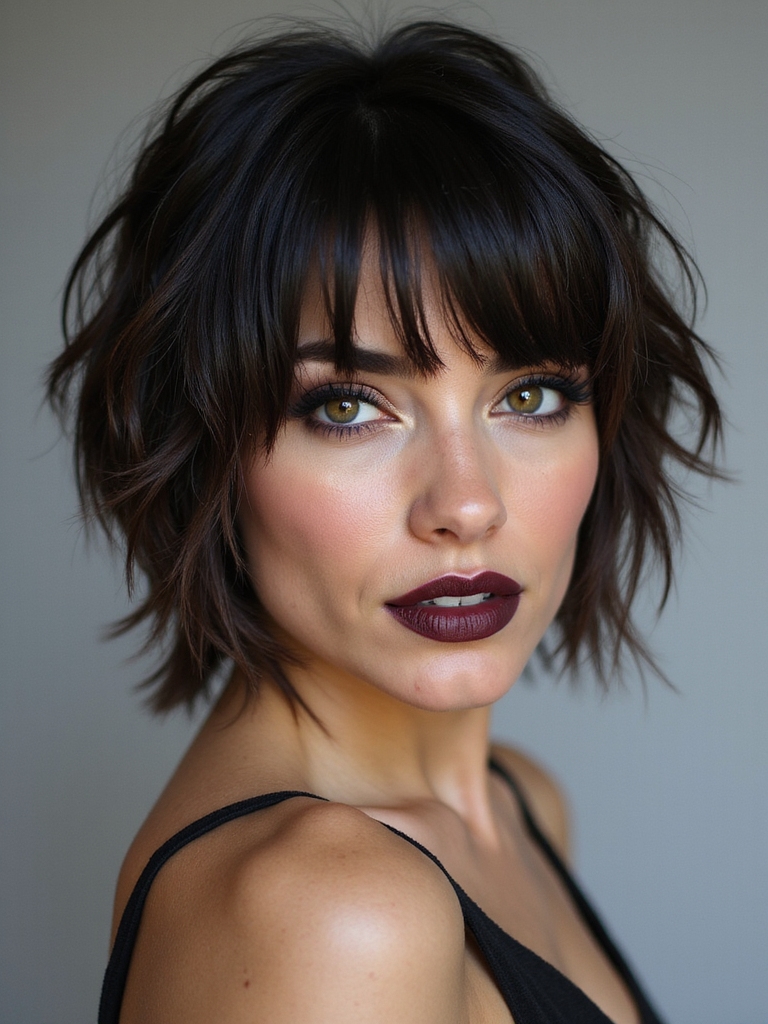
I love how the edgy wolf cut with curtain bangs mixes wild texture and soft framing, and I think it’s one of the easiest ways to feel modern without overhauling your whole routine.
It gives instant movement, flatters most face shapes, and—when done right—stays wearable regardless your hair’s fine, thick, or wavy. If you’re curious about how to make it suit your life and hair, I’ll walk you through what to ask your stylist and common styling tricks…
What Is a Wolf Cut and Why It Works

Think of the wolf cut as a hybrid haircut that shakes off strict rules and gives you lived-in texture with an edge.
I love how it blends shaggy layers and volume for movement, so strands frame and lift naturally.
It’s low-maintenance, adaptable to hair types, and instantly playful.
Believe me — it feels rebellious without trying too hard, and that’s why it works.
The look draws on the broader trend to “Embrace Your Style” with the Trendy Wolf Cut as a modern, versatile option.
Curtain Bangs Explained: The Face-Framing Trend

Because curtain bangs split softly down the middle, they instantly open your face and give a flattering, effortless frame, and I love how they balance bold styles like the wolf cut without stealing the show.
I’ll walk you through textures, lengths, and easy styling tips so your bangs feel tailored, low-maintenance, and playful—perfect for shaking up your look without drama.
They also pair particularly well with layered cuts that emphasize face-framing angles, adding movement and edge to the overall style.
How These Two Styles Complement Each Other

When you pair curtain bangs with a wolf cut, they soften the cut’s wild energy and give it a chic, wearable edge I actually crave—those curtain pieces tuck around the cheekbones while the choppy layers do their messy, voluminous thing, so your face reads open and styled, not overdone.
I love how movement balances structure, adding softness without losing attitude, making styling fun and effortless.
The combo draws on the classic Shag With Curtain Bangs aesthetic to blend retro texture with modern polish.
Best Hair Types for a Wolf Cut With Curtain Bangs

I love how a wolf cut with curtain bangs adapts to different hair textures, so let’s look at who it flatters most.
For fine, straight hair it adds movement and the bangs create the illusion of volume; thick, textured hair gets that bold shape and effortless edge; and wavy or loose curls bring a soft, lived-in vibe that’s super flattering.
Tell me which one sounds like your hair and I’ll help you tweak the look. A layered hair approach with curtain bangs can enhance the overall silhouette and softness.
Fine, Straight Hair
Think of fine, straight hair as the secret weapon for a wolf cut with curtain bangs — I’ve seen it take the style from trendy to effortlessly chic.
I love how it layers cleanly, frames the face, and stays light. Try these perks:
- Airy movement without heavy weight
- Soft, natural curtain separation
- Easy styling with minimal product
- Flattering on small faces
This look blends elements of soft layers and curtain bangs to create effortless soft layers that boost texture and movement.
Thick, Textured Hair
Often I get excited about thick, textured hair because it loves the wolf cut with curtain bangs—seriously, it brings out that lived-in, rocker-chic vibe with tons of movement.
I’d recommend strategic thinning and layered shaping to avoid bulk while keeping body.
You’ll get effortless volume, playful fringe framing, and low-maintenance texture that looks intentionally undone without constant styling.
Wavy or Loose Curls
After talking about thick, textured hair, I want to spotlight wavy and loose curls because they’re basically made for a wolf cut with curtain bangs.
I love how the layers dance with natural movement, framing my face effortlessly.
Easy styling, volume without heaviness, and a tousled, modern vibe make this a go-to look.
- Natural bounce
- Soft face-framing
- Low maintenance
- Flirty texture
Choosing the Right Length and Layering

When I choose the right length and layering for a wolf cut with curtain bangs, I start by picturing how you move—do you toss your head, tuck hair behind an ear, or prefer low-maintenance swing?
I balance choppy layers for texture with softer ones around the face to frame it. We’ll pick a length that swings with your life, playful yet easy to manage.
How to Describe This Look to Your Stylist

Curious how to tell your stylist exactly what you want? I keep it simple: say “wolf cut with soft curtain bangs,” point to photos, and describe length and face-framing.
I add texture requests and how bold or blended I want the layers.
- Show photos from multiple angles
- Specify bangs’ part and length
- Mention desired edge (edgy vs soft)
- Ask for layering intensity
Top Styling Tools and Products to Use

I reach for a few go-to tools and products that make styling a wolf cut with curtain bangs quick and fun: a medium-barrel round brush for shaping bangs, a diffuser or wide-tooth comb for natural waves, a texturizing spray for that lived-in grit, and a light-hold hairspray to lock everything without stiffness.
I also love a small amount of pomade for piecey definition and dry shampoo for instant lift.
Daily Styling Routine for Effortless Texture

I’ll show you a quick morning tousle that wakes up your wolf cut and curtain bangs in under five minutes.
If mid-day limpness happens, I’ve got texture-refresh tricks—think dry shampoo, a few scrunches, and a light mist—to bring it back to life.
Stick with me and you’ll have that effortless, lived-in look every day without fuss.
Quick Morning Tousle
Usually I wake up with my wolf cut already doing half the work, so my quick morning tousle is really about coaxing texture, not creating it from scratch.
I run fingers through damp roots, scrunch ends, and let curtain bangs fall naturally. A few spritzes and a pinch, and I’m out the door — effortless, lived-in, lively.
- Finger-scrunch roots
- Mist sea salt spray
- Twist ends gently
- Shake out bangs
Texture-Refresh Tricks
Often I just need a little midday pep to wake my wolf cut back up, so my texture-refresh routine is all about quick, targeted moves that keep things airy and undone.
I spritz dry shampoo at the roots, scrunch mids and ends with salt spray, tousle with fingers, and finish by flipping bangs aside then smoothing with a touch of cream for soft separation.
How to Create Piecey, Edgy Ends

Start by sectioning the hair and snipping with intent: I like to work with dry, styled hair so I can see how the layers fall and where those piecey, edgy ends will land.
I tip small vertical snips into ends, twist sections, and vary lengths for movement. Playful, intentional cuts give that lived-in edge.
- Snip vertically
- Twist for texture
- Vary lengths
- Check balance
Softening the Look for a Polished Finish

I love softening a wolf cut with face-framing layers that hug your features and calm the wildness.
I’ll show you a few tamed texture techniques—like gentle point-cutting and controlled blowouts—to keep movement without the mess.
Then we’ll pick a couple of polished styling products that smooth frizz and add subtle shine so your look feels finished.
Face-Framing Layers
Think of face-framing layers as the secret handshake of the wolf cut — I love how a few soft, tapered pieces around your face can instantly polish the whole look without stealing its edge.
I use them to soften angles, highlight cheekbones, and make curtain bangs feel intentional.
Try these playful tweaks:
- Subtle taper at temples
- Chin-length wisps
- Feathered ends
- Gentle inward bend
Tamed Texture Techniques
Soften the wolf cut’s wild side by dialing in texture where it counts — I’ll show you how lightweight techniques and the right tools can keep movement without frizz or chaos.
I blend subtle point-cutting, feathered ends, and gentle thinning near the crown to tame bulk while preserving swing.
I finish with cool air-drying and soft finger-scrunching for a polished, effortless vibe you’ll love.
Polished Styling Products
Now that the cut’s texture is tamed, I reach for the right styling products to keep that polished, soft finish without weighing hair down.
I love lightweight, nourishing formulas that smooth frizz and add subtle shine—here’s my go-to kit to keep curtain bangs soft and the wolf cut sleek.
- Weightless smoothing serum
- Creamy leave-in conditioner
- Light-hold styling cream
- Dry texture spray
Color Ideas to Enhance the Cut

While I love the shape of a wolf cut with curtain bangs on its own, adding color can totally transform its personality — from soft and lived-in to bold and edgy.
I recommend sun-kissed balayage for warmth, chunky face-framing highlights for pop, or pastel ends for whimsy. Want attitude? Try deep chocolate with a peek of vivid teal — playful, modern, and surprisingly wearable.
Transitioning From Long Hair or a Bob

If you’re coming from long hair or a bob, I’ll admit the idea of chopping into a wolf cut can feel both thrilling and a little scary — but it’s one of the most forgiving changes you can make.
I walked into my stylist nervous and left giddy.
Try these quick tips:
- Bring inspo photos
- Discuss face shape
- Start gradual if unsure
- Welcome texture and layers
Maintenance: Trims, Bang Touch-Ups, and Care

I’ll walk you through a simple maintenance plan so your wolf cut and curtain bangs always look fresh.
We’ll cover how often to trim, quick bang touch-ups between salon visits, and a daily care routine that keeps texture and shape intact.
Stick with me and you’ll spend less time fussing and more time enjoying the look.
Regular Trim Schedule
Usually I recommend getting a trim every 6–8 weeks to keep the wolf cut’s shape sharp and curtain bangs from drooping into your eyes; I’ll adjust that based on your hair texture and how fast you grow.
I suggest sticking to a schedule so layers stay lively and ends don’t look tired.
- Assess fullness every visit
- Trim layers, not length
- Track growth rate
- Book in advance
Curtain Bang Upkeep
Keeping a regular trim rhythm helps the overall wolf cut, but your curtain bangs need a little extra love between those appointments to stay flirty and functional.
I clip stray pieces every few weeks, snip long face-framing strands, and ask my stylist for soft point cuts.
I also tame frizz with lightweight oil and resist over-washing so shape and bounce last longer.
Daily Care Routine
Often I start my day by giving my wolf cut and curtain bangs a quick once-over — a little shake, a light mist if needed, and a tiny trim of any obvious flyaways.
I keep care simple and fun, so I can look polished without fuss.
- Snip tiny split ends weekly
- Mist and style with fingers
- Heat-protect before styling
- Refresh shape monthly with pro trim
Celebrity and Street-Style Inspiration

I always look to celebrities and the streets for how the wolf cut with curtain bangs is actually worn—because seeing it in motion tells you more than any salon photo.
I love spotting effortless versions on musicians and actors, then translating those vibes into wearable looks. Street style shows messy texture, playful color pops, and real-world movement that convinces me this cut’s bold and approachable.
Common Mistakes to Avoid When Getting the Cut

Seeing the wolf cut on celebs and the sidewalk made me want one too, but there are a few pitfalls I’ve learned to watch for before you sit in the chair. I made mistakes so you don’t have to — honest communication and realistic expectations matter.
- Bringing vague inspo pics
- Skipping face-shape discussion
- Asking for too-short bangs
- Neglecting maintenance time
I hope this makes you excited to try the edgy wolf cut with curtain bangs — it’s playful, flattering, and surprisingly easy to live with. Bring photos, chat with your stylist about gradual layers and soft curtain pieces, and expect simple daily texture with a spritz of texturizing spray and the occasional trim.
Ready to adopt the volume-and-fringe combo? Go bold, but keep it wearable — you’ll love the movement and face-framing sass.


