

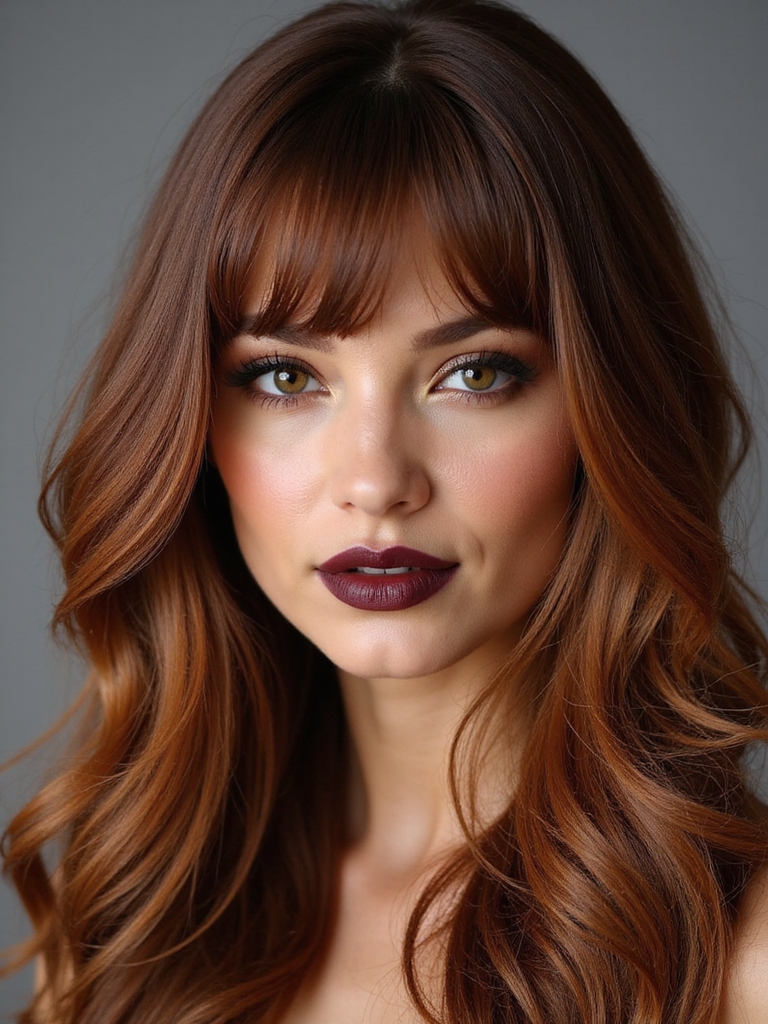
I love how long layers with curtain bangs can make hair look effortlessly styled without feeling stiff, and I’ll show you how the right blend softens your face and adds movement;
if your hair’s fine or thick, there’s a way to keep the bangs airy and flattering, and I’ve got tips on length, cutting cues for your stylist, and styling tricks that work for photos—so stick around if you want a version that actually suits your shape.
Why Long Layers and Curtain Bangs Work Together

Think of long layers and curtain bangs as a dream team for hair — I love how they play off each other to frame your face without looking fussy.
I find layers add movement and stop curtain bangs from feeling heavy, while the bangs soften your forehead and guide the eye.
Together they create balance, texture, and effortless shape that feels styled but not overdone. Long layers also blend seamlessly with curtain bangs to create natural movement and volume throughout the hair.
Who Benefits Most From Blended Curtain Bangs

I’ve noticed blended curtain bangs do wonders for softening angular faces, framing cheekbones without adding harshness.
They’re also a clever trick for enhancing thin hair, creating the illusion of fullness at the front. Let’s look at how these two wins actually play out for different face shapes and hair textures.
Long layers help the bangs blend into the rest of the hair, creating a more natural fall and movement, especially on medium length hair.
Softening Angular Faces
If you have a sharp jawline or pronounced cheekbones and want to soften those angles, I’d recommend blended curtain bangs—they skim the face and break up hard lines without hiding your features.
I love how they create gentle movement around the temples, drawing attention inward. They balance strong bone structure, add femininity, and feel effortless—perfect if you want subtle shaping, not a dramatic makeover.
A versatile option to consider is adding long layers that work with curtain bangs layers to enhance texture and flow.
Enhancing Thin Hair
Boosting fine strands with blended curtain bangs is a low-drama trick I reach for when clients want lift without weight—those soft, face-framing layers add the illusion of volume at the roots and give thin hair something to move with.
I recommend them to anyone with fine texture, a high forehead, or flat crown; they create bounce, texture, and effortless style without sacrificing length. I often pair them with long layers to create effortless long layers that enhance movement and blend the bangs seamlessly.
Choosing the Right Layer Length for Your Face Shape

Because a few subtle length tweaks can make your face sing, I like to start by looking at your shape and personal vibe before we cut anything.
For round faces I suggest longer layers to elongate; for square jaws, soft face-framing pieces soften angles; oval? Lucky you — balance mid-length layers; heart shapes get chin-grazing layers to add width where you want it.
I also consider how curtain bangs work with long layers to ensure a seamless blend and natural movement, especially when thinking about Curtain Bangs Long Hair Layers.
How to Describe Blended Curtain Bangs to Your Stylist

When I tell my stylist I want blended curtain bangs, I say I want the length to graze my cheekbones so they frame my face without hiding it.
I ask for seamless layering that melts the bangs into the long layers—no harsh lines, just soft shifts. That shorthand keeps us both on the same page and saves time in the chair.
Length and Face-Framing
If I want my curtain bangs to blend naturally with long layers, I tell my stylist the exact length I want at the cheekbone and how I want the pieces to tuck around my face.
I mention my part, if I prefer soft face-framing or a bolder sweep, and note any cowlicks.
Clear, specific cues keep the cut flattering and low-maintenance for me.
Seamless Layering Technique
To get truly blended curtain bangs, I tell my stylist I want soft, graduated layers that feather into the longer hair instead of a blunt stop — think a gentle slope from cheekbone to shoulder rather than a hard line.
I describe weight removal near the face, subtle point-cutting, and leaving length to swing.
I ask for movement, not choppy steps, and a light, airy finish.
Cutting Techniques That Create a Seamless Blend

Because I love a clean, invisible shift, I start by sectioning and softening the weight line so curtain bangs melt into long layers instead of sitting on top like a helmet.
I use point cutting, slide cutting, blunt anchors, and feathering to craft movement that reads natural and effortless.
- Point cutting for texture
- Slide cutting for graduation
- Blunt anchors for shape
- Feathering for softness
Best Hair Textures for Long Layers With Curtain Bangs

I love how long layers with curtain bangs play differently on each hair type, and I want to help you pick what works best for yours.
Fine hair gets airy movement and face-framing lift, thick hair can be thinned and shaped for soft swing, and wavy or curly textures add natural bounce and personality.
Tell me which texture you have and I’ll give you tailored tips.
Fine Hair Benefits
I’ve found that fine hair really shines with long layers and curtain bangs—literally and figuratively—because the cut adds movement without weighing strands down.
I love how it creates fullness, easy styling, and airy texture. Try these perks:
- Instant lift at the roots
- Soft, face-framing shape
- Faster drying and styling
- Less product buildup, more bounce
Thick Hair Adaptability
Often, thick hair welcomes long layers and curtain bangs with open arms — and I love how much control it gives me.
It tames bulk, adds movement, and keeps shape without daily fuss.
I can chop weight for airiness or keep density for drama.
Styling’s forgiving: a quick blowout, a flat-iron flick, or tousled texture all look effortlessly polished.
Wavy and Curly Textures
Usually, wavy and curly hair sings with long layers and curtain bangs—I’ve found they give texture real direction without fighting your natural pattern.
I love how layers reduce bulk, enhance bounce, and let bangs frame the face while still flattering coils.
Try these playful styling tips:
- Scrunch with a light mousse
- Diffuse gently for volume
- Trim bangs dry for shape
- Pineapple at night
Styling Tools and Products You’ll Need
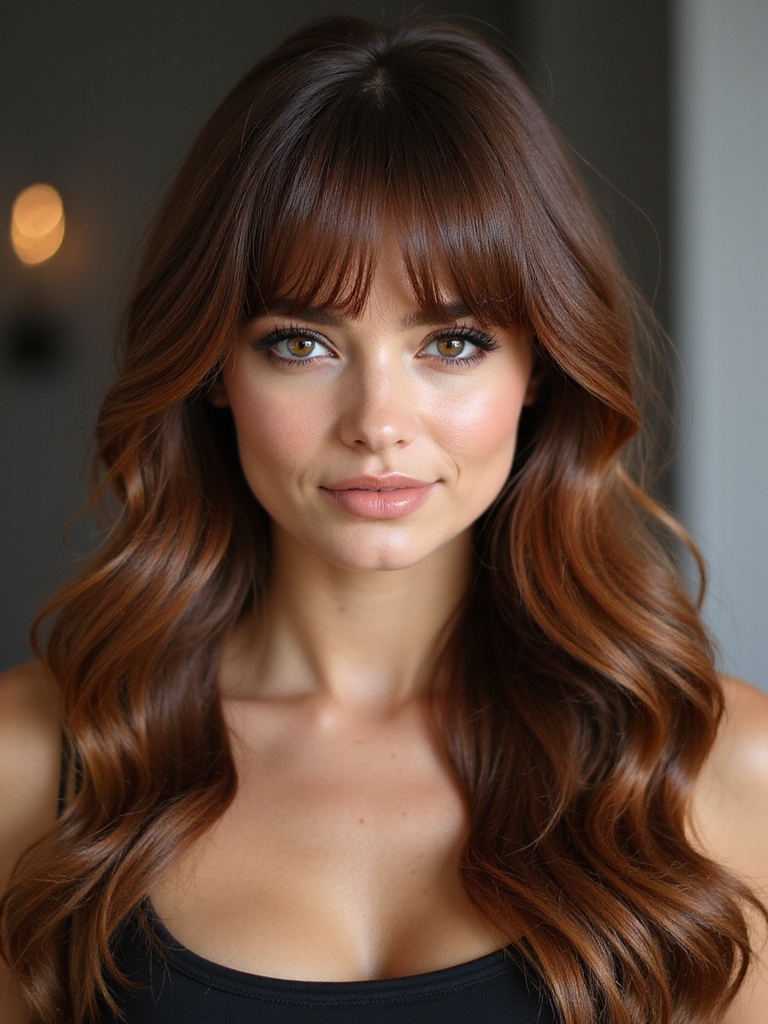
Before you jump in, let me walk you through the handful of tools and products that’ll make long layers with curtain bangs look effortless — not fussy.
I recommend a medium barrel round brush, a lightweight blow-dryer with a nozzle, a flat iron for touchups, heat protectant spray, a texturizing mist for movement, and a bit of flexible-hold hairspray to lock shape without stiffness.
Quick Everyday Styling Routine

Let’s keep this simple: I’ll walk you through a five-minute routine that gets your long layers and curtain bangs looking polished without turning your morning into a production.
I’ll show quick steps I use to tame frizz, shape bangs, and refresh layers so you leave feeling put together.
- Light misting and finger-comb
- Quick blow-dry sweep
- Soft texturizing touch
- Finish with hairspray dab
Creating Volume and Movement Without Heat

I’ll show you how to pump up volume and add movement to long layers and curtain bangs without touching a hot tool: think braids, twists, and smart product placement that work while you get dressed or sip your coffee.
I’ll guide you through overnight braids, loose pin curls, root-lifting spray at the crown, and finger-tousle finishes so your hair looks effortless and full all day.
Transitioning From Short Bangs to Long Blended Curtains

If you’ve been using braids and root-boosting sprays to wake up long layers, you’re already halfway to growing out short bangs into soft curtains—I’ll show you how to make that awkward in-between stage work for you.
I’ll guide trims, strategic parting, and styling tricks so your fringe blends naturally as it grows.
- Ask for face-framing snips
- Adopt side parts
- Use texturizing scissors
- Try loose twists
Color Ideas That Enhance the Layered Look

When framing long layers, I love using color to amplify movement—subtle contrasts make each tier pop without shouting.
I play with soft balayage, face-framing highlights, or a hint of warmth at ends to accentuate layers.
Low-maintenance lived-in tones keep texture visible, while a cool gloss ties everything together.
It’s fun, flattering, and easy to personalize.
How Often to Trim to Maintain the Shape

I keep my long layers on a regular schedule depending on length—every 10–12 weeks if you’re growing them out, or 6–8 weeks to keep things bouncy and precise.
My curtain bangs get the VIP treatment with a quick trim every 3–4 weeks so they don’t overrun my face.
Let’s talk about how to tweak that timing for your hair texture and lifestyle.
Trim Frequency by Length
Usually I recommend trimming long layers with curtain bangs every 8–12 weeks to keep the shape fresh without sacrificing length.
I tailor frequency by length: longer hair needs fewer trims, shorter layers and face-framing pieces need more attention.
Here’s a quick guide:
- Long layers: every 12 weeks
- Mid-length: every 10 weeks
- Shorter layers: every 8–9 weeks
- Fast growers: adjust sooner
Bang Maintenance Schedule
Often I trim my own curtain bangs every 3–4 weeks to keep their airy shape and prevent them from falling into my eyes.
I check growth weekly and snip tiny amounts at the longest points, blending into layers.
If you want less upkeep, stretch to six weeks but expect a softer fringe.
Quick touch-ups with scissors beat awkward days.
Adapting the Cut for Thinning Hair

Because thinning hair changes the game, I tweak the long layers and curtain bangs to make your mane look fuller and move better.
I cut strategically, remove weight, and create soft face-framing pieces so curtain bangs sit airy, not flat.
I also texturize lightly to boost volume without frizz.
- Light layering at crown
- Thinned ends, bluntish bangs
- Face-framing pieces
- Strategic texturizing
Styling for Special Occasions and Photos

When you want your long layers and curtain bangs to pop for an event or photoshoot, I dial up polish without losing that lived-in vibe — think soft hold, strategic shine, and just enough texture to read on camera.
I smooth frizz with a light serum, boost roots with a spritz, touch up waves with a wand, and set with flexible spray so photos stay flattering.
Growing Out Your Curtain Bangs Gracefully

If you’re ready to let curtain bangs grow out without looking awkward, I’ve got simple tricks to keep things intentional instead of messy — think clever parting, discreet trims, and styling that blends new length with your layers.
- Sweep and pin for off-face days
- Soft side part to disguise length
- Regular micro-trims every 6–8 weeks
- Blend with face-framing layers using light texturizer
So, if you’re tempted to try long layers with curtain bangs, go for it — they’re forgiving, flattering, and fun. I love how the layers keep the bangs airy and the face framed without feeling heavy, and a little balayage makes everything pop on camera.
Tell your stylist you want blended, eye-skimming curtains and soft, face-framing layers. With simple trims and light texturizer, you’ll have a polished, effortless look that’s easy to style and grow out.


