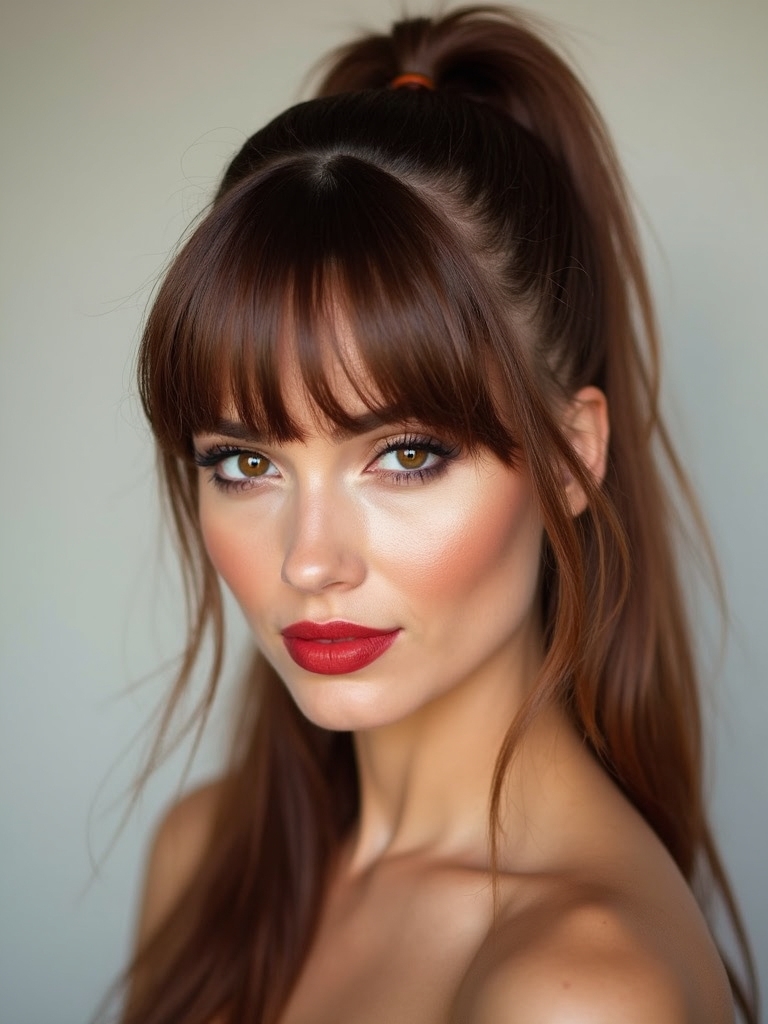
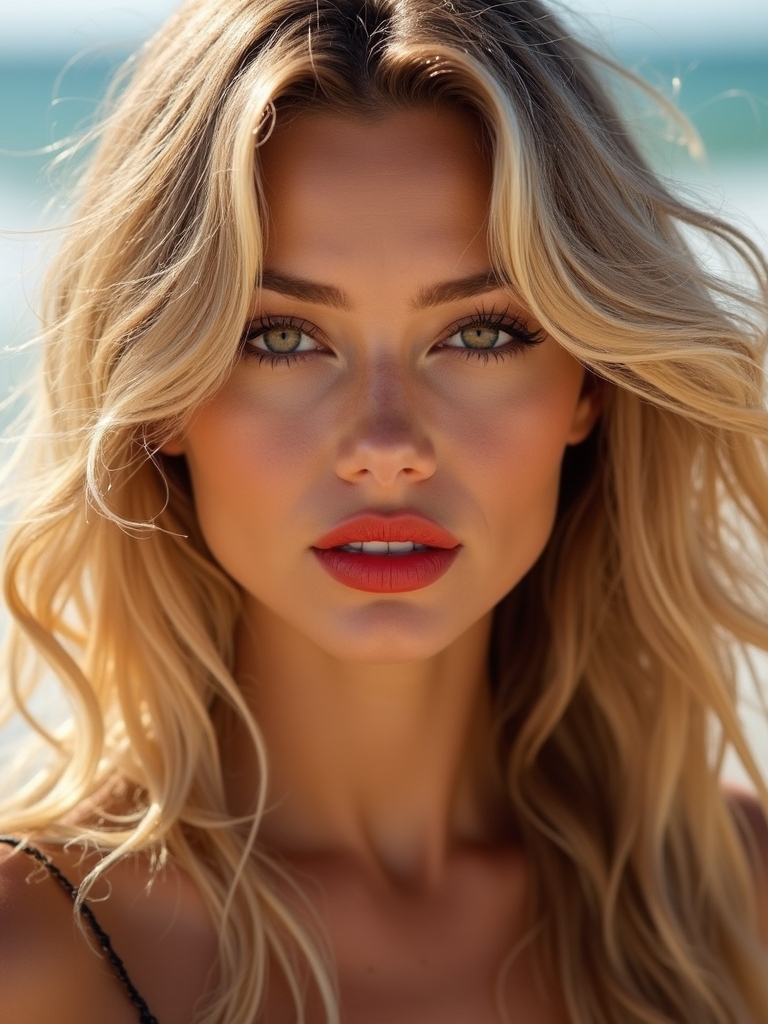
I love how curtain bangs and beachy waves work together to make hair feel alive — soft face-framing layers meet tousled, swingy lengths for instant movement and texture.
It’s an easy, low-effort vibe that flatters lots of shapes and hides heavy ends, but there are a few neat tricks and product choices that really sell the look, so stick around and I’ll walk you through what to try next…
Why Curtain Bangs and Beachy Waves Complement Each Other

When I pair curtain bangs with beachy waves, I get an effortless, face-framing look that feels both chic and low-maintenance; the soft curtain sweep highlights my cheekbones while the tousled waves add movement so the style never looks flat or overly styled.
I love how the bangs soften my forehead while waves keep things playful, breezy, and casually polished—perfect for everyday charm.
Curtain bangs also translate beautifully to straight textures, offering an effortless curtain bangs option that remains sleek and refined.
Best Hair Types for This Look

I love how this style plays with natural wave and texture, so if your hair already has a bit of movement it’ll make styling way easier.
Think about thickness too—too fine might need product or extensions, while thicker hair holds the beachy shape beautifully.
And of course, we’ll match the curtain bangs to your face shape so the whole look flatters you.
This cut works especially well with wavy hair, which enhances the effortless, beachy movement.
Natural Wave and Texture
Loving how beachy waves move means picking the right hair to start with — I’ve found this look sings on naturally wavy or lightly curly hair, where texture gives you instant body and a lived-in feel; fine hair can work if you add sea-salt spray and layers, while very tight curls usually need a bit more blowout and shaping to hit that loose, effortless vibe.
I love enhancing natural bends with scrunching and a light salt mist for soft, undone texture that still reads polished.
This style is especially flattering when you work with your natural pattern and choose flattering hairstyles that emphasize movement.
Hair Thickness Match
Balance is everything — I’ve found that beachy waves and curtain bangs play differently on each hair thickness, so choosing the right base makes styling way easier.
Fine hair gets airy, textured layers and sea-spray for volume; medium hair is the dream—holds shape with minimal fuss.
Thick hair benefits from long layers and thinning for movement so bangs won’t feel heavy.
This look works best when combined with long layers to enhance movement and prevent heaviness.
Face Shape Compatibility
While face shape doesn’t rigidly dictate style, I’ll walk you through which shapes naturally pair best with beachy waves and curtain bangs so you can tweak the look to flatter your features.
I love how oval and heart faces pop with this combo; round faces benefit from longer waves and parted bangs to lengthen, while square jaws soften with wispy curtain pieces.
Try and adjust!
Long curtain bangs are especially flattering on round faces because they create vertical lengthening and soften the face’s width.
Face Shapes and Curtain Bang Variations

I love matching curtain bangs to different face shapes because a few small tweaks can totally change the vibe.
If you’ve got a round, oval, square, or heart-shaped face, I’ll show which bang lengths and partings flatter each one.
Stick with me and we’ll pick the exact fringe length that softens or sharpens your features just right.
Face Shape Matches
Because everyone’s face is different, I like to match curtain bangs and beachy waves to your specific shape so the look feels effortless, not forced.
For round faces I soften width with longer, face-framing pieces; for square jaws I add soft waves and a tapered curtain to soften angles; for oval and heart shapes I play with volume and parting to highlight your best features.
Bang Length Tweaks
Let’s tweak your bangs so they actually flatter your face—not fight it—by adjusting length and tapering for each shape.
I recommend shorter, wispy curtain ends for round faces to elongate; longer, cheekbone-grazing layers for square jaws to soften angles; a slight center part with long curtains for heart shapes; and full, feathery curtains for oval faces—versatile, low-maintenance, and breezy.
How to Cut Curtain Bangs at Home Safely
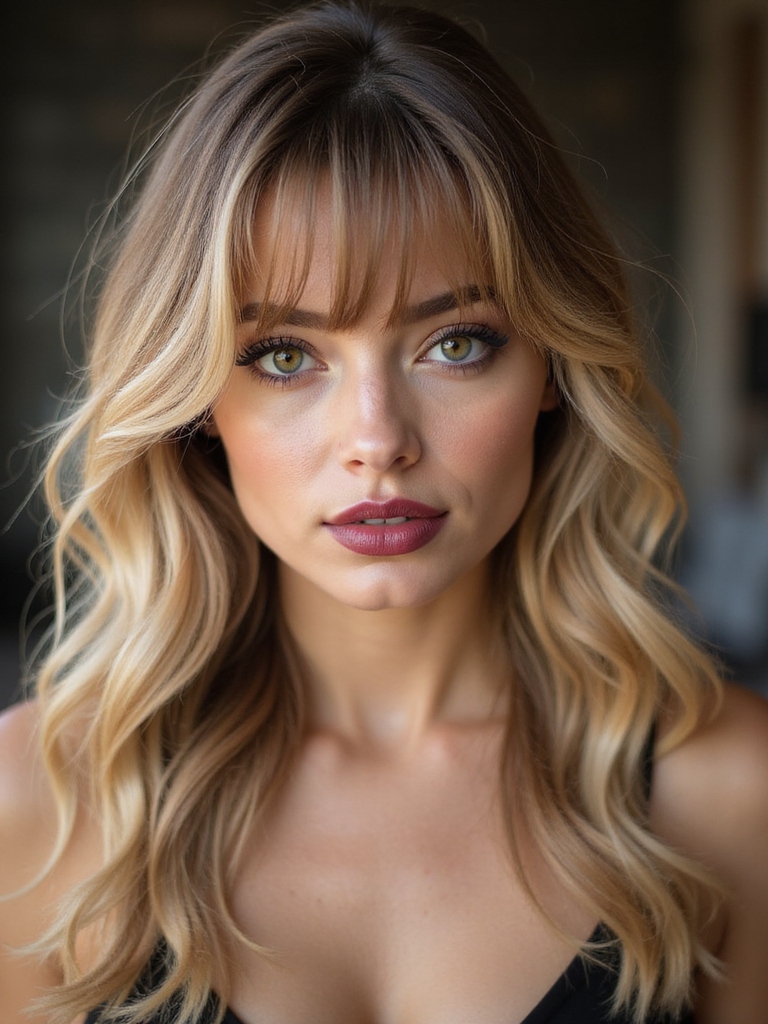
If you’re nervous about snipping, I get it — cutting curtain bangs at home feels like a tiny act of rebellion and a big responsibility at once.
I always start dry, small sections, point-cut for softness, and trim less than you think. Take breaks, check symmetry with your head tilted, and remember you can always trim more — but you can’t add back length.
Essential Tools and Products You’ll Need
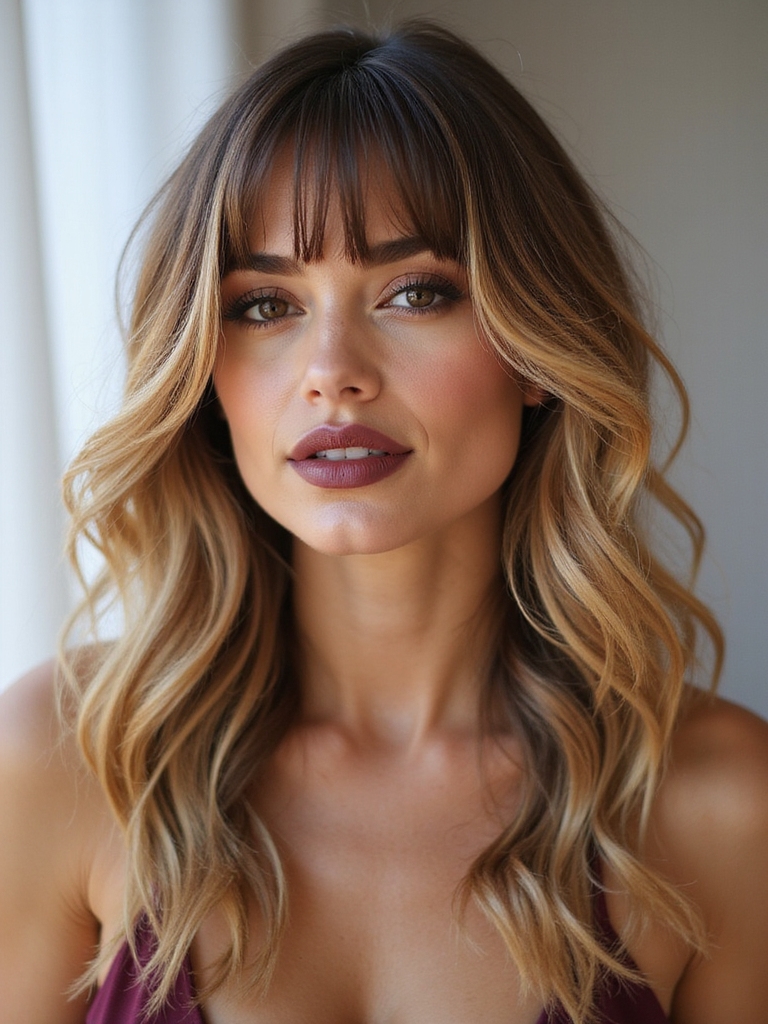
Gather your kit before you start—trust me, it saves stress and weird DIY detours.
I recommend a wide-tooth comb, paddle brush, lightweight curl cream, sea salt spray, heat protectant, 1–1.5″ curling wand (or flat iron), clips, and a microfiber towel.
Keep a texturizing dry shampoo and light-hold hairspray handy for movement and second-day bounce.
Simple, effective, and portable.
Step-By-Step Styling for Natural Beachy Waves
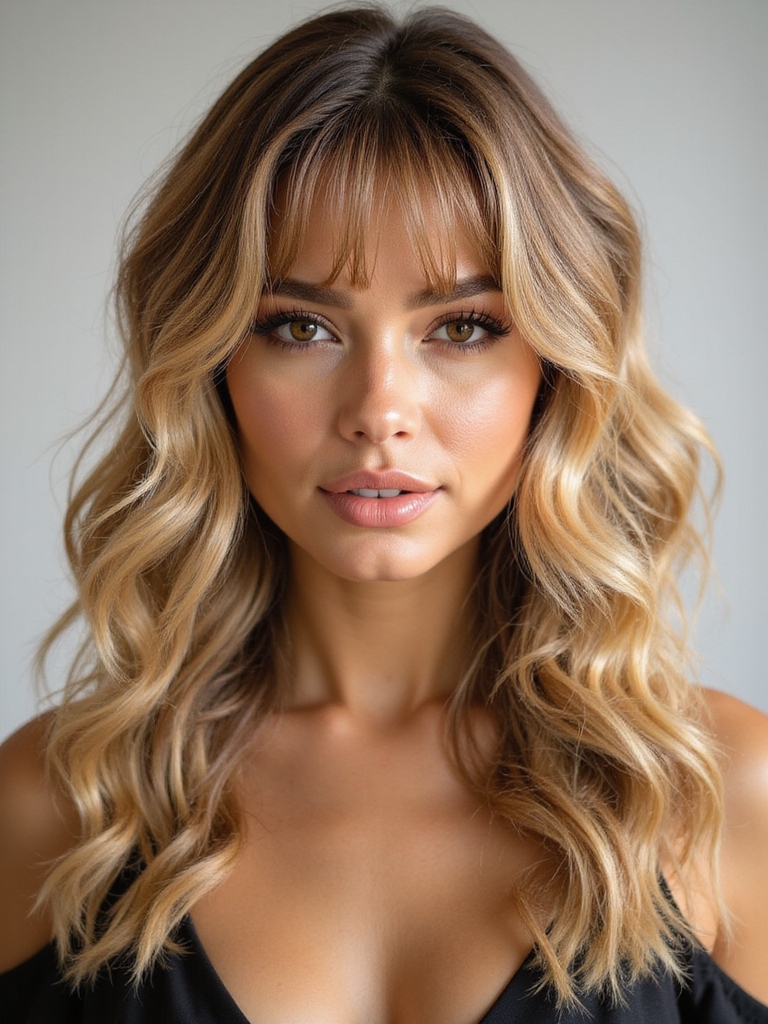
Alright — first I’ll show you how I prep my hair and pick the right products so the waves actually hold without feeling crunchy.
Then I’ll walk you through my curling technique, from section size to the twist-and-release trick that gives those effortless loose waves.
Stick with me and you’ll have beachy texture that flatters curtain bangs without a fuss.
Prep and Product
Let’s kick things off by getting your hair prepped the right way—I always start with clean, towel-dried hair that’s about 70% dry so products can actually work their magic.
I spritz a lightweight sea salt spray for texture, apply a pea-sized cream to tame frizz, and use a heat protectant. Finger-comb everything—no brushes—to keep movement and that effortless, beachy vibe.
Curling Technique
I start by sectioning my hair into manageable layers—clip the top half up and work with about 1–1.5 inch pieces—because smaller chunks give looser, more natural waves.
I then:
- Wrap mid-lengths around a 1″ wand, leaving ends out.
- Alternate directions for texture.
- Hold 5–8 seconds, don’t overcook.
- Cool, tousle gently, finish with light spray.
Heatless Methods for Creating Waves

Experimenting with heatless methods is my favorite way to get beachy waves without frying my hair—and you’ll love how easy some of them are.
I twist damp sections into buns, braid loose plaits overnight, or use foam rollers for soft texture.
In the morning I shake out pieces, finger-comb my curtain bangs, and spritz salt spray for that effortless, lived-in movement.
Layering and Length Tips for Optimal Movement

I love how a few face-framing layers wake up curtain bangs and give your waves a soft, flattering outline.
Keeping hair at an ideal mid-length — think collarbone to just below the shoulders — gives you that effortless swing without weighing curls down.
And when your stylist thins out the ends and adds textured layers, you get movement and piecey definition that lasts all day.
Face-Framing Layers
When I’m shaping face‑framing layers, I aim for pieces that wake up my waves without stealing their bounce.
I tell clients to keep texture light and movement natural.
Quick tips:
- Cut softly around the cheekbones.
- Angle toward the jaw for lift.
- Keep ends texturized, not blunt.
- Avoid too-short layers that frizz.
Optimal Mid-Lengths
Now that you’ve got face‑framing layers waking up your waves, let’s talk mid‑lengths — the sweet spot that gives movement without sag.
I like keeping length just below the shoulders so waves bounce, not weigh down. Ask your stylist for subtle graduation through the mid‑section to encourage lift and avoid blunt heaviness.
It feels effortless and windy‑day friendly.
Layered Ends Texturizing
Softening the ends with feathered, layered texturizing is my go‑to move for keeping beachy waves light and lively.
I love how subtle layers create bounce without bulk. Try these quick tips:
- Thin ends slightly for movement.
- Keep face‑framing layers long.
- Use point‑cutting for texture.
- Avoid heavy blunt cuts near the jaw.
You’ll get effortless, airy waves.
Styling Curtain Bangs for Different Occasions
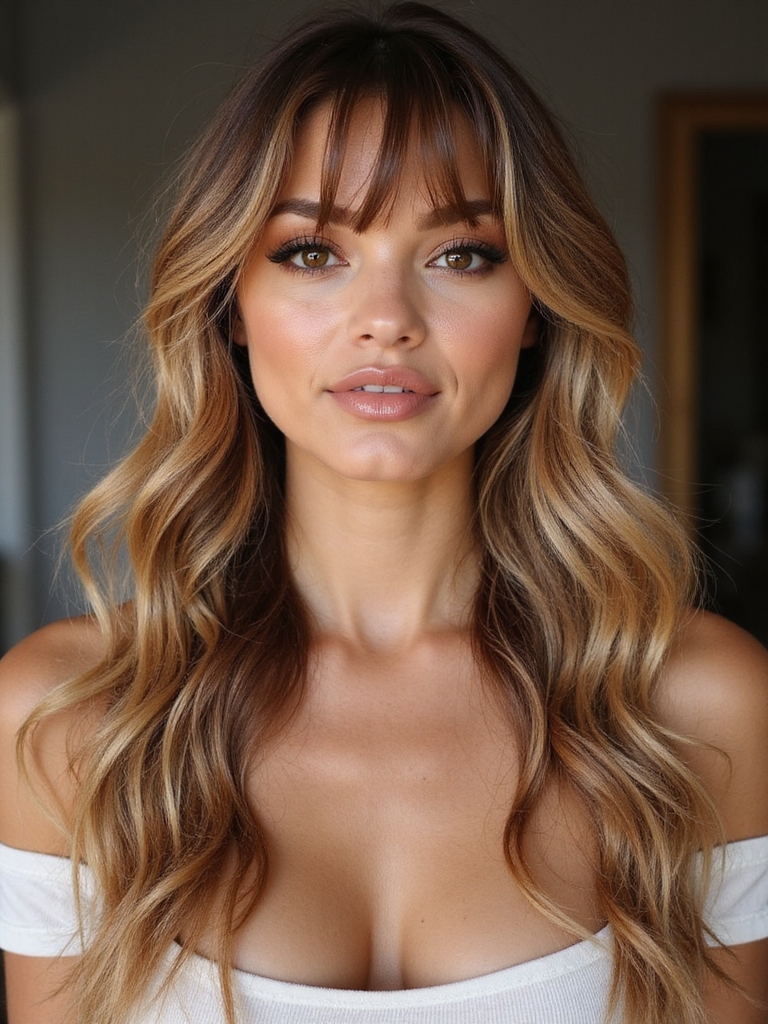
Because curtain bangs are so versatile, I like to think of them as the secret hairstyle Swiss Army knife—effortless for brunch, polished for the office, and flirty for date night.
I’ll show quick tweaks: soft air-dried parting for casual, smooth blowout with a round brush for meetings, and tousled waves plus a light mist for evening.
Quick, simple, and fun.
Maintaining Volume and Texture Throughout the Day

I often check my bangs and crown mid-day because even the best morning styling can lose pep, so I keep a few tricks handy to revive volume and texture without a full redo.
I do quick, gentle tweaks and a spritz. My go-to moves:
- Tousle roots with fingers
- Light dry-shampoo lift
- Mist texturizer from mid-lengths
- Flip and set briefly with cool blast
Quick Fixes for Limp Bangs or Flat Waves

Usually, when my bangs go limp or the waves lose their bounce, I reach for a few speedy tricks that get everything looking fresh without a full restyle. I spritz dry shampoo at the roots, tousle with fingers, and clip bangs up to set a soft lift.
For flat waves, a quick twist-and-scrunch with sea salt mist revives texture fast.
How to Protect Hair From Heat Damage

After those quick fixes, I still want my hair to stay healthy, so I’m careful with heat tools and how often I use them.
I use gentle habits and products to protect waves and curtain bangs.
- Lower heat setting.
- Heat protectant spray.
- Limit styling days.
- Cool-down finish for shine.
Refreshing Second-Day Waves and Bangs
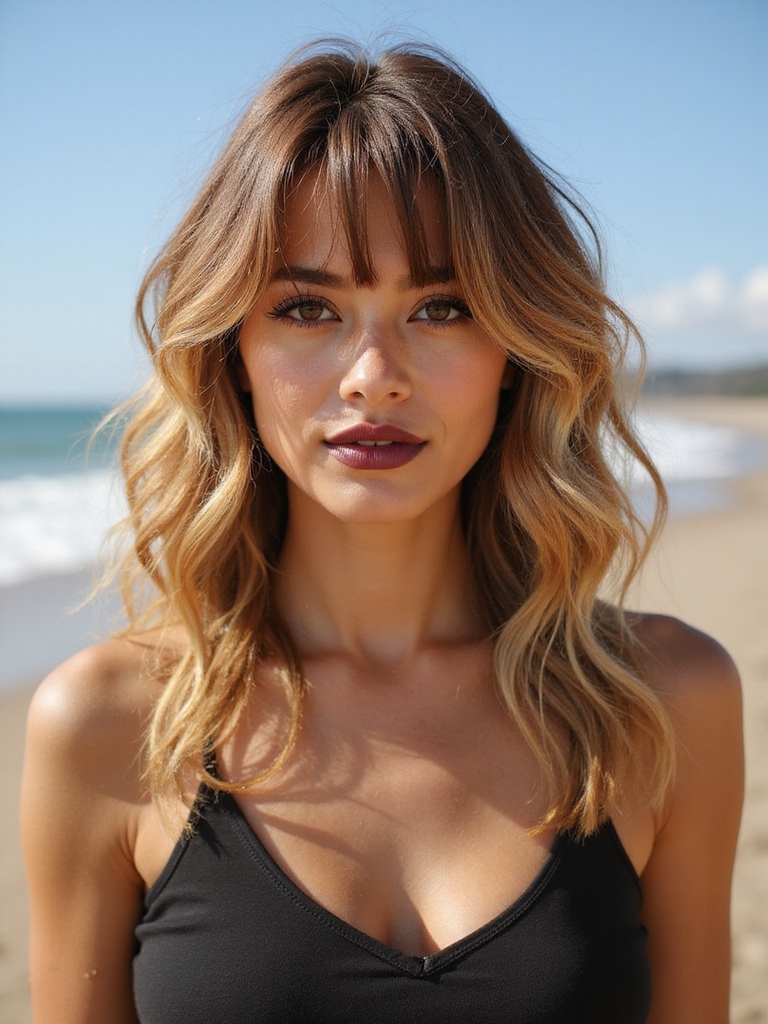
Since you don’t have to start from scratch every morning, I’ll show you quick tricks to revive my beachy waves and tame curtain bangs so they look effortless on day two.
I spritz dry shampoo at the roots, scrunch mid-lengths with sea salt mist, and smooth bangs with a tiny dab of styling cream.
A few finger lifts, and I’m ready—no hot tools.
Transitioning This Look Between Seasons

Keeping your day-two waves and curtain bangs looking fresh is easier when you tweak a few habits as the weather shifts.
I switch products and routines smoothly:
- Swap to lightweight oil in humid months.
- Use richer cream in cold, dry air.
- Adjust wash frequency to scalp needs.
- Protect bangs with a light mist before hats or scarves.
Simple changes keep movement alive.
When to Visit a Stylist for Trims and Adjustments

I usually book a trim every 6–8 weeks for curtain bangs and every 8–12 weeks for the beachy layers, because staying on that schedule keeps the shape and movement you love without over-thinning or losing the texture.
I pop in sooner if split ends creep in, bangs droop, or my waves lose bounce. Small tweaks keep the look effortless and fun.
I love how curtain bangs and beachy waves make getting ready feel effortless — they frame your face and add movement without fuss. If you’re rocking natural texture or styling with heatless tricks, this combo is forgiving and playful.
Keep things airy with texturizers, trims, and gentle heat protection, and you’ll have a breezy, polished-meets-undone vibe every day. Try it, tweak it, and have fun with the swing of your hair.