


I love how long layers with curtain bangs can quietly transform your hair — they give movement and frame your face without shouting for attention. I’ll walk you through choosing layer placement, tailoring bangs for thickness and texture, and styling tricks that keep it low‑maintenance yet polished.
If you’ve wondered how to get that airy, blended look that works from straight to curly, stick with me and we’ll map out what suits you best—and why.
Why Long Layers and Curtain Bangs Work Together

Because they balance shape and movement so well, I’m always recommending long layers paired with curtain bangs to clients who want effortless style with a bit of edge.
I love how layers add bounce while curtain bangs frame the face, softening features and guiding hair to fall naturally.
You get low maintenance, instant texture, and a flirty finish that works on many hair types.
Long layers especially shine when cut to create effortless long layers that enhance natural movement and volume.
Choosing the Right Layer Placement for Your Face Shape

Now that we’ve covered why long layers and curtain bangs pair so well, let’s talk about where to place those layers to flatter your face.
I’ll guide you: soft, chin-skimming layers for round faces; longer, cheekbone-grazing layers to elongate square shapes; subtle volume around temples for heart shapes; and long, face-framing pieces for oval faces.
Quick, simple tweaks make a big difference.
Layered curtain bangs create soft movement and dimension that enhance layered cuts, so place your layers strategically to maximize that natural movement.
Tailoring Curtain Bangs to Different Hair Thicknesses

If your hair’s on the finer side, I’ll show how softer, feathered curtain bangs and strategic layering can create the illusion of more body without weighing hair down. For thicker hair, I’ll explain blending techniques and texturing tips that keep bangs manageable and prevent a heavy, chunky look.
Either way, I’ll help you pick the small tweaks that make curtain bangs work with your natural thickness. I’ll also outline how long layers with curtain bangs can blend seamlessly to enhance movement and shape, highlighting long layers as a key styling element.
Fine Hair Strategies
I usually tell clients with fine hair that curtain bangs can be a secret weapon — when we tailor the cut and styling to your density, they add movement without flattening your shape.
I cut lighter, use texture, and teach simple styling tricks so bangs look fuller, not thin.
- razor-thinned ends for airy volume
- root lift with mousse
- blow-dry with a round brush
Curtain bangs work particularly well with medium length hair when layered to blend seamlessly.
Thick Hair Blending
Let’s tackle thick hair blending for curtain bangs so they sit soft and move instead of weighing your face down.
I suggest strategic thinning at the roots, long face-framing layers, and point-cut ends to avoid blunt heaviness.
I’ll show your stylist photos, ask for texture over sheer removal, and recommend lightweight products so your bangs breathe, swing, and actually behave.
I also recommend incorporating soft layers throughout the lengths to enhance movement and complement curtain bangs soft layers.
Adapting the Cut for Straight, Wavy, and Curly Hair

Since hair texture changes everything, I tailor long layers and curtain bangs differently for straight, wavy, and curly hair so the cut works with—not against—your natural pattern.
I listen, assess volume, and adjust layering to enhance movement and manageability.
Here’s how I approach each texture:
- Straight: soft, face-framing layers for sleek flow
- Wavy: chunkier layers to define waves
- Curly: longer layers to avoid pyramid shape
Tools and Techniques Stylists Use to Blend Layers Seamlessly

I love showing you the small tricks that make layers look effortless, so let’s talk tools like point-cutting for soft texture, razors for feathering, and blending shears for ultra-smooth shifts.
I’ll explain when each technique shines and how stylists use them together to keep your curtain bangs flowing with the rest of your hair.
Stick with me—these little moves are what turn a good cut into a great one.
Point-Cutting Techniques
Think of point-cutting as the secret handshake I use to make long layers and curtain bangs look effortless — it’s how I soften blunt edges, remove weight, and create those airy, face-framing pieces without obvious choppiness.
I lightly snip into ends at angles for movement.
Try these quick tips:
- Snip vertically for subtle texture
- Vary pressure for softness
- Check in dry for balance
Feathering With Razors
Grab a razor and you’ll see why feathering is a stylist’s go-to for blending long layers and curtain bangs into soft, natural finishes — I use a Japanese or feather razor to skim the hair’s surface, removing bulk and creating wispy ends without rough lines.
I feather with light, confident strokes, watching movement and texture, stopping often to check balance so the result stays airy, modern, and effortless.
Seamless Blending Shears
Reach for your blending shears and you’ll see why they’re a secret weapon for soft shifts between long layers and curtain bangs.
I snip strategically to remove bulk, soften edges, and keep movement natural—no choppy lines.
Try these quick tips:
- Point-cut lightly near ends for airy texture
- Thinning at the crown eases weight
- Blend bangs into face-framing layers gently
Step-by-Step Salon Consultation Checklist

Once we sit down together, I’ll walk you through a simple, step-by-step checklist to make sure your long layers and curtain bangs turn out exactly how you want—no surprises.
I’ll ask about your daily routine, show reference photos, assess texture and face shape, confirm length and maintenance, discuss parting and face-framing, and agree on styling expectations so we both leave smiling.
At-Home Styling Routines for Effortless Movement
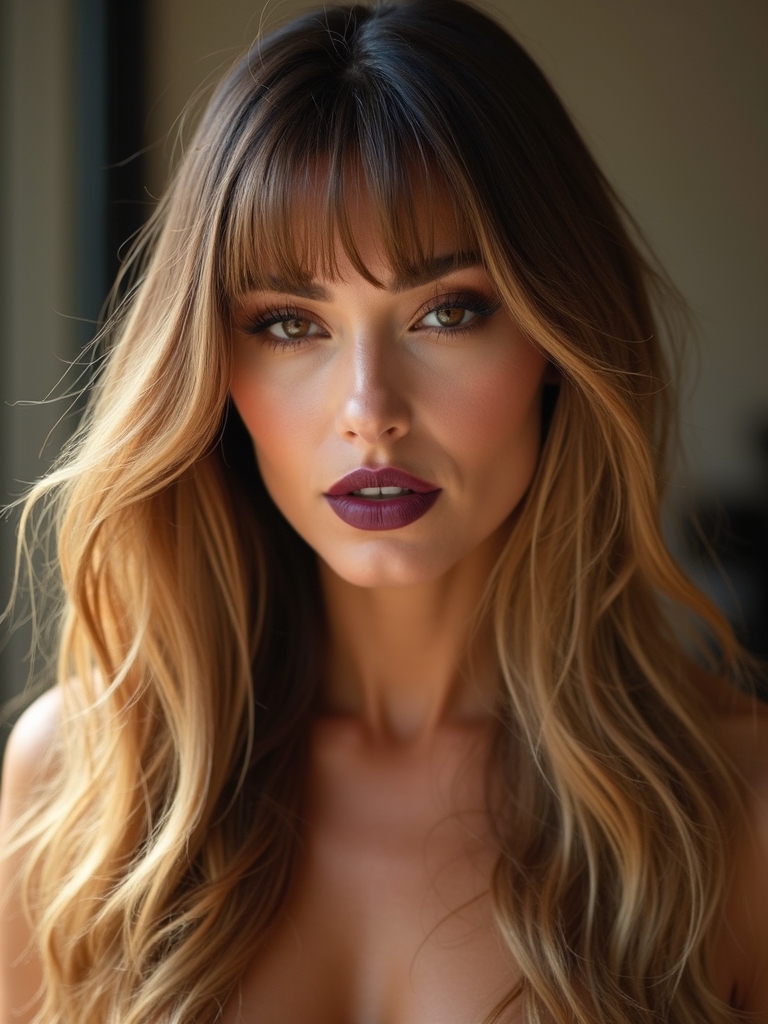
Usually I start by showing you a few quick, no-fuss moves you can do at home to keep those long layers and curtain bangs looking like they were styled by a pro—without the time or heat.
I’ll guide you through simple routines that add movement and polish.
- Finger-twist pieces for soft definition
- Air-dry scrunch for natural bend
- Light mist and shake for separation
Heat Styling Tips to Preserve Layered Texture

I like to keep my flat iron and blow dryer on the lower heat settings to protect those long layers and keep movement soft.
Before any heat, I spritz a lightweight heat-protectant mist so each strand stays smooth and the curtain bangs don’t go crispy.
Believe me—gentle heat plus a good mist preserves texture better than blasting and repairing later.
Lower Heat Settings
While I love a glossy, salon-fresh finish, dialing down my heat settings is the single best habit I’ve picked up to keep long layers and curtain bangs looking lively instead of fried.
I use lower temps to sculpt without stress — it’s gentler and lasts. Try these quick tricks:
- Use medium heat for daily touch-ups.
- Reserve high heat for special styles.
- Test on an inner strand first.
Protect With Mist
Frequently I spritz a lightweight heat protectant mist before I touch a hot tool, because it’s the easiest trick to shield long layers and curtain bangs from damage without weighing them down.
I mist mid-lengths and ends, comb through, then let it dry briefly. It adds slip for styling, tames frizz, and keeps my texture bouncy — simple, fast, and totally worth it.
Low-Maintenance Air-Dry Methods for Busy Mornings

Usually I grab a towel and spend five minutes prepping my long layers and curtain bangs so I can air-dry them without fuss; let me show you the quick steps I actually use on busy mornings to get shape, volume, and soft fringe without heat.
- Scrunch damp hair gently to encourage natural movement.
- Twist bangs and clip them up to set direction.
- Loose braid or top-knot for body, release when dry.
Product Guide: What Helps Layers and Curtain Bangs Pop

I’m a big fan of lightweight styling products that give layers movement without weighing them down, plus a few targeted creams or mousses to define curtain bangs.
I’ll also walk you through the heat tools I reach for — a medium-barrel round brush or a flat iron for soft bends — and the must-have heat protectant to keep everything glossy and healthy.
Stick with me and I’ll show how small product choices make a big difference.
Lightweight Styling Products
A few lightweight styling products can make your long layers and curtain bangs look effortlessly salon-fresh without weighing them down. I love quick fixes that add texture, control, and movement—nothing greasy or heavy.
- Sea salt spray for airy texture and grip
- Lightweight mousse to boost volume without crunch
- Dry oil mist for shine and frizz control without flattening
Heat Tools & Protection
Reach for a good heat protectant before you even think about the blow dryer or flat iron—trust me, it’s non-negotiable if you want your long layers and curtain bangs to look polished, not fried.
I love a lightweight spray plus a smoothing serum for ends.
Use lower heat, quick passes, and a round brush for volume.
Finish with a cool blast to set shape.
Trimming and Maintenance Schedule to Keep the Shape

Usually I trim my curtain bangs every 3–4 weeks and refresh the long layers every 8–12 weeks to keep the shape sharp without losing length.
I check growth, split ends, and face-framing balance, then act.
- Quick bang snips at home between salon visits
- Professional layer refresh to maintain movement
- Spot trims for split ends or unevenness
Transitioning From Shorter Bangs or No Bangs to Curtains

Thinking about switching from short bangs or no bangs to curtain bangs? I did it, and I’ll walk you through smart steps: grow patiently, ask your stylist for long, face-framing graduation, and aim for a center part start.
I trimmed slowly, blended layers, and used a light round brush to encourage the curtain shape as length arrived. Be patient — it’s worth it.
Styling Variations for Formal and Casual Looks

When I want my long layers and curtain bangs to feel polished for a formal event, I’ll blow-dry them smooth with a round brush and add a bit of light-hold serum so the fringe parts cleanly at the center.
For casual days, I shake in texture spray and finger-style for a lived-in vibe.
- Sleek updo with face-framing bangs
- Tousled low pony, loose pieces
- Soft waves, curtain bangs swept aside
Color and Highlight Strategies That Complement Layers

For long layers and curtain bangs, I lean on color to amplify movement and frame the face—strategic highlights, lowlights, and soft balayage all help your layers read lighter or deeper depending on how they fall.
I suggest face-framing brightness, subtle root shadow for depth, and fine babylights to mimic sun-kissed texture.
Tell me your maintenance comfort and I’ll tailor the placement.
Common Mistakes to Avoid When Getting This Cut

Before we cut, I want you to know the traps I see most with long layers and curtain bangs so you can avoid a disappointing result.
I’ll keep it short: communicate, trust your stylist, and maintain the shape at home.
Quick reminders:
- Asking for too much drama at once
- Skipping regular trims and styling lessons
- Not considering your hair’s natural texture
So, if you’re craving movement without the fuss, long layers with curtain bangs are a sweet, low-maintenance win — they frame your face, add bounce, and play nicely with any texture when tailored right.
Talk to your stylist about placement and thickness, bring photos, and expect a gentle grow-out. Have fun experimenting with styling and color; this cut’s playful versatility means you’ll get polished looks with minimal effort. Go for it — you’ll love the swing.


