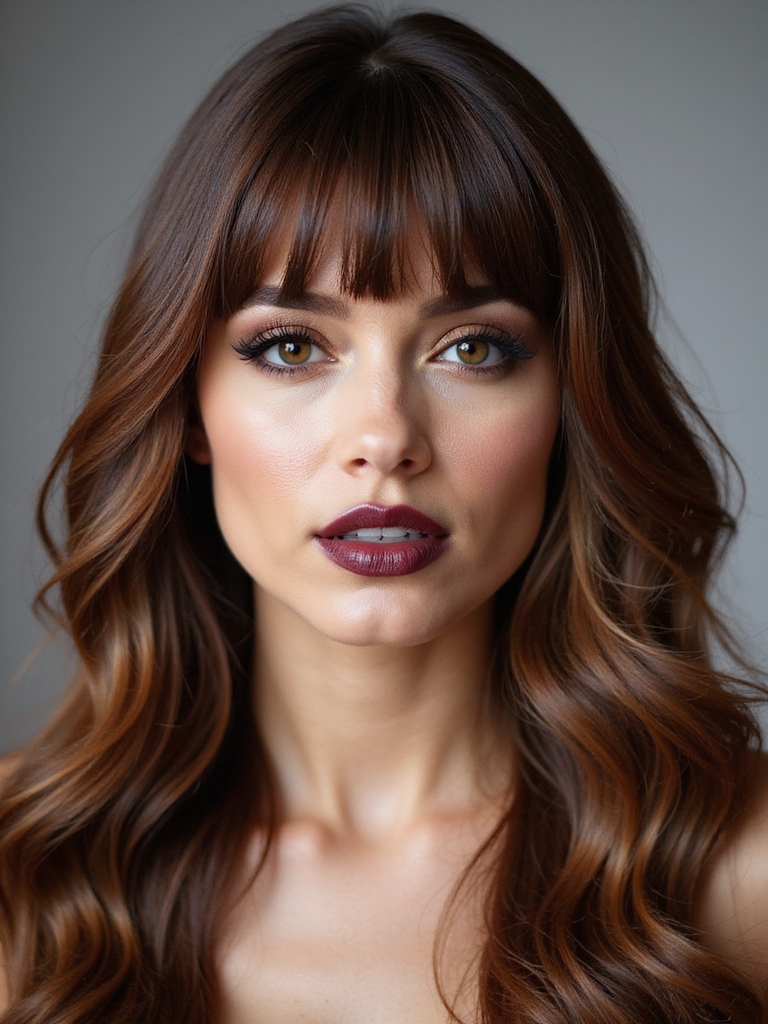

I love how long layers with curtain bangs feel effortless yet intentional — they frame your face, keep length, and add movement without looking overworked.
I’ll show you which face shapes and hair textures benefit most, how to ask your stylist for seamless blending, and easy styling tricks to keep the look soft and modern, plus the trims you’ll actually need to maintain it — if you want the low‑fuss version or something more sculpted, keep going.
Why Curtain Bangs Work With Long Layers

Because I love hair that moves, I’m a big fan of pairing curtain bangs with long layers — they create instant framing without sacrificing length.
I find bangs soften the face while layers add motion and reduce bulk, so styling feels effortless. You get that lived-in, chic look regardless of air-dried or blowout, and it’s surprisingly low-maintenance for something that reads polished.
These pieces are perfect for achieving effortless long layers that enhance texture and movement.
Face Shapes That Benefit Most From This Cut

I love how curtain bangs and long layers flatter so many looks, but some face shapes really get the biggest boost. I’ve seen them soften angles and add balance—super flattering.
Try these:
- Oval — naturally balanced, bangs enhance symmetry.
- Heart — bangs soften the forehead, layers add chin movement.
- Square — layers and curtain fringe soften strong jaws.
They’re versatile and effortlessly chic. For maintenance, regular trims help preserve the shape and prevent split ends, and embracing long layers can enhance movement and reduce bulk.
Choosing the Right Layer Length for Your Hair Type

Now let’s talk about picking layer length that actually works for your hair — I’ll walk you through what suits different densities and textures.
If your hair is thick, shorter layers can remove bulk, while finer hair usually benefits from longer, softer layers to keep weight and movement.
For texture, think about how waves, curls, or sleek strands will sit with each layer length so your cut enhances what you already have.
Long layers often pair beautifully with curtain bangs to create effortless movement and face-framing shape.
Layer Length by Density
If your hair is fine, I’ll recommend longer, softer layers that add movement without eating up volume; if it’s thick, I’ll suggest shorter, more graduated layers to remove bulk and shape the silhouette. I’ll tailor lengths to density so your cut breathes and sits right.
- Fine: long, face-framing layers
- Medium: balanced, mid-length layers
- Thick: shorter, graduated layers
Stylish shoulder-length cuts often feature layered shoulder length to create dimension and easy styling.
Layer Length by Texture
Because texture dictates how hair moves and holds shape, I match layer length to if your strands are poker-straight, wavy, or curly so the cut enhances natural pattern instead of fighting it.
For straight hair I add subtle long layers for movement; waves get face-framing, mid-length layers; curls need longer, graduated layers to avoid triangle shapes and keep bounce without bulk.
Long layers and curtain bangs work together to create effortless movement and framing, especially when tailored to medium length hair and your hair’s natural texture.
How to Ask Your Stylist: the Phrasing to Use

I tell my stylist exactly how I want the face-framing to fall—soft around the cheekbones or grazing the jaw—to flatter my shape.
I ask for curtain bangs that hit between my cheekbones and lips so I get that effortless sweep, and I show a photo to be precise.
Then I ask what blending technique they’ll use so the layers and bangs flow together without harsh lines.
Describe Desired Face-Framing
Think of face-framing as the finishing touch I ask my stylist to sculpt — I’ll say exactly where I want hair to graze my cheekbones, how soft or blunt I want the edges, and if I want layers to start high or low around my face.
I keep requests clear and visual:
- Grazing cheekbone, soft edge
- Shorter near temples
- Long, blended layers around jawline
Specify Curtain Bang Length
Now that we’ve pinned down how the layers should frame my face, it’s time to be specific about curtain bangs so my stylist knows exactly where they should hit.
I say: “Mid-cheek length at the longest point, grazing the cheekbones, with shorter pieces ending just below the brows.” I add that I want soft, face-framing tapering rather than blunt edges.
Ask About Blending Technique
When I ask about blending technique, I’ll keep it simple and specific so my stylist knows exactly how seamless I want the curtain bangs to meet the layers.
I say what I want and show photos, then ask for subtle graduation rather than harsh lines.
My go-to phrases:
- “Softly tapered into layers.”
- “Feathered, not blunt.”
- “Blend at cheekbone level, please.”
Blending Techniques Stylists Use for Seamless Movement

Because layers only look effortless when they flow into one another, I focus on blending techniques that create soft shifts and natural movement.
I use point cutting, slide cutting, and feathering to remove harsh lines, plus gentle graduation around the face for curtain bangs.
I check in as I cut, blending with texture shears and minimal weight removal so everything reads soft and intentional.
Styling Tips for Air-Dried Texture

I usually let hair do its own thing after a quick prep — I apply a lightweight salt spray or curl cream to towel-dried strands, scrunch gently, and then finger-comb curtain bangs so they fall naturally.
I favor minimal fuss and texture-friendly products.
- Welcome air-dry time.
- Refresh with mist.
- Tousle to finish.
How to Smooth and Polish for a Sleek Finish

Want a sleek finish without losing your layers’ movement? I gently blow-dry with a round brush, directing hair down the shaft to seal cuticles.
I smooth stubborn flyaways with a tiny dab of serum, focusing on ends and bangs. Then I glide a flat iron quickly—small sections, one pass—to polish without flattening the shape or weight of my layers.
Products That Enhance Volume Without Weighing Hair Down

When I’m trying to boost body without smothering my layers, I reach for lightweight mousses, root-lifting sprays, and dry shampoos that add grit and lift rather than drag.
I keep routines simple and breezy, picking products that evaporate or rinse out cleanly.
- Foam mousse
- Root spray
- Volumizing dry shampoo
Tools and Brushes That Make Styling Easier

Grab a lightweight round brush and a vented blow-dryer and you’ll see how much easier styling long layers and curtain bangs can be.
I reach for a paddle for smoothness, a small round for bend at the ends, and a wide-tooth comb for detangling.
A ceramic curling iron and a microfiber towel finish the look—quick, polished, and effortlessly chic every morning.
Transitioning From Blunt Bangs to Curtain Bangs

Switching from blunt bangs to curtain bangs is easier than it looks — I’ve done it, and you don’t need to freak out about losing your shape overnight.
I eased the change with simple steps that kept things chic and forgiving:
- Grow length at the center.
- Add soft, angled layers.
- Feather the ends for movement.
You’ll get a softer, face-framing vibe fast.
Maintaining Your Shape Between Salon Visits

I’ll show you simple daily touch-ups that keep your long layers and curtain bangs looking salon-fresh without a fuss.
I’ll also share sleep-friendly tips to protect your shape overnight and easy DIY trim techniques for when you need a quick fix.
Stick with me and you’ll breeze through the weeks between appointments.
Daily Styling Touch-Ups
When my layers start to lose their shape midweek, I reach for a few quick tricks that keep everything looking fresh without a full restyle.
I tidy curtain bangs and revive texture fast:
- Dry-shampoo roots and scrunch to restore lift.
- Mini flat-iron flicks to redefine ends.
- Lightweight cream to smooth flyaways and add sheen.
These small moves rescue my look instantly.
Sleep Protection Methods
Usually I sleep with a few simple habits that make mornings way easier and keep my layers and curtain bangs looking intentional between salon visits.
I loosely braid or twist my hair, use a silk pillowcase, and pin bangs gently to shape without creases.
In the morning I spritz a little water or lightweight styling cream, shake it out, and refine pieces quickly.
DIY Trim Techniques
Let’s trim the little things so your long layers and curtain bangs keep that fresh-salon shape between appointments — I’ll show you simple, safe techniques you can do at home with just scissors, a comb, and a steady hand.
I walk you through bite-sized moves:
- Snip split ends
- Point-cut bangs
- Soften layer edges
Stay calm, steady, and chic.
Adapting the Look for Curly and Wavy Hair

Because curl pattern and wave shape change how layers fall, I tweak long layers and curtain bangs so they work with your texture rather than fight it.
I cut longer, face-framing pieces for curls to avoid triangular volume, and soften curtain bangs into a longer, layered fringe for waves.
We discuss shrinkage, dry cutting, and product-friendly shapes that celebrate bounce and movement.
Color Ideas That Complement Long Layers and Bangs

When I’m thinking about color for long layers and curtain bangs, I always picture face-framing highlights to brighten the features and draw attention to the eyes.
Soft balayage shifts keep the look effortless and grown-out, so the layers move naturally without harsh lines.
We’ll also weigh warm versus cool tones to pick a palette that flatters your skin and complements your personal style.
Face-Framing Highlights
I often recommend face-framing highlights to clients with long layers and curtain bangs because they instantly lift the face and add dimension without overpowering the cut. I suggest tones that feel natural and polished — subtle brightness around the face, blended pieces to accent movement, and placement that flatters your bone structure.
- Warm honey
- Soft caramel
- Cool ash-bronde
Soft Balayage Transitions
If face-framing highlights lift and define your features, soft balayage will make the whole look feel effortlessly sun-kissed and lived-in.
I love how gentle, painted-on tones blend through long layers and curtain bangs, adding depth without harsh lines. It softens regrowth, complements movement, and lets you skip frequent touch-ups while keeping a polished, natural vibe that flatters every texture.
Warm vs. Cool Tones
Balance matters more than rules when you’re choosing warm or cool tones for long layers and curtain bangs, and I’ll help you weigh the options.
I lean on skin tone, lifestyle, and maintenance when picking a direction. Consider:
- Warm: golden highlights for sun-kissed movement.
- Cool: ash or platinum for sleek contrast.
- Hybrid: soft balayage blending both for versatility.
Celebrity and Influencer Inspiration for Different Variations

When I look to celebrities and influencers for long-layer and curtain-bang inspo, I’m drawn to how they tweak the basics to suit face shapes, hair textures, and personal style.
I point to a few looks: soft, face-framing layers on oval faces, choppy curtain bangs for texture, sleek long layers for glossy finishes, and lived-in waves for low-maintenance glamour.
When to Consider a Trim Versus a Reshaping Appointment

Because I want your long layers and curtain bangs to always look intentional, I’ll help you decide if you need a quick trim or a full reshaping appointment.
I’ll ask about shape, growth and styling goals, then recommend:
- Trim: tidy ends, preserve length.
- Minor reshape: tweak bangs or layers.
- Full reshape: change silhouette or major restyle.
Alright — you’ve got the gist: long layers with curtain bangs are everything I reach for when I want movement without losing length. They soften my face, work with so many textures, and feel effortless with a little feathered blending at the ends.
Tell your stylist you want curtain bangs tapered into long, graduated layers, plan trims to keep the shape, and use lightweight products or air‑drying for that lived‑in polish. Try it — it’s an easy, chic upgrade.