

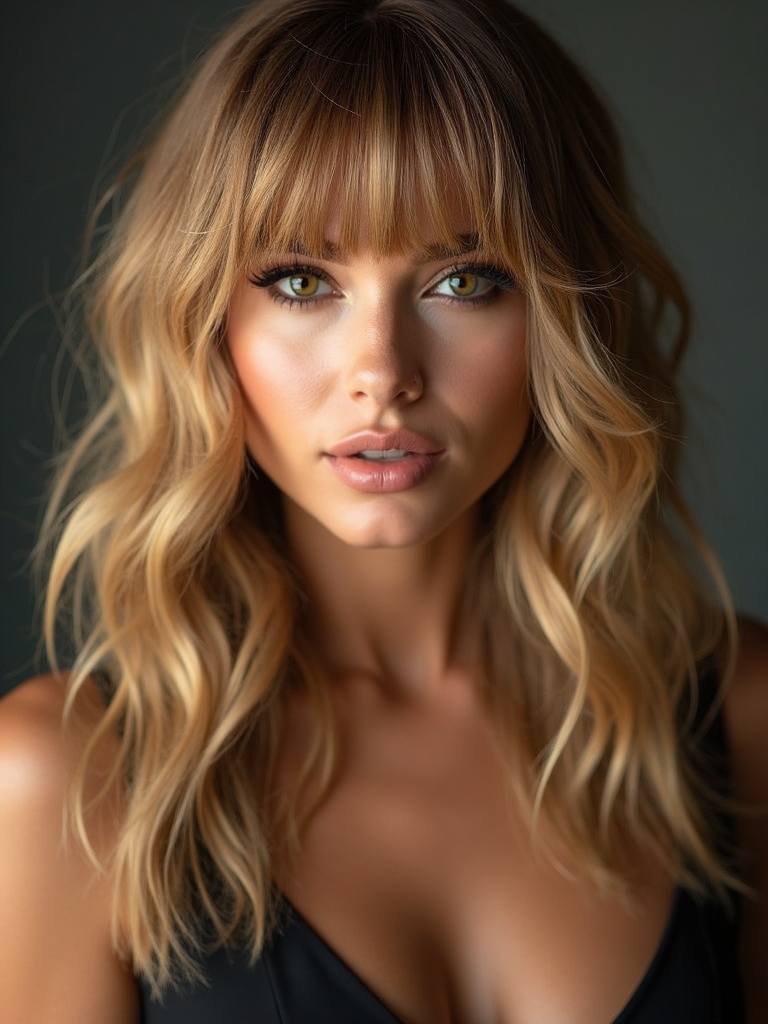
I love how layered hair with curtain bangs can make you look effortlessly put-together with almost no fuss; I’ll walk you through picking layer lengths that flatter your face, how bangs play with different textures, and simple color tricks to make those layers catch the light.
There’s a sweet spot between soft movement and easy maintenance, and once you see how tiny changes shift the whole vibe, you’ll want to try a few tweaks yourself…
Why Layered Cuts and Curtain Bangs Work Together

When I pair layered cuts with curtain bangs, I’m aiming for movement and face-framing that feel effortless — like your hair woke up looking good on purpose.
I love how layers add texture and lightness while curtain bangs soften the forehead and draw attention to the eyes. Together they create balance, natural bounce, and styling flexibility, so you get shape without stiffness or heavy maintenance.
I especially appreciate how long layers enhance the flow and prevent heaviness in long hair.
Choosing the Right Layer Length for Your Face Shape

Because your face shape changes how layers fall, I always start by asking what you want to highlight or downplay — cheekbones, jawline, a long or round silhouette — then pick layer lengths that do that work for you.
- Short layers to add lift around the crown.
- Chin-length to frame and soften jawlines.
- Long, subtle layers to elongate faces.
- Wispy ends to blend and reduce width.
Soft layers paired with curtain bangs create movement and effortless texture that flatters many face shapes.
Curtain Bangs: Styles for Different Hair Textures

Now I want to talk about how curtain bangs work with different textures, from fine and wispy to full-on curly or thick.
I’ll share quick, practical fixes for limp fine hair, easy styling tips for curls, and ways to tame and shape very thick hair.
Stick with me and you’ll see which tweaks make curtain bangs feel effortless for your texture.
Curtain bangs are a versatile look that pairs beautifully with layered hair, helping frame the face and add movement; learn how they pair with Hair Curtain Bangs and layered cuts.
Fine Hair Solutions
I usually recommend curtain bangs for fine hair because they add instant shape without weighing strands down, and I’ll walk you through the best ways to style and maintain them so they look full and effortless.
- Use lightweight mousse at roots for lift.
- Blow-dry with a round brush inward.
- Trim frequently to avoid limp ends.
- Sleep on a silk pillowcase to reduce breakage.
Curtain bangs pair especially well with layered cuts for straight hair because the layers create movement and a soft frame around the face.
Curly Hair Styling
If curtain bangs work so well for fine hair, you’ll love how they can transform curly hair too—I’ll show you how to shape and style them without losing your curls’ bounce.
I cut mine slightly longer, trimmed dry to respect curl pattern, and use a curl cream plus diffuser. I refresh bangs with water and scrunching, avoiding heavy brushing so texture stays lively and framed.
Curtain bangs can also enhance face-framing layers for a softer silhouette and better curl definition, especially when cut to complement your natural curl type and face shape.
Thick Hair Management
Tame thick hair for curtain bangs by thinking structure over weight—I’ve learned that a few strategic layers and careful thinning can keep the fringe soft without turning it into a heavy curtain that smothers your face.
- Add long layers to remove bulk.
- Use point-cutting for movement.
- Thin selectively near the roots.
- Style with lightweight balm for control and shine.
Best Haircuts to Enhance Natural Volume and Movement

Because you’ve got natural texture to work with, I usually recommend cuts that celebrate movement instead of fighting it. I suggest long layers to lighten bulk, face-framing layers to boost swing, and soft razored ends for effortless bounce.
A blunt lob with subtle internal layering keeps shape while adding lift. Tell your stylist you want airy movement and low-maintenance play.
Color Techniques That Make Layers Pop

I love using color to make layers stand out, and a few smart techniques can do wonders.
Face-framing highlights brighten your features, root-smudging adds natural depth, and balayage between layers creates seamless dimension.
I’ll walk you through how each one works and which fits your style best.
Strategic Face-Framing Highlights
When I want your layers to sing, I reach for face‑framing highlights that catch the light exactly where it matters — around your cheekbones and along the ends of those shorter pieces.
I keep it soft, natural, and flattering.
- Thin, painted slices for movement
- Warmer tones near the face
- Subtle brightness on curtain bangs
- Feathered blending for effortless glow
Root-Smudging for Depth
Starting with a soft halo at the roots, I use root‑smudging to give layered hair a lived‑in depth that makes each tier read richer and more natural.
I gently blend darker roots into lighter lengths, softening contrasts so layers float instead of clashing.
It’s low‑maintenance, forgiving at grow‑out, and perfect for curtain bangs—adds dimension without harsh lines or constant touchups.
Balayage Between Layers
If root-smudging gives your layers a soft, lived-in base, balayage between the tiers will make each one sing.
I love painting subtle sun-kissed strokes to highlight movement and depth. Try these simple approaches:
- Face-framing lightness for brightness.
- Mid-length softening to connect layers.
- Ends-focused warmth for contrast.
- Peekaboo ribbons for playful dimension.
Balayage and Highlights for a Sun-Kissed Glow

With soft, hand-painted strokes and a few well-placed foils, I love how balayage and highlights bring a sun-kissed glow to layered hair with curtain bangs—it’s like framing your face with light.
I’d choose warmer tones near the front, softer pieces through layers, and subtle contrast to enhance movement. It brightens skin, lifts your features, and keeps that effortless, lived-in vibe.
Low-Maintenance Gloss and Shine Treatments

A few glossy treatments can make layered hair with curtain bangs look fresher for weeks, and I’m a big fan of options that don’t demand constant salon visits.
- Quick salon gloss for color and shine that lasts a few weeks.
- Waterless shine sprays for instant polish between washes.
- Cool-rinse habit to seal cuticles and boost gloss.
- Weekly lightweight mask to maintain luster.
At-Home Styling Tools and Products You’ll Need

Because I want layered hair and curtain bangs to look salon-fresh every day, I keep a small arsenal of go-to tools and products at home that actually make styling fast and foolproof.
A lightweight heat protectant, smoothing serum, flexible-hold hairspray, round brush, paddle brush, and a ceramic blow dryer cover all bases.
I also stash a fine-tooth comb for precision and a couple of clips.
Heat-Free Methods to Create Soft Waves and Bounce

I love showing you simple, heat-free tricks that give layered hair and curtain bangs soft waves and real bounce.
Try overnight braids for gentle, lived-in texture or sleep in heatless curling rods when you want more defined curls without the damage.
Both methods are low-effort, travel-friendly, and perfect for keeping your layers light and touchable.
Overnight Braids Technique
With a few simple braids before bed, I wake up to soft waves and extra bounce without ever touching heat.
I sleep with loose braids, then shake and separate in the morning for natural texture. Try these quick tips:
- Braid damp, not dripping, hair.
- Use silk ties to prevent creases.
- Make two or three braids for varied waves.
- Finish with light oil.
Heatless Curling Rods
If you like waking up to waves from overnight braids, you’ll love heatless curling rods for a bit more defined, bouncy texture without touching a hot tool.
I wrap damp sections around soft foam or flexible rods, secure gently, sleep, then release.
The result is natural, touchable waves that suit layers and curtain bangs.
It’s low-effort, kind to hair, and instantly wearable.
Quick Tricks to Freshen Curtain Bangs Between Cuts

Usually I reach for a few fast tricks when my curtain bangs start looking shaggy between cuts, and they really save the style without a salon visit.
- Trim stray pieces with sharp scissors, snipping vertically for softness.
- Blow-dry with a round brush to restore shape.
- Apply a lightweight texturizing spray for movement.
- Pin back when growing out to keep them tidy and flattering.
Transitioning From Short to Long Layers Seamlessly

When you’re growing out short layers, I suggest blending length slowly so nothing looks choppy as it gains inches.
I’ll show how gentle layering techniques keep the shape while we let length come in.
Then we’ll place face-framing layers to flatter your features at every stage.
Gradual Length Blending
Because I want your layers to look effortless, I always start by mapping out the shortest and longest points before cutting — that lets me blend lengths gradually so there are no harsh steps.
- I work in small sections for control.
- I soften shifts with point cutting.
- I check movement as I go.
- I adjust for hair density and texture.
Face-Framing Layer Placement
Start by visualizing the line where short, face-framing layers meet the longer lengths so you can guide each cut with purpose.
I blend by angling scissors slightly and cutting in small sections, checking symmetry often.
I keep shorter pieces soft around the cheekbones, letting them feather into longer strands.
This creates a natural progression that flatters your face without harsh steps.
Styling for Busy Mornings: 5-Minute Routines

If I’m honest, I don’t have time for elaborate styling before I run out the door, so I keep a few go-to tricks for layered hair with curtain bangs that only take five minutes.
I’ll share simple steps that freshen volume and shape fast.
- Dry bangs with a round brush.
- Tousle layers with texturizing spray.
- Quick low knot for bad hair days.
- Smooth ends with a tiny serum.
Protecting Your Glow: Care for Color-Treated Ends

When I color my ends, I treat them like the VIPs of my hair routine, giving them a little extra love so the hue and health last longer.
I use sulfate-free shampoo, cool rinses, and a weekly protein-moisture mask.
I trim split ends promptly, avoid daily heat, and spritz UV protectant before sun or pool time to keep color vibrant and ends resilient.
Nighttime Habits to Preserve Shape and Shine

Usually, I sleep in ways that protect my cut and color without making a production out of it: loose braid or low bun, a silk pillowcase, and a quick spritz of leave-in to tame frizz.
- Pineapple or loose braid to keep layers intact.
- Silk pillowcase for less friction.
- Low bun for curtain bangs shape.
- Light oil on ends to boost shine.
When to Visit a Stylist: Signs Your Cut Needs Updating

Because my curtain bangs and layers frame my face, I keep an eye out for a few telltale signs that it’s time to book an appointment: split ends that refuse to smooth out, bangs that start poking in my eyes instead of parting, loss of shape where layers no longer move, or color that looks dull and grown out.
I schedule trims, reshape layers, and refresh color before things feel limp.
I hope you’re feeling inspired to try layered hair with curtain bangs — it’s one of my favorite ways to add movement, brightness, and a little flirtiness to everyday looks. Keep the layers wispy, the bangs soft, and use lightweight products and regular trims to maintain that glow.
Play with subtle color or gloss for extra dimension, and don’t be afraid to ask your stylist for tweaks so it always flatters your face.


