


I love how side curtain bangs can quietly transform your look without needing a full haircut overhaul — they sweep from a center or slightly off-center part, soften features, and add movement that flatters most hair types.
They’re easy to style and grow out gracefully, but there’s a little art to choosing the right sweep and length for your face, and a few tricks that’ll make them work every morning…
What Are Side Curtain Bangs and Why They Work

Think of side curtain bangs as a softer, face-framing cousin of full bangs — they part down the middle (or slightly off-center) and sweep to either side, blending into the rest of your hair.
I love them because they soften features, add movement, and feel low-maintenance. They work on many textures, grow out gracefully, and give instant polish without drastic commitment. They pair especially well with soft layers to enhance movement and dimension.
Choosing the Right Curtain Bangs for Your Face Shape

Because everyone’s face is different, I always start by matching curtain bangs to your bone structure and features — not just your hair type.
I look at forehead height, cheekbones, jawline and how your hair falls.
Then I suggest length, parting and sweep that flatter your proportions.
We’ll tweak thickness and angle so the bangs feel effortless and truly you.
I also consider classic Hair Curtain Bangs techniques to ensure the cut frames the face naturally.
Best Curtain Bang Styles for Round Faces

When I work with round faces, I aim for curtain bangs that add angles and lengthen the silhouette — soft layers that skim the cheekbones and part slightly off-center to create the illusion of a slimmer face.
I recommend longer, face-framing lengths, subtle tapering toward the jaw, and a bit of texture so the look feels effortless, elongating, and playful without overwhelming features.
I often incorporate an effortless layered cut to enhance movement and complement the curtain bangs.
Curtain Bang Variations for Oval and Heart Faces

If you’ve got an oval face, I love recommending soft, wispy layers that let curtain bangs breeze around your features without overpowering them.
For heart-shaped faces, I suggest a slightly fuller, face-framing cut that balances a narrower chin and highlights your cheekbones.
Want me to show quick examples for each so you can picture the difference?
A popular choice to achieve this look is the Long Bob With Curtain Bangs, which pairs well with those curtain-style layers.
Soft Layers for Oval
Playing with soft layers around an oval face is one of my favorite ways to keep curtain bangs feeling fresh and effortless. I love how gentle layers add movement without stealing the shape, so you get airy texture that flatters every angle.
- Keeps bangs light and movable
- Enhances natural cheekbones
- Adds subtle volume at ends
- Easy to style day-to-night
- Works with thin or thick hair
Long layers are especially effective at creating effortless long layers that complement curtain bangs while maintaining movement.
Face-Framing for Heart
For a heart-shaped face, I love using curtain bangs to soften a pointed chin and draw attention upward toward your eyes and cheekbones.
I’ll keep the fringe longer at the sides, grazing cheekbones, and add subtle layers to avoid heaviness.
This frames the face, balances width at the forehead, and feels flirty yet effortless—perfect if you want gentle definition without harsh lines.
How to Adapt Curtain Bangs for Square Jawlines

If you’ve got a square jawline, I love how curtain bangs can soften those angles and add a touch of softness to your face.
I usually recommend longer, wispy lengths and strategic layering that skim the cheekbones rather than cutting bluntly at the jaw.
Let’s talk about which lengths and layer placements will flatter your bone structure best.
Soften Angular Jawline
I usually tell people with square jawlines that curtain bangs are a secret weapon—I’ve seen them soften a strong jaw by adding vertical lines and movement around the face. I recommend gentle tapering and face-framing pieces to lighten angles and draw the eye inward.
- Keep bangs slightly longer at the sides
- Soften edges with subtle texturizing
- Add wispy layers near cheeks
- Angle curtain sweep inward
- Use soft styling toward face
Length and Layering Choices
You’ve seen how curtain bangs can soften a square jaw, so now let’s talk about how length and layers make that magic work even better.
I favor longer, face-framing lengths that hit below the cheekbones to elongate the jaw. Soft, graduated layers around the face reduce boxiness without adding bulk.
Keep ends textured and avoid blunt cuts for a gentler, more flattering finish.
Matching Curtain Bangs to Different Hair Textures

When I look at curtain bangs, I think about the way texture changes everything—fine hair needs softness and wispy layering to avoid looking heavy, while thick hair can carry bolder, chunkier curtains that frame the face with drama.
I’ll help you pick tweaks that flatter your natural pattern.
- Fine: feathered, airy cuts
- Thick: chunkier, sculpted pieces
- Wavy: blended, face-framing layers
- Curly: longer, stretched curtains
- Frizz-prone: controlled, moisture-friendly shaping
Styling Curtain Bangs for Straight Hair
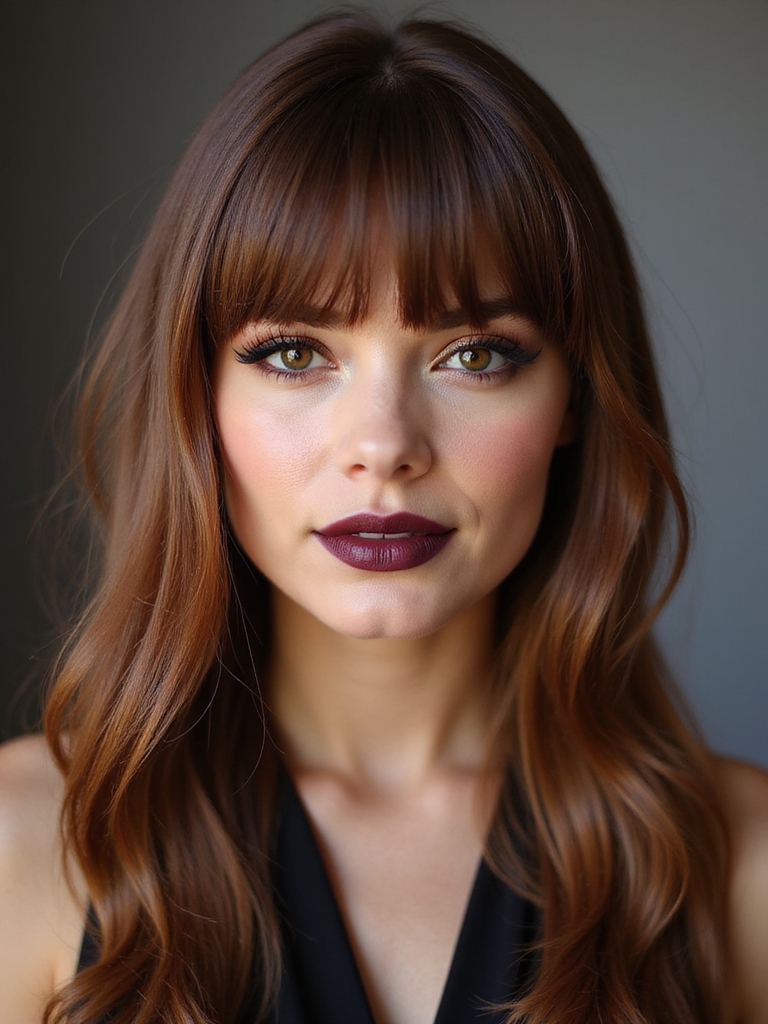
On straight hair, curtain bangs can look effortlessly sleek with just a few smart moves, so I’ll walk you through simple styling tricks that make them sit perfectly every day.
I blow-dry with a round brush, directing bangs outward for that soft crescent. I finish with a light serum to tame flyaways and a quick cool blast to set the shape.
Styling Curtain Bangs for Wavy and Curly Hair

If your hair’s wavy or curly, I always recommend cutting curtain bangs with your natural curl pattern in mind so they sit right when dry.
I’ll show you how to diffuse for volume, skip the rough towel rub, and use styling products that actually define without crunch.
Stick with me and we’ll make those bangs bounce the way you want.
Cut for Curl Pattern
Welcoming your natural curl pattern is the smartest first step I’ll recommend when cutting curtain bangs for wavy or curly hair — it tells you how much spring and volume to expect so you don’t end up with too-short, poofy fringes.
I measure curl shrinkage, cut slightly longer, and trust the bounce.
- Test with dry curl clumps
- Cut in small sections
- Angle for face shape
- Preserve length at roots
- Trim gradually, not drastic
Diffuse, Don’t Towel
Diffusing your curtain bangs instead of toweling them is the trick that keeps your waves defined and your shape intact — I always reach for the diffuser because rubbing or rough-towel drying stirs up frizz and flattens the pattern you worked to cut.
I cup sections gently, lift at the roots, and rotate the dryer for soft volume; it’s quick, playful, and preserves that perfect curtain sway.
Define With Product
Now that your bangs are dry and frizz-free, I reach for product to lock in shape and boost definition — think of it as the finishing handshake that keeps your curtain sway intact.
I use small amounts, layering light-to-medium hold pieces so curls stay bouncy and soft.
- Sea salt spray for texture
- Lightweight cream for moisture
- Gel for hold
- Oil for shine
- Finishing mist for longevity
Cutting Side Curtain Bangs at Home: A Step-by-Step Guide

Let’s get your scissors ready — I’ll walk you through cutting side curtain bangs at home so you’ll feel confident and in control every step of the way.
I’ll guide finger-sectioning, point-cutting soft layers, angling toward cheekbones, and trimming a little at a time.
Keep hair dry, use sharp shears, check symmetry, and tweak gradually until the sweep feels natural and flattering.
What to Ask Your Stylist Before Getting Curtain Bangs

Before we book the snip, I always ask if curtain bangs will flatter my face shape and what adjustments you’d recommend.
I also check how much daily styling and upkeep they’ll need so I’m not surprised by a morning routine overhaul.
Tell me what tools and products you’d use so I can be sure I’ll actually keep them looking good.
Face Shape Fit
Confidence matters when you’re trying out a new fringe, so I always ask about how curtain bangs will interact with my face shape before we even touch the scissors. I chat with my stylist about balance, angles, and personal style to make sure the cut flatters my features.
- Will this soften or accentuate my jaw?
- Ideal length for my forehead?
- How will layers frame my cheeks?
- Any adjustments for my hair texture?
- Face-shape photos to reference?
Styling and Upkeep
I usually ask about daily styling and how much upkeep curtain bangs will need, because knowing the routine helps me decide if I’ll actually keep them.
I ask about recommended products, heat tools, trimming frequency, and how they behave in humidity.
I also quiz my stylist on easy morning tricks and if they suit my lifestyle—practical, honest, and fun advice keeps me confident.
Daily Styling Tools and Products for Curtain Bangs

Let’s plunge into the everyday toolkit I reach for to keep curtain bangs looking effortless—quick, reliable, and a little bit fun.
I grab small essentials that tame, add texture, and hold shape without stiffness, so I can switch looks fast and feel polished.
- Lightweight heat protectant spray
- Round brush (small)
- Travel blow dryer
- Texturizing cream
- Flexible-hold hairspray
Maintaining Length and Shape Between Salon Visits

If you want curtain bangs to keep that perfect swoop between cuts, you’ve got to treat maintenance like mini salon visits at home—I trim, tame, and tweak so they never go rogue.
I snip a tiny point at the ends, blow-dry with a round brush for shape, and refresh with a light styling cream.
Quick checks every two weeks keep things crisp.
Transitioning Out of Curtain Bangs Without a Drastic Cut
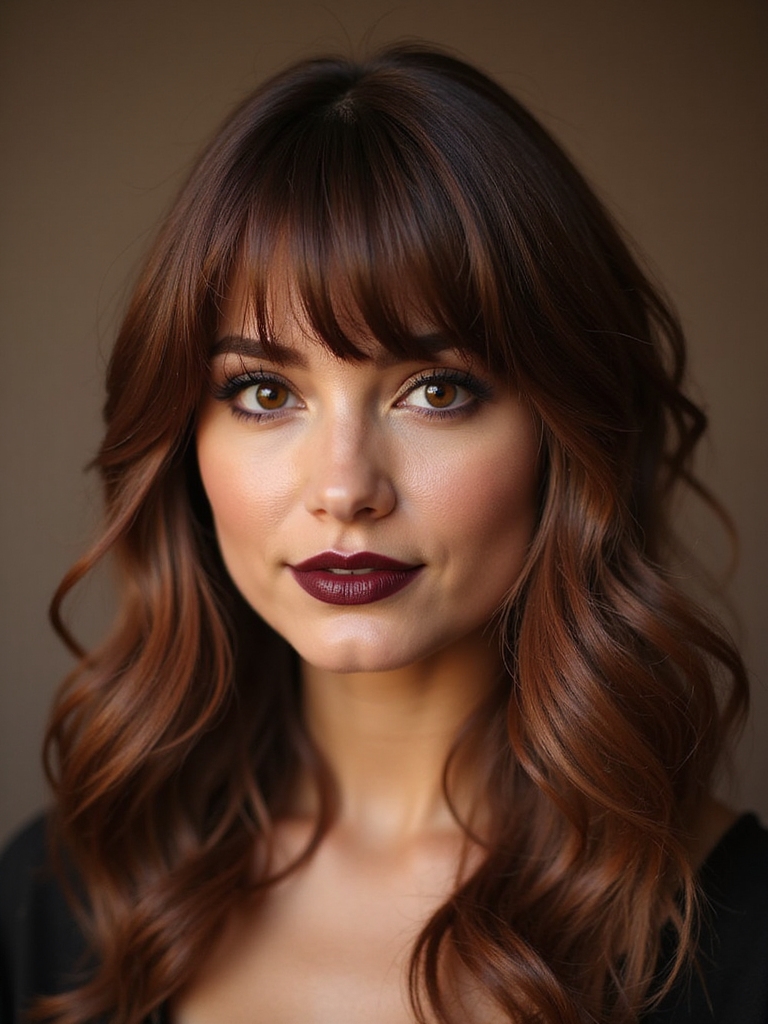
Keeping those little at-home trims in check makes it easier when you’re ready to let curtain bangs grow out without a dramatic chop.
I’ll guide you through gentle blending, patience, and styling tricks so it feels intentional, not messy.
- Sweep and pin to train growth
- Add layers for soft integration
- Use a round brush when blow-drying
- Try side parts to camouflage length
- Visit your stylist for subtle texturizing
Celebrity Inspiration and Real-Life Before-and-Afters

Celeb photos always spark my imagination, and I love how side curtain bangs look on everyone from red-carpet regulars to indie musicians — they give me quick ideas for shaping, length, and texture that I can try at home.
I adore sharing before-and-afters: cropped selfies, subtle tweaks, and bold transforms that prove small cuts and styling swaps truly refresh your face without drama.
Common Mistakes to Avoid With Curtain Bangs

While I love how forgiving curtain bangs can be, I’ve seen a few repeat mistakes that turn fresh fringe into a fussy mess—so let’s nip them in the bud.
I’ll keep it simple: tiny tweaks prevent big regrets.
Here are common slip-ups I warn friends about:
- Cutting too much at once
- Ignoring your hair texture
- Skipping regular trims
- Over-styling with heat
- Wrong part placement
I hope this guide makes curtain bangs feel doable and fun — not scary. I’m convinced that a soft, side-swept curtain can freshen your look, flatter your features, and still be totally low-maintenance.
Try a subtle version first, tweak length to suit your face, and let the layers do the work as they grow out. Play with texture, watch a few celeb photos for inspo, and enjoy the little change that makes a big difference.


