

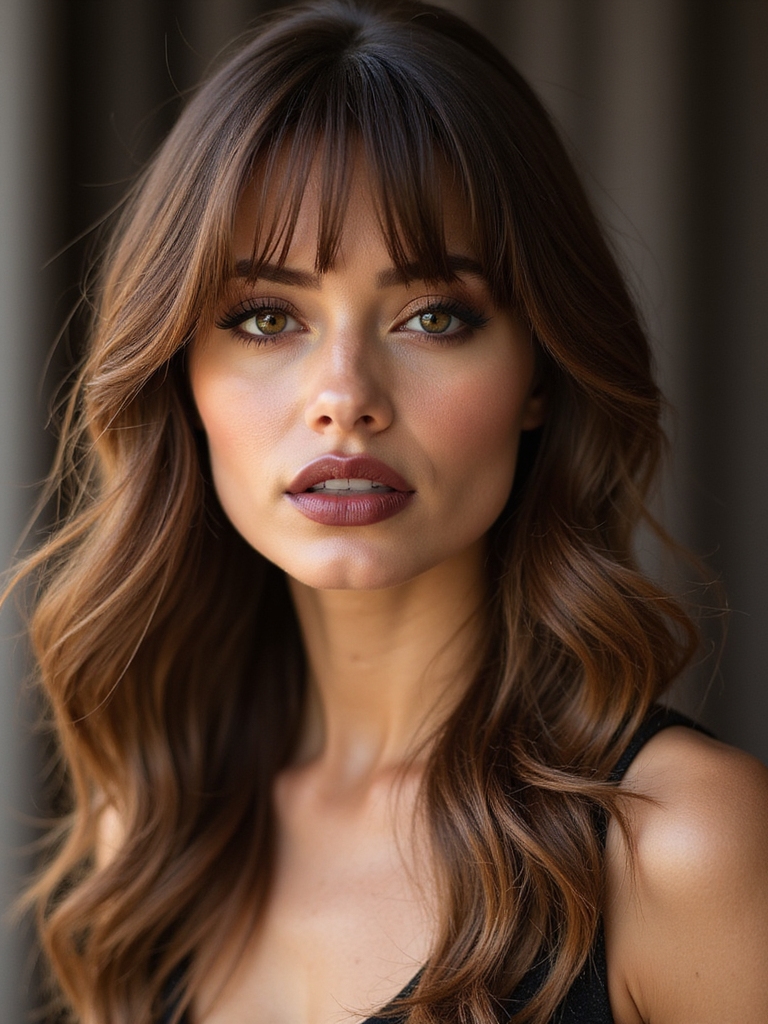
I love how elegant long layers with curtain bangs move—they make hair feel alive, soft, and endlessly flattering. I’ll walk you through why the shape works, how to tailor it to your face and texture, and the cutting tricks pros use for seamless flow.
Stick around and I’ll show you the simple tweaks that turn everyday hair into something that catches light and keeps turning heads…
Why Curtain Bangs and Long Layers Complement Each Other

When I talk about curtain bangs paired with long layers, I always get a little excited — they just seem to finish each other off.
I love how bangs frame my face while layers add movement, so each toss looks effortless. They balance volume, soften angles, and keep hair lively without fuss.
Together they feel modern, romantic, and wonderfully easy to style. Long layered hair creates natural movement and dimension that helps curtain bangs blend seamlessly.
Choosing the Right Face Shape for This Cut
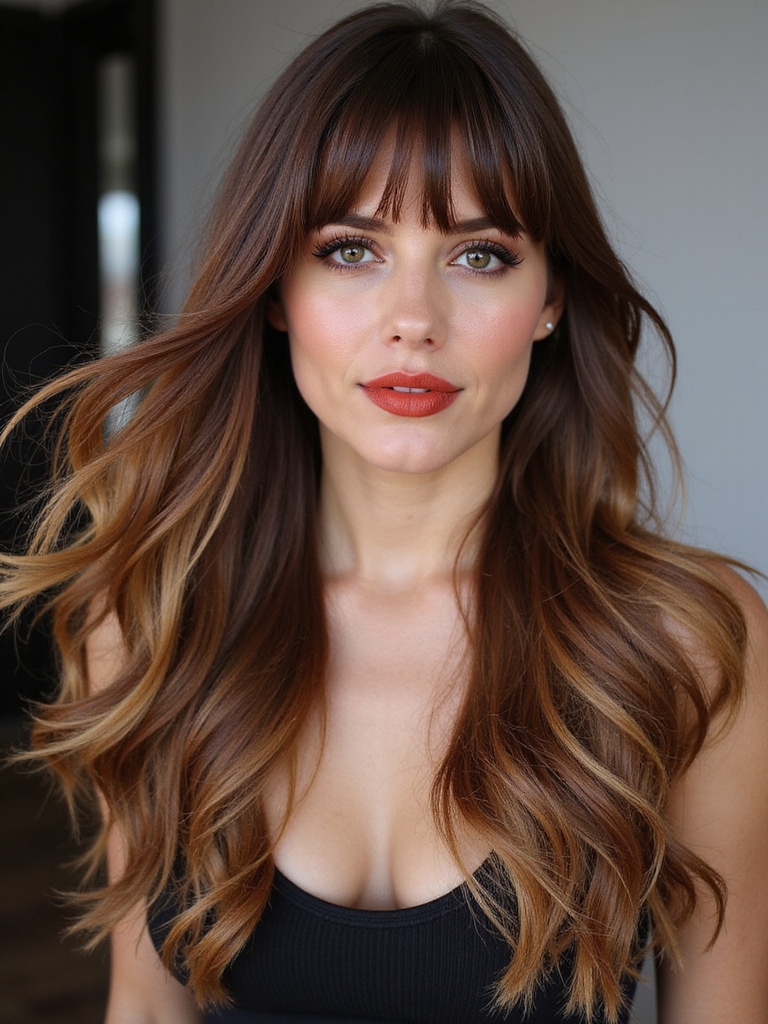
Because everyone’s face is a little different, I like to think of curtain bangs with long layers as a friendly framework we can tweak to flatter your unique shape.
For round faces, I soften width with longer layers; for square jaws, I add wispy fringe to ease angles. Oval faces get almost anything, and heart shapes benefit from balance around the chin.
Believe me, we’ll customize. A key consideration is how long layers move with the bangs to create effortless motion.
Hair Textures That Shine With Long Layers
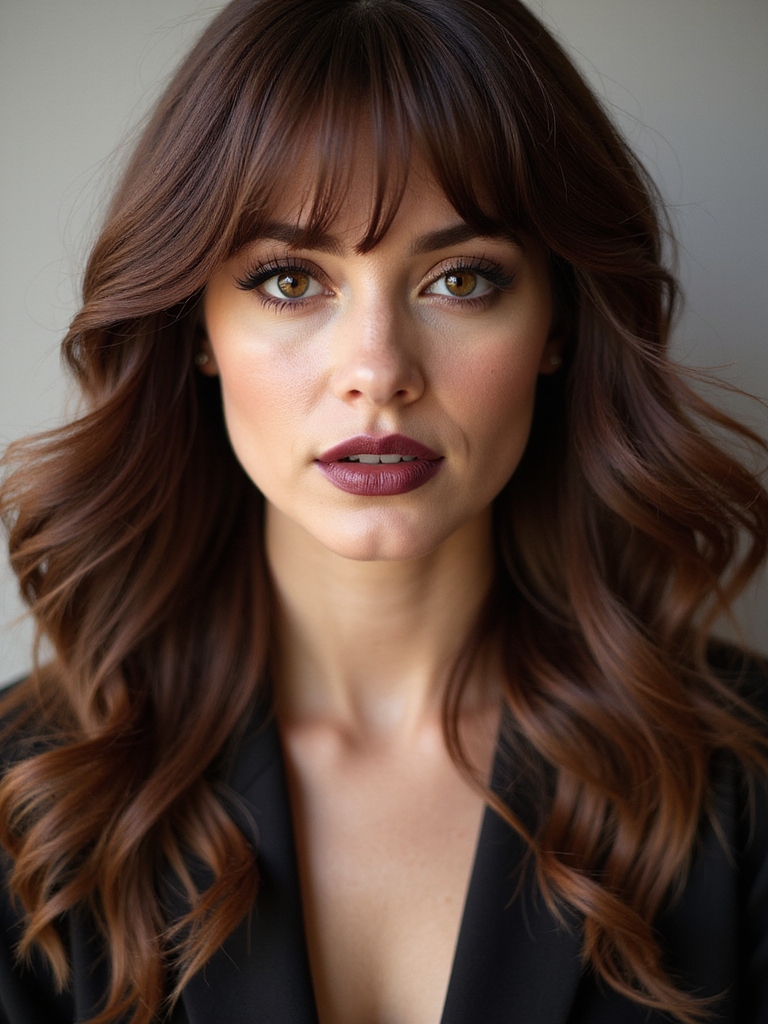
I usually tell clients that long layers play nicely with almost every texture — you just adjust the cut to the hair’s natural behavior.
Fine hair gains movement and volume without losing length, wavy hair shows off effortless bounce, and thick hair gets weightless shape that still reads full.
Curly textures love layered framing when cut with respect for curl pattern.
Layering also works beautifully when paired with curtain bangs to soften the face and enhance movement.
Cutting Techniques for Seamless Movement

I’ll walk you through simple cutting techniques that give long layers and curtain bangs effortless movement, starting with smart sectioning and tension control to set the foundation.
Then I’ll show how slide cutting softens weight lines and how subtle blending at the faceframe keeps everything airy and natural.
Stick with me and you’ll see how small adjustments make a big, wearable difference.
Medium Layered Hair With Curtain Bangs provide a versatile foundation for styling and movement, and learning the right layering approach can enhance that effortless medium layers with minimal effort.
Sectioning and Tension Control
When cutting long layers with curtain bangs, I start by mapping the hair into clean, logical sections so every snip contributes to smooth, natural movement.
I control tension with relaxed fingers, altering hold for face-framing versus body layers. Consistent, gentle tension prevents choppy lines and keeps bounce.
I pause, reassess section angles, and adjust tension to polish seamless flow with playful precision. Effortless long layers with curtain bangs enhance natural movement and frame the face with soft, cascading shape.
Layering With Slide Cutting
Slide cutting lets me feather layers so they blend and move without obvious blunt edges. I lightly glide the shears, removing weight and creating soft shifts that dance with motion.
I watch the hair fall, adjusting angulation for natural bounce. It’s a bit like sculpting air—gentle, precise, playful—so your long layers and curtain bangs flow together, never fighting each other.
Blending at Faceframe
At the faceframe, I blend with tiny, deliberate snips that coax the layers to meet the bangs without a line showing; I watch how each strand falls across the cheek and soften or carve until movement feels effortless.
I test with fingers, swing pieces, and tweak angles so curtain bangs curtain-frame the face, creating airy shifts that dance with every head turn.
Length and Layer Placement Guidelines
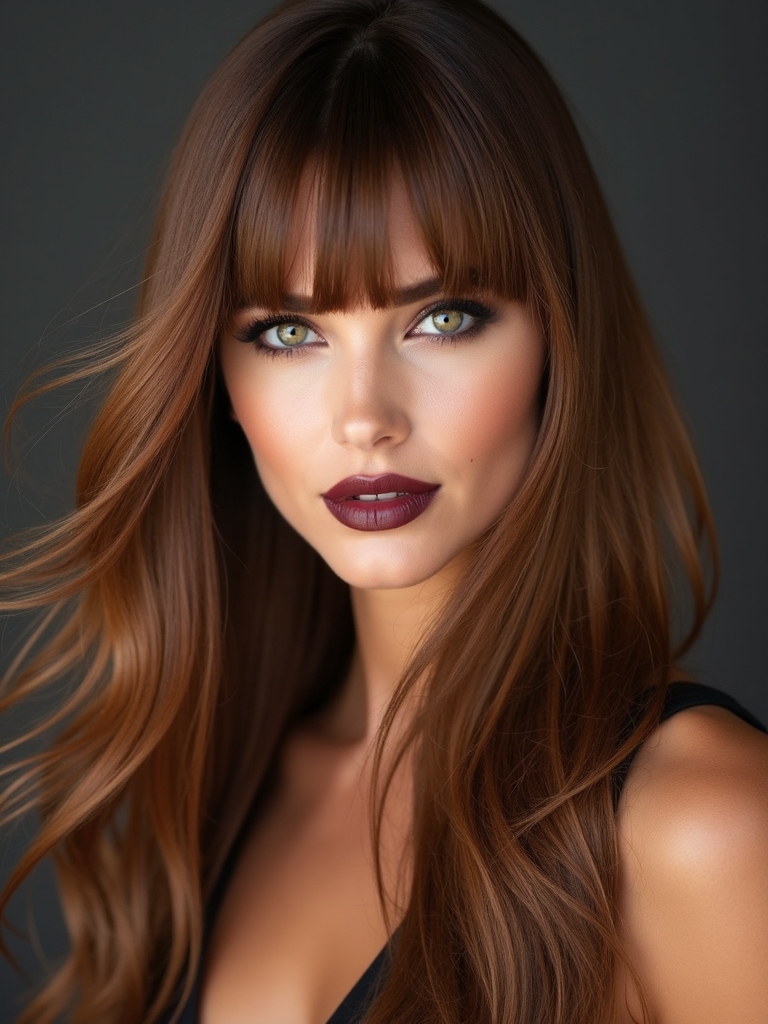
If you want long layers with curtain bangs to feel effortlessly balanced, I’ll recommend where to place each tier so your face shape and movement sing together.
I suggest shorter layers near the chin for round faces, long face-framing pieces for oval shapes, and staggered mid-length tiers to add volume without weight.
Keep the longest layer grazing the collarbone for universal swing.
Styling Tools to Create Natural Swing
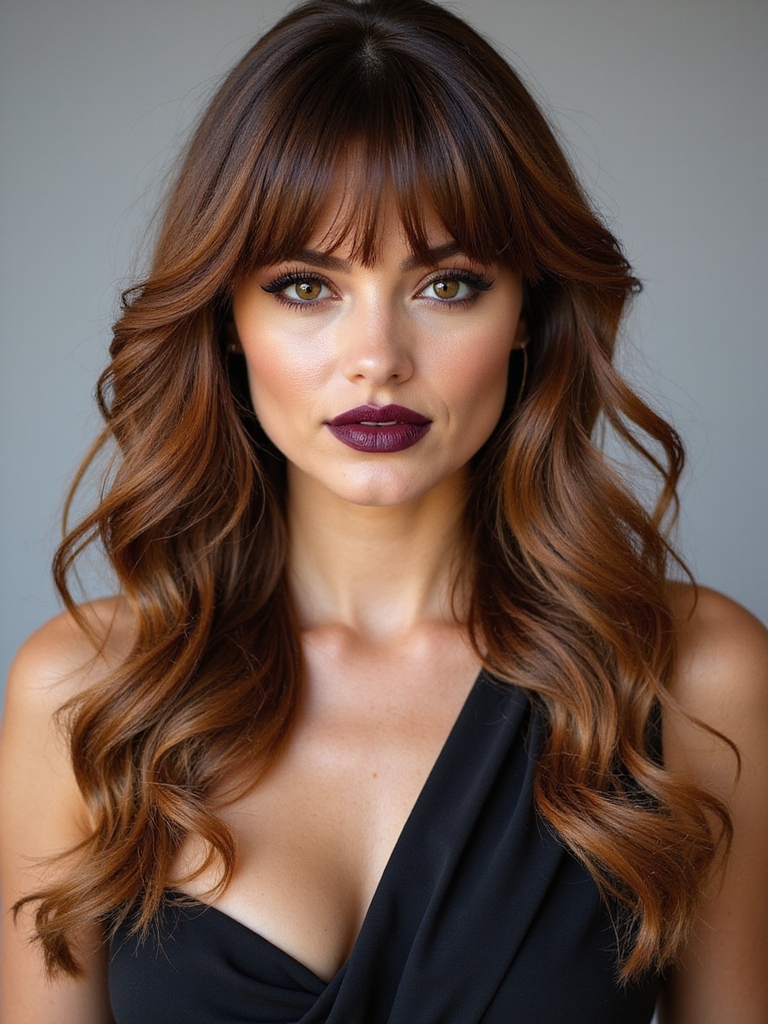
I like to start with a right-sized round brush to coax those long layers and curtain bangs into a soft, natural swing.
I always mist on a heat-protectant spray before touching hot tools so hair stays shiny and healthy.
A quick cool-shot finishing blast locks the shape without losing movement.
Right-Sized Round Brush
Grab a round brush that actually fits your hair and you’ll see how easily curtain bangs get that soft, natural swing.
I choose a barrel size that matches my bang length — smaller for crisp flicks, larger for gentle waves.
I love how a well-sized brush controls tension and bounce without overworking strands.
Try one and you’ll notice the effortless, lived-in movement.
Heat-Protectant Spray
Spritzing on a good heat-protectant spray is my little secret for keeping curtain bangs soft and swingy while I shape them with hot tools.
I mist lightly, comb through, then quickly style—protectant shields hair from damage and helps the bend hold without stiffness. It leaves a touchable finish, no crunch, and lets my bangs move naturally as I go about my day.
Cool-Shot Finishing Blast
Once you’ve shaped the bangs with heat, I’ll lock that bend in place using the cool-shot blast on my dryer—it’s the tiny secret that keeps the swing lasting all day.
I aim the cool air along the curve, holding tension briefly so the hair sets without frizz.
It feels like applause for your styling: crisp, natural movement that survives humidity and busy days.
Step-by-Step Blowout for Curtain Bangs

I usually start my curtain-bangs blowout by working with freshly washed, towel-dried hair so the shape comes together easily.
I apply a lightweight mousse, clip roots for lift, then section bangs separately.
I use a round brush and a medium heat blow dryer, rolling bangs back and outward.
Finish with a cool blast, finger-comb, and a light oil to tame flyaways.
Everyday Low-Effort Styling Routines
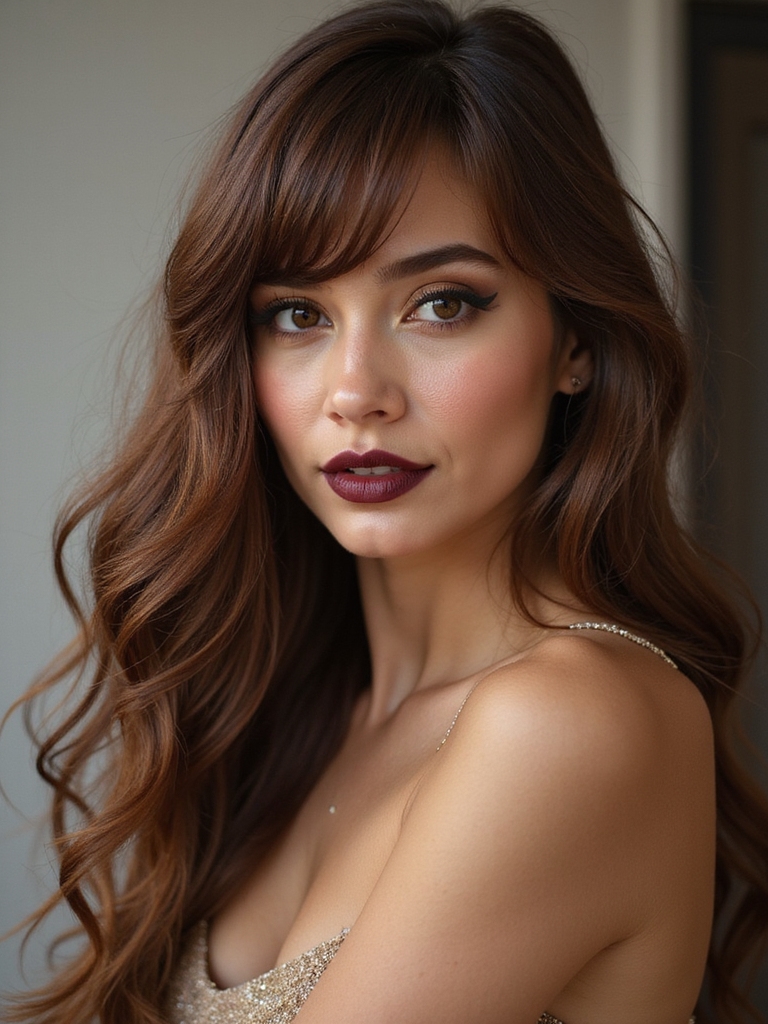
Usually I reach for the quickest moves I know when mornings are rushed, so I’ll show you a few fuss-free routines that keep curtain bangs and long layers looking polished without much time or tools.
I’ll flip damp hair, scrunch ends for texture, blast bangs with a round brush briefly, and finish by tousling with fingers—simple steps that feel fun, fast, and lived-in.
Product Picks for Hold, Shine, and Flexibility
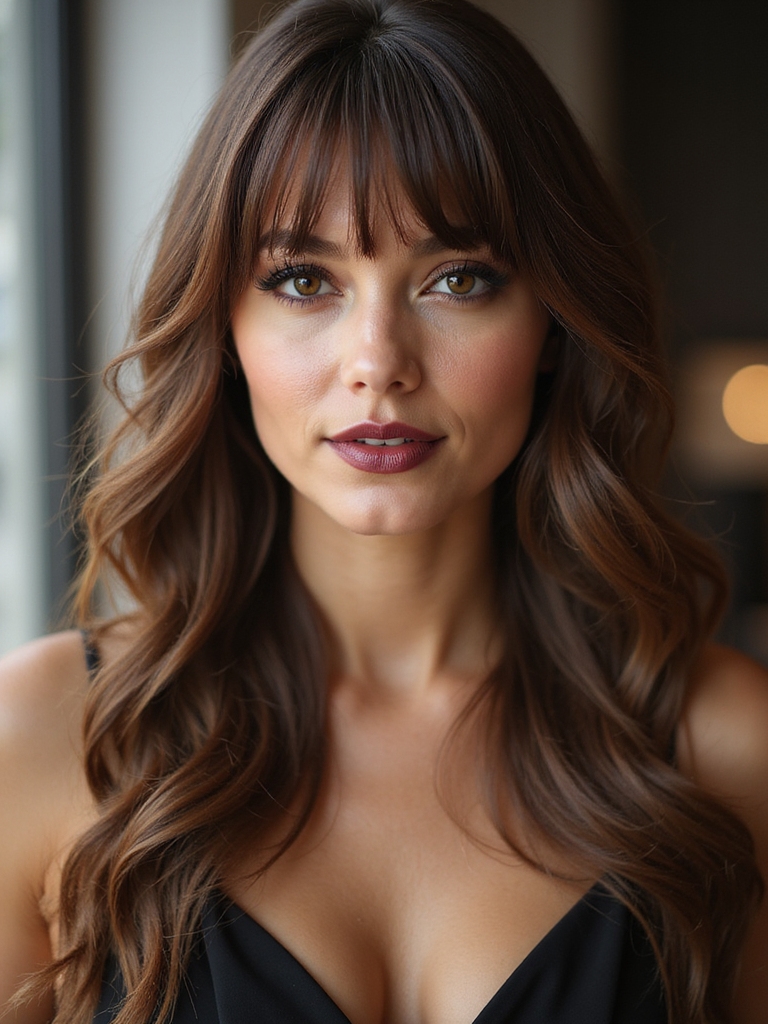
Because curtain bangs and long layers need different kinds of help, I reach for a small toolkit that balances hold, shine, and flexibility so your style moves without going limp or crunchy.
I love mixing textures—nothing stiff, everything touchable. My go-tos:
- Lightweight hairspray for soft hold
- Finishing oil for glossy ends
- Creamy styling paste for bendable definition
Pro Tips for Enhancing Natural Wave or Curl
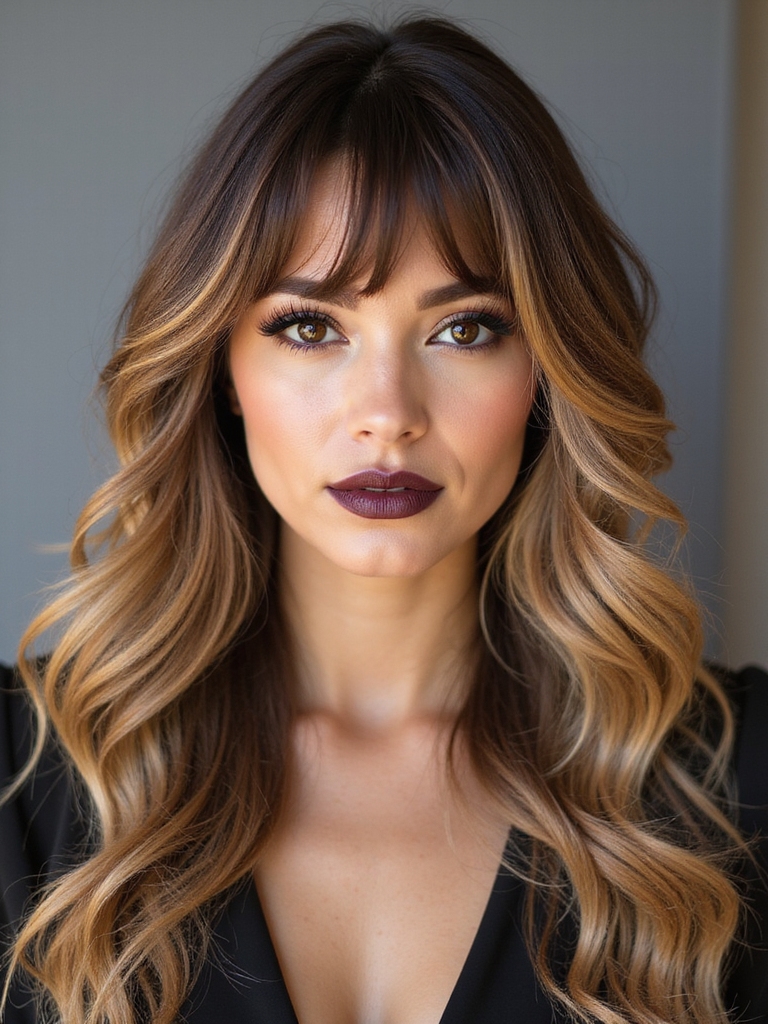
Enhancing your natural wave or curl starts with working with what you’ve already got, not trying to force it into something else.
I suggest scrunching with a lightweight curl cream, diffusing on low heat, and revitalizing second-day hair with a spritz of salt-and-water or a touch of leave-in.
Welcome imperfections, clip roots for lift, and sleep on a silk pillow to preserve shape.
Transitioning From Shorter Bangs to Curtains
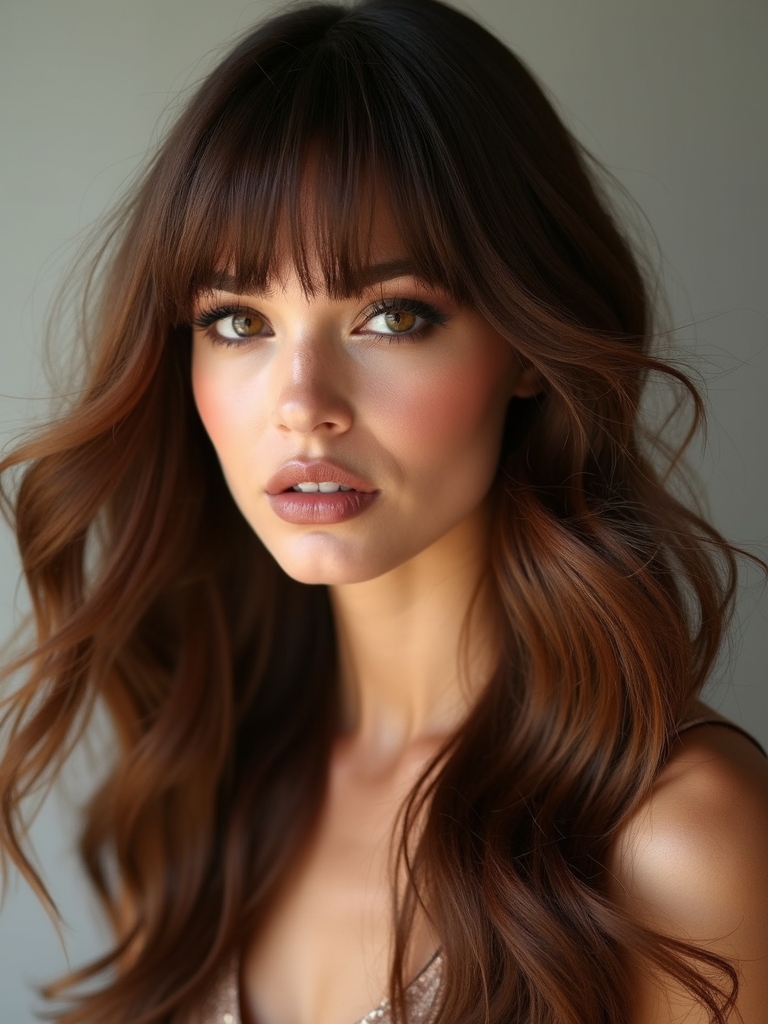
If you’re ready to grow out shorter bangs into soft curtain fringes, I’ll walk you through what to expect and how to keep things looking intentional as length returns.
I’ll share easy styling and patience hacks so the awkward phase feels chic.
- clip strategically to soften edges
- use a side part to encourage curtain drape
- style with light texture spray for movement
Maintenance and Trim Schedules to Preserve Shape
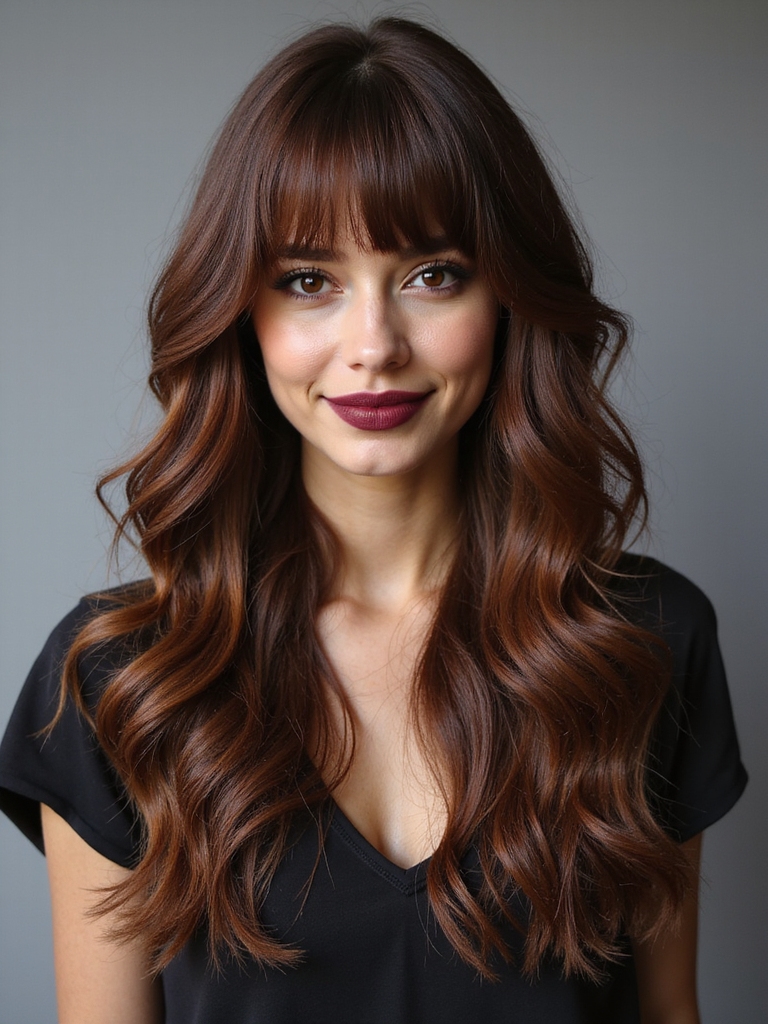
I usually recommend trimming long layers and curtain bangs every 8–12 weeks to keep the shape fresh without losing length; I’ll help you spot the small changes that mean it’s time for a tidy-up.
I check split ends, weight build-up, and how bangs part.
Between cuts, I suggest gentle trims at home, soft dusting, and monthly dusting at the salon to maintain bounce.
Color Ideas That Accentuate Layers and Movement
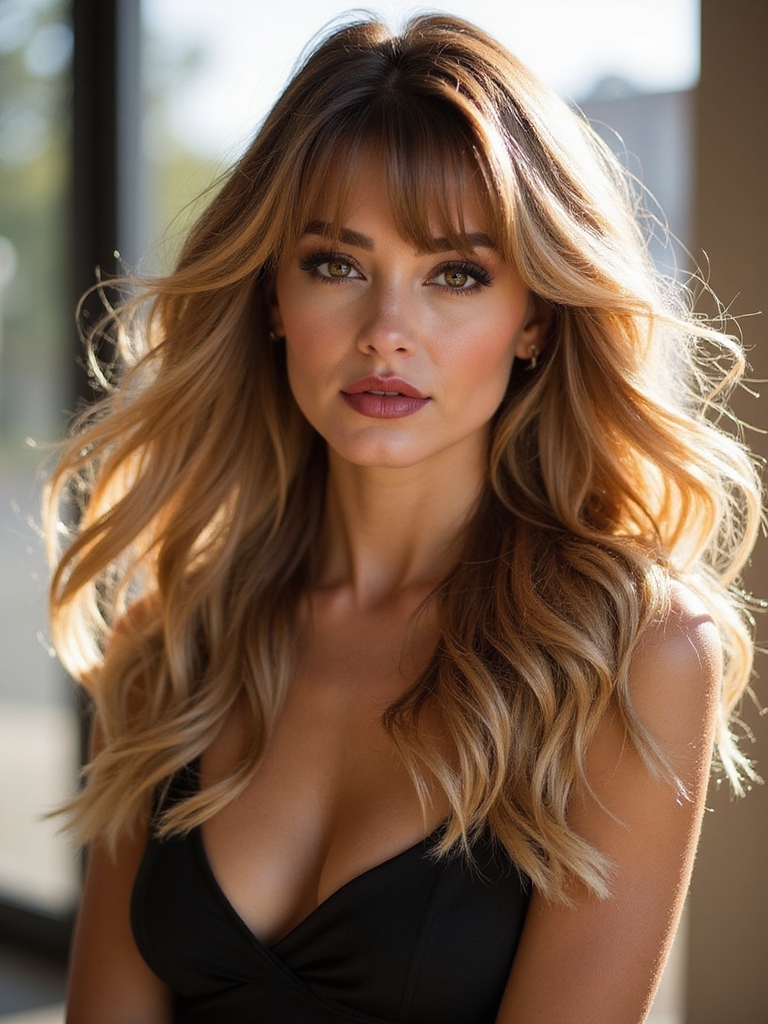
Once your layers and curtain bangs are shaped, color becomes the secret ingredient that makes movement sing — and I love playing with tones that catch light and motion.
I suggest playful, subtle contrasts that enhance depth and sway.
- Soft balayage for sun-kissed flow
- Face-framing lowlights to define layers
- Pearl or caramel gloss for luminous movement
Adapting the Look for Special Occasions

When you want your long layers and curtain bangs to feel event-ready, I lean into small, strategic tweaks that make a big impact—think polished finishes, secure styling, and a few accessories that play up movement without weighing it down.
I’ll sweep bangs to one side, add glossy serum, pin back a section with a sparkling clip, and mist for hold so motion stays effortless.
Common Problems and How to Fix Them

Polished looks are great for parties, but everyday wear brings its own set of headaches, and I’ve learned a few practical fixes that keep long layers and curtain bangs looking their best.
I tackle common issues quickly:
- Flat bangs: add texture spray and a quick blowout.
- Frizz in layers: use a smoothing serum on damp hair.
- Greasy roots: dry shampoo revival.
I hope you’re as excited about elegant long layers with curtain bangs as I am — they really do make hair feel alive. With the right face-shape tweaks, texture-friendly cutting, and color that plays with light, this look’s easy to wear every day or glam up for nights out.
Keep trims regular, tweak layers for seasons, and don’t be afraid to experiment with gloss or balayage. Believe me: a little movement goes a long way.


