

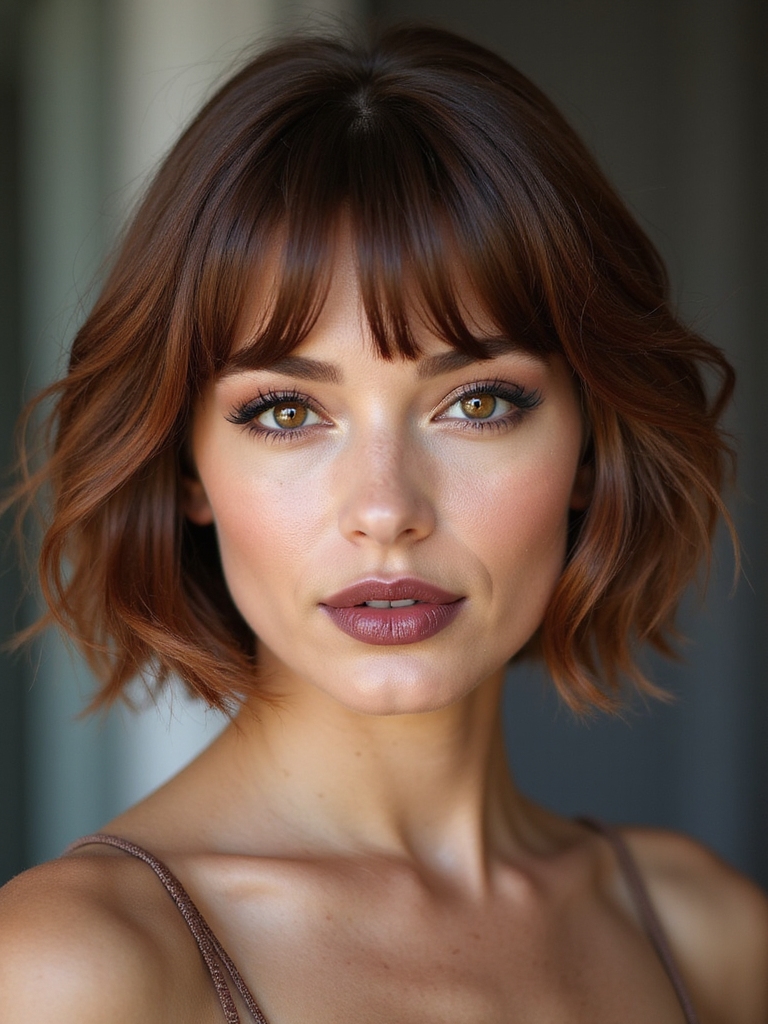
I’m seriously loving how short hair with curtain bangs can change your whole vibe without being dramatic. I’d tell you it’s flattering on most faces, easy to style, and gives a soft, lived-in look that still feels polished.
If you’re eyeing a pixie or a textured bob, there are simple tweaks to make it yours — and I’ve got the tips to help you pick the perfect version for your shape and hair type.
Why Curtain Bangs Work So Well on Short Hair

Because they frame the face without stealing the show, I love how curtain bangs instantly make short hair feel chic and effortless.
They soften angles, add movement, and give instant personality without heavy commitment.
I find they balance proportions, distract from problem areas, and let texture shine.
They’re low-fuss: air-dry friendly, easy to style, and refresh your look with minimal effort.
Short curtain bangs are a versatile option that suit many face shapes and short haircuts, blending seamlessly with cropped styles.
Choosing the Right Short Cut for Your Face Shape
Okay, let’s figure out which short cut actually flatters your face shape — I’ll walk you through the basics so you can spot if you’re oval, round, square, or heart-shaped.
We’ll chat about balancing proportions with length and layers so your features look harmonized, not overwhelmed.
And I’ll show how curtain bangs can soften or accentuate specific features so you get the exact vibe you want.
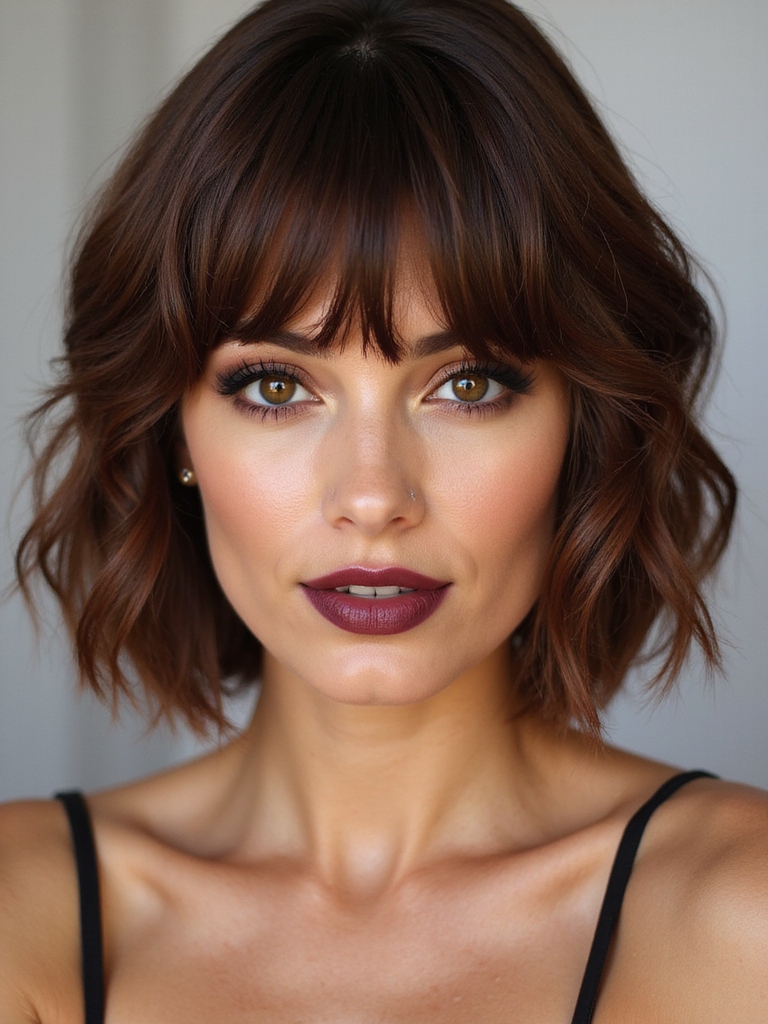
A chic short bob with curtain bangs can give a modern, flattering finish to many face shapes.
Face Shape Basics
If you’ve ever stared at a stack of hairstyle photos wondering which short cut will actually flatter your face, I’ve got you—understanding your face shape makes picking curtain bangs and a short style way less random.
I’ll help you ID oval, round, square, heart, and diamond shapes quickly, then match basic cuts and bang placements so your features get framed, not flattened.
Curtain bangs are a versatile option that can soften the face and add movement when paired with the right short cut, offering an effortless way to frame your face with Hair Curtain Bangs.
Balancing Proportions
When I’m helping someone pick a short cut with curtain bangs, I start by looking at proportions—your forehead, cheekbones, jawline and how they relate to one another—because that’s what tells me where bangs should sit and how much length to keep.
I nudge length to soften angles, add volume to balance width, or slim a round face—small tweaks, big harmony.
I often recommend adding soft layers to create movement and make curtain bangs blend seamlessly with the rest of the cut.
Bangs and Features
Harmony matters most — I look at how your features play together before I decide where curtain bangs should fall.
I’ll balance forehead height, cheekbones, and jaw to sculpt a short cut that flatters. Round faces get longer, wispy parts; angular jaws soften with curved lengths. We’ll tweak parting, thickness, and length so your bangs feel effortless and totally you.
Short curtain bangs can also complement long hair by adding movement and framing the face for a fresh silhouette with short curtain bangs.
Pixie Cuts Paired With Curtain Bangs

I’ve been playing with pixie cuts paired with curtain bangs and I’m here to share easy styling tips you can do every morning without drama.
I’ll walk you through quick products and techniques that keep the look fresh, plus how to tweak the length and part to flatter different face shapes.
If you’re curious which tweaks suit round, oval, or angular features best, I’ll point you to the simplest fixes.
Styling Tips Daily
I usually start my mornings by fluffing my pixie and sweeping those curtain bangs into place — it takes two minutes and instantly softens my face.
I spritz lightweight texturizer, tousle with fingertips, and pin any stubborn fringe while it sets.
By midday I refresh with a tiny dab of cream for shine.
Quick, playful, and totally manageable for busy days.
Face Shape Guide
When I pick a pixie with curtain bangs, I think about my face shape first — it’s the quickest way to make sure the look flatters instead of fights you.
I match cuts playfully: shorter back for round faces, long side-sweeps for square jaws, volume on top for oval, and soft wisps for heart shapes.
My quick checklist:
- Round: height
- Square: soften
- Oval: balanced
- Heart: width
Textured Bobs and Soft Face-Framing Pieces

Think of textured bobs as your go-to, low-fuss statement — I love how they balance edge and softness.
I’ll chat about adding soft face-framing pieces that skim cheeks and highlight curtain bangs without heavy layering.
They soften your profile, create subtle movement, and feel effortless for daily styling.
You’ll get a chic, lived-in look that’s playful and surprisingly easy to maintain.
Layered Short Styles to Enhance Movement

Textured bobs give you that lived-in vibe, but layering is where the hair really starts to move — and I’m here for the drama.
I love how short layers add bounce and effortless shape around curtain bangs.
Try these playful tweaks:
- Razored ends for feathered motion
- Graduated layers for lift
- Choppy pieces near face
- Soft, short crown layers for swing
Styling Tools and Products for Short Hair With Curtain Bangs

I’m excited to walk you through the best heat tools for shaping curtain bangs—think mini flat irons and lightweight wands that give control without frying.
I’ll also share a compact styling-products guide so you know when to reach for a texturizing spray, light cream, or heat protectant for your short layers.
Together we’ll keep your bangs bouncy, framed, and totally wearable every day.
Best Heat Tools
Let’s talk tools: when I style short hair with curtain bangs, the right heat gadgets make the whole look effortless instead of fiddly.
I reach for compact, gentle tools that shape without frying. My go-tos:
- Small round brush dryer combo
- 1-inch ceramic curling wand
- Slim flat iron for bends
- Travel-sized blow dryer with cool shot
They speed mornings and keep soft movement.
Styling Products Guide
I reach for a handful of trusty products that make styling short hair with curtain bangs fast and forgiving: a lightweight heat protectant, a smoothing cream for flyaways, a flexible-hold texturizing spray, and a tiny dab of pomade for bang definition.
I finish with a light mist of shine spray and a mini dry shampoo to boost lift—simple, speedy, and surprisingly fun.
Everyday Hairstyles: From Sleek to Effortless
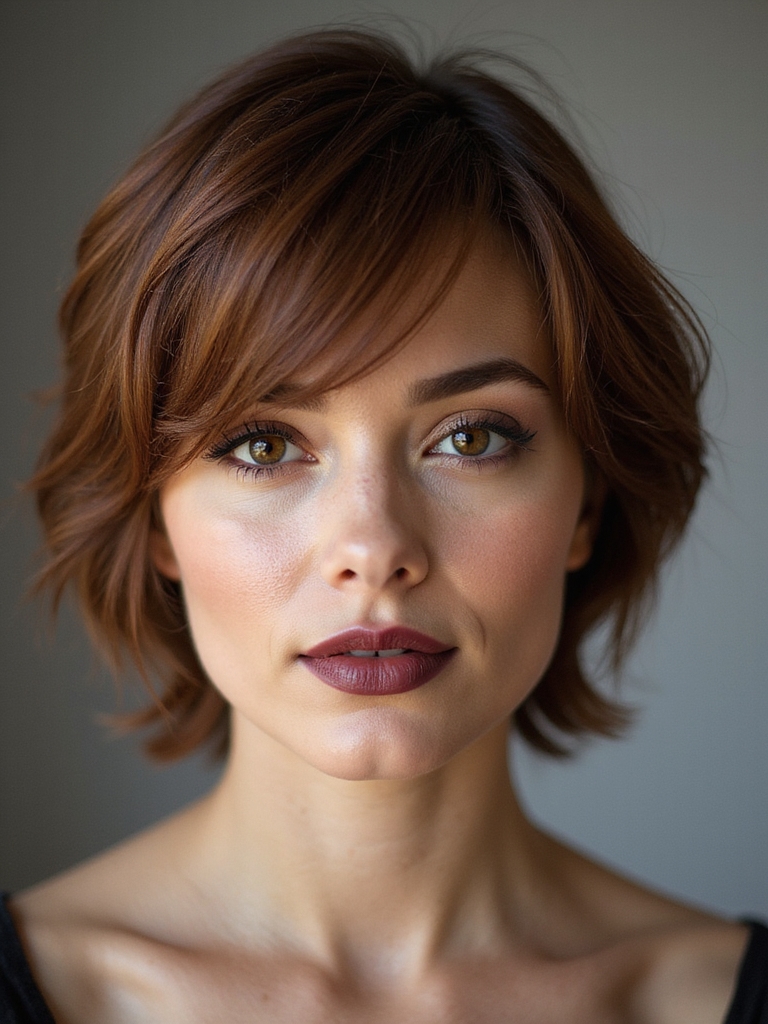
Curious how to pull off quick, polished looks without spending ages in front of the mirror? I love simple routines that make curtain bangs shine.
Try these staples:
- Blow-dry with a round brush for smoothness.
- Use a light cream to tame frizz.
- Tuck one side behind your ear for instant chic.
- Add a tiny bit of texturizing paste for movement.
Quick Updos and Half-Up Looks for Short Lengths

Short hair can be twisted and pinned up faster than you think, and I’ll show you easy updos and half-up looks that look intentionally stylish with minimal fuss.
I’ll walk you through messy mini buns, tucked twists, and clipped half-up crowns that keep curtain bangs framing your face.
They’re quick, secure, and perfect for days when you want cute without the effort.
Color Ideas to Accentuate Curtain Bangs

A bold color can make curtain bangs sing, so I’ll show you shades and techniques that highlight their face-framing power.
I love playful contrasts and subtle depth to lift features. Try these:
- Honey balayage for warmth.
- Soft ash for cool contrast.
- Bright face-framing streaks.
- Root shadow for natural dimension.
Pick one that feels fun and wearable.
How to Trim Curtain Bangs at Home Safely

Okay, before you snip, I always gather the right tools — sharp haircutting scissors, a fine-tooth comb, clips, and a spray bottle.
I section and gently dampen the hair so the bangs sit naturally and I can see where to trim.
Then I use small point-cutting snips to soften the edge and avoid a blunt, choppy finish.
Gather the Right Tools
Before you snip a single hair, I want you to grab the right tools so you don’t end up in a DIY haircut disaster. I’ll keep it simple and fun — quality gear makes trimming easy, precise, and less scary.
- Sharp hairdressing scissors
- Fine-tooth comb
- Clips for sectioning
- A handheld mirror for checking angles
Section and Dampen Hair
Since wet hair behaves predictably, I dampen and section my hair before I touch the scissors so I’m not guessing at where each snip will fall. I clip back side pieces, leave the center curtain section loose, and use a fine-tooth comb to smooth strands.
This keeps control, reveals true length, and stops accidental hefty chops — tidy, simple, and a bit fun.
Trim With Point-Cutting
Grab your sharpest pair of hair-cutting scissors and let’s get playful—but careful. I point-cut to soften blunt edges: snip vertically into ends, small cuts only.
Follow these steps:
- Comb bangs forward.
- Twist slightly for texture.
- Snip tiny vertical cuts.
- Check length, even out.
I repeat subtly until satisfied—less is more, promise.
When to Visit the Salon: Maintenance Timeline
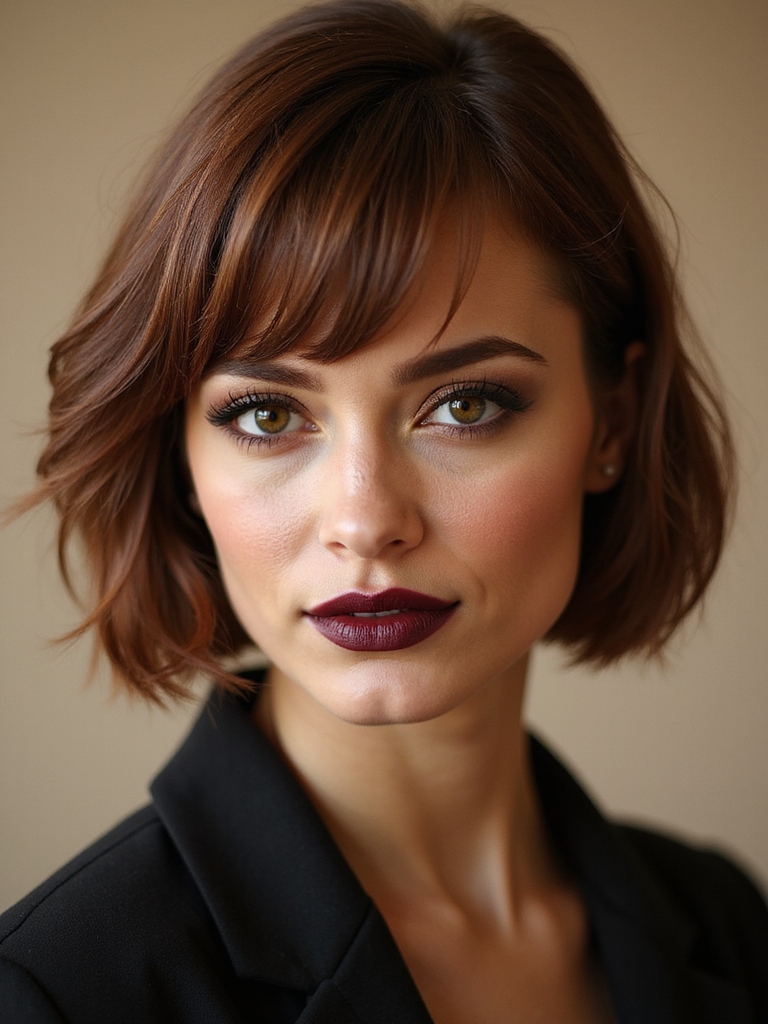
I usually tell clients to come back every 6–8 weeks for trims and bang shaping, because curtain bangs and short cuts lose their crispness fast.
I recommend lighter touch-ups at four weeks if you love precise fringe, and a fuller reshape every two months.
Think quick tidy-ups between bigger appointments — easy, predictable, and keeps your look fresh without drama.
Transitioning From Long Bangs to Curtain Bangs

If you’re coming in regularly for those 6–8 week trims, you’ve already got a rhythm that makes trying something new less scary—I’ll guide you through adjusting length and layering so your long bangs become soft, face-framing curtain bangs without that choppy halftime look.
I’ll walk you through steps:
- Trim center length.
- Add subtle layers.
- Soften ends.
- Style part for shape.
Adapting Curtain Bangs for Thick or Thin Hair

Because hair density changes everything, I’ll show you how to tweak curtain bangs so they flatter thick or fine hair without losing that breezy vibe.
If your hair’s thick, I thin the ends, add long layers, and encourage a big swoop for movement.
If it’s fine, I keep softer, shorter layers, add texture with a light product, and part strategically to boost volume.
Celebrity Inspirations and Real-Life Transformations

When I look to celebrities for curtain-bang inspo, I’m not just admiring their hair—I’m scouting practical tweaks you can borrow for your own cut and texture.
I love sharing real-life wins and tiny tweaks that make a big difference:
- Soft layering for movement
- Thinned ends for lighter drape
- Slight asymmetry for edge
- Styling tricks for second-day volume
Common Mistakes to Avoid With Short Curtain Bangs
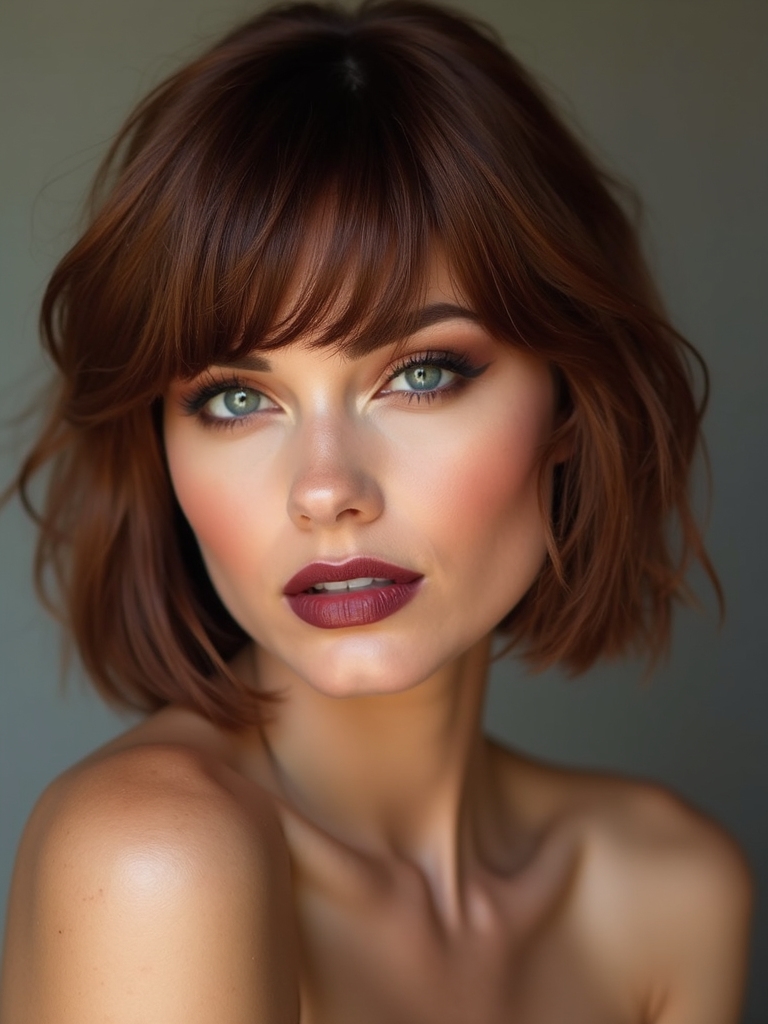
Although curtain bangs feel effortless, I’ve seen a few repeat mistakes that turn them fussy fast — and you can dodge them with small fixes.
Don’t over-thin the fringe, skip grease by washing or dry-shampooing smartly, and avoid cutting them too short at home.
Use a round brush for shape, trim tiny bits regularly, and welcome natural growth—bangs need patience, not panic.
So, ready to try curtain bangs with your short cut? I’ve seen how they instantly brighten a face and make styling feel fun again — if you go pixie, bob, or layered. Start with a consult, keep trims regular, and don’t be afraid to tweak thickness for your hair type.
It’s low-maintenance glam that’s totally wearable. Tell me what you’re thinking, and I’ll help you pick the perfect short-and-bang combo.


