


I love how long curtain bangs can completely change a look without drama, so I’ll walk you through picking the perfect length, part, and layers for your face.
I’ll show what works for thin versus thick hair, how to angle them for round or angular features, and simple styling tricks to keep them effortless. Stick around—once you see the easy tweaks, you’ll know exactly what to ask your stylist next.
What Are Long Curtain Bangs and Who Do They Suit
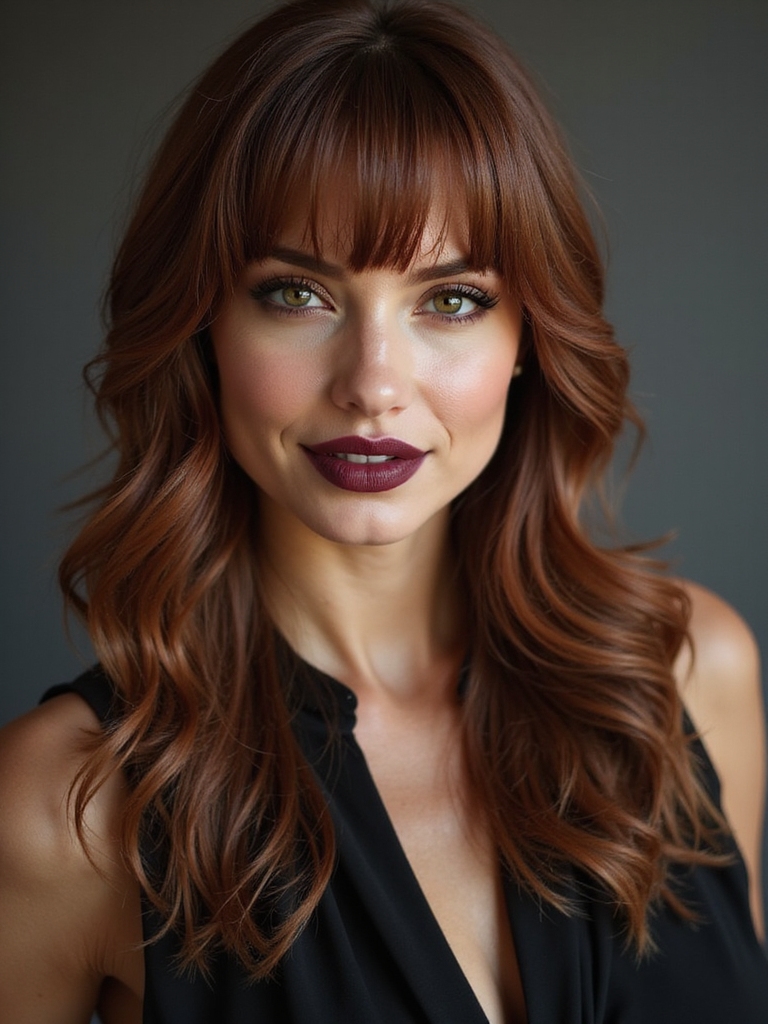
Let’s jump in — long curtain bangs are those face-framing sections that part down the middle (or slightly off-center) and sweep softly to either side, grazing cheekbones or collarbones depending on length; I love how they blend the vintage curtain look with modern, lived-in texture.
They suit most faces—oval, heart, and soft square—because they soften angles and add movement, especially on thicker or layered hair.
You can achieve an effortless look by combining long layers with soft curtain bangs that move naturally and reduce bulk.
Choosing the Right Length for Your Face Shape
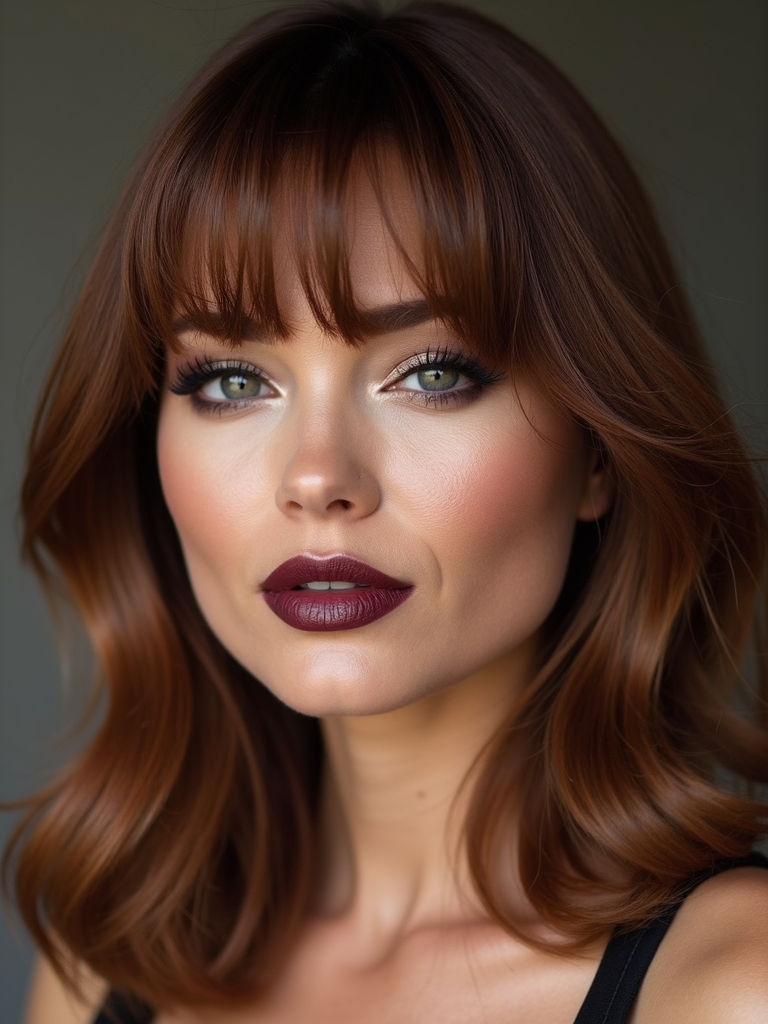
I’ll walk you through how the length of curtain bangs can change your whole look — from chin-grazing chic to languid collarbone vibes.
We’ll match lengths to forehead height so proportions feel balanced, and tweak softness around the jawline to flatter strong or rounded profiles.
Think of it as small length tweaks that make a big face-shaping difference.
Effortless long layers and soft curtain bangs are a great way to add movement and frame the face with long layers.
Chin-Grazing vs. Collarbone
Face shape matters more than you might think when you’re deciding between chin-grazing and collarbone curtain bangs—I always check proportions first.
For round faces, chin-grazing softens curves; for long faces, collarbone-length adds horizontal balance.
If you’ve got an angular jaw, chin-skimming bangs can soften edges, while collarbone layers create elegance and movement.
Trust proportions, not trends, and play until it feels right.
Curtain bangs offer an effortless framing effect that complements most hair textures and can be tailored with layers and length.
Forehead Height Balance
While chin-grazing versus collarbone length helps with overall proportions, forehead height changes how those bangs actually sit and flatter your features.
I usually ask about forehead height first — low, average, or tall — then tweak curtain bangs accordingly. A lower forehead benefits from longer, swoopy pieces; a higher one can handle shorter, airy layers that still frame without overwhelming.
Curtain bangs are a versatile option that can be tailored to suit many face shapes, especially when adjusted for forehead height.
Softness With Jawlines
Because jawlines can be sharp, soft, or somewhere in between, I tailor curtain-bang length to either soften angles or accentuate curves.
If you’ve got a strong jaw, I keep bangs longer, grazing the chin to soften edges.
For rounder faces, shorter, cheek-framing layers add definition.
It’s playful, simple: length is your secret weapon to balance and boost your best features.
Curtain bangs often work best with layered cuts to create movement and dimension.
How to Customize Angle and Parting for Your Features
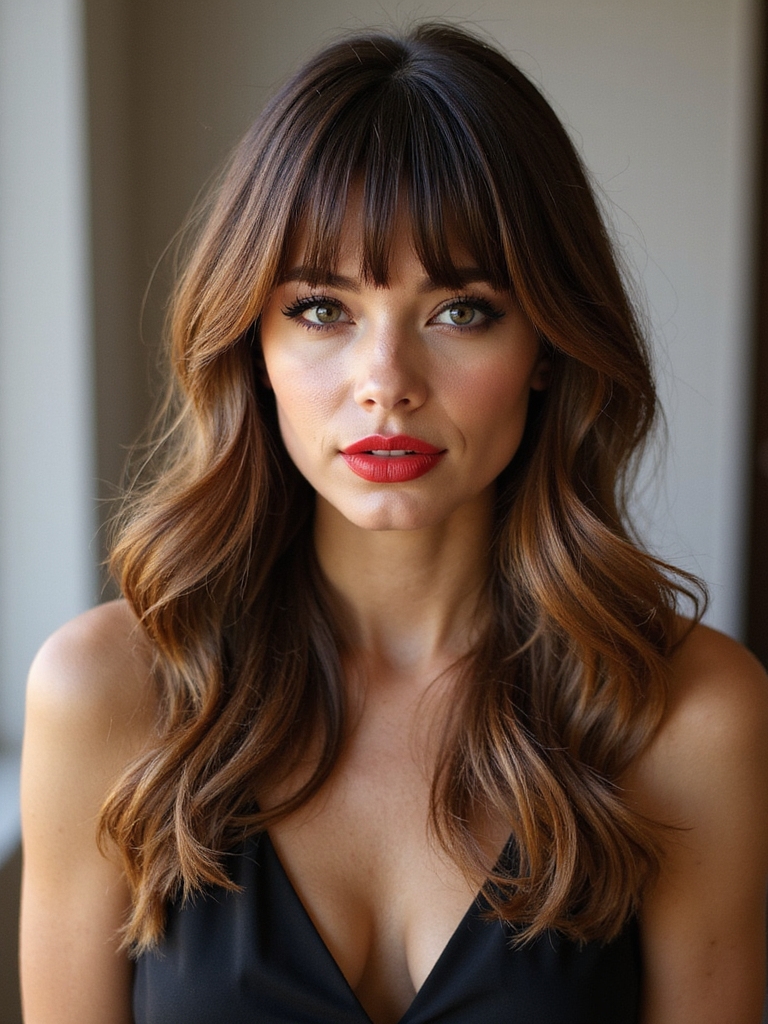
If you want your long curtain bangs to actually flatter you, I’ll show you how to tweak the angle and part so they highlight your best features instead of hiding them.
I like to angle bangs toward cheekbones for round faces, soften the sweep for square jaws, and shift the part slightly off-center to lengthen a short face.
Try small adjustments and mirror-check.
Layering Techniques for Different Hair Densities
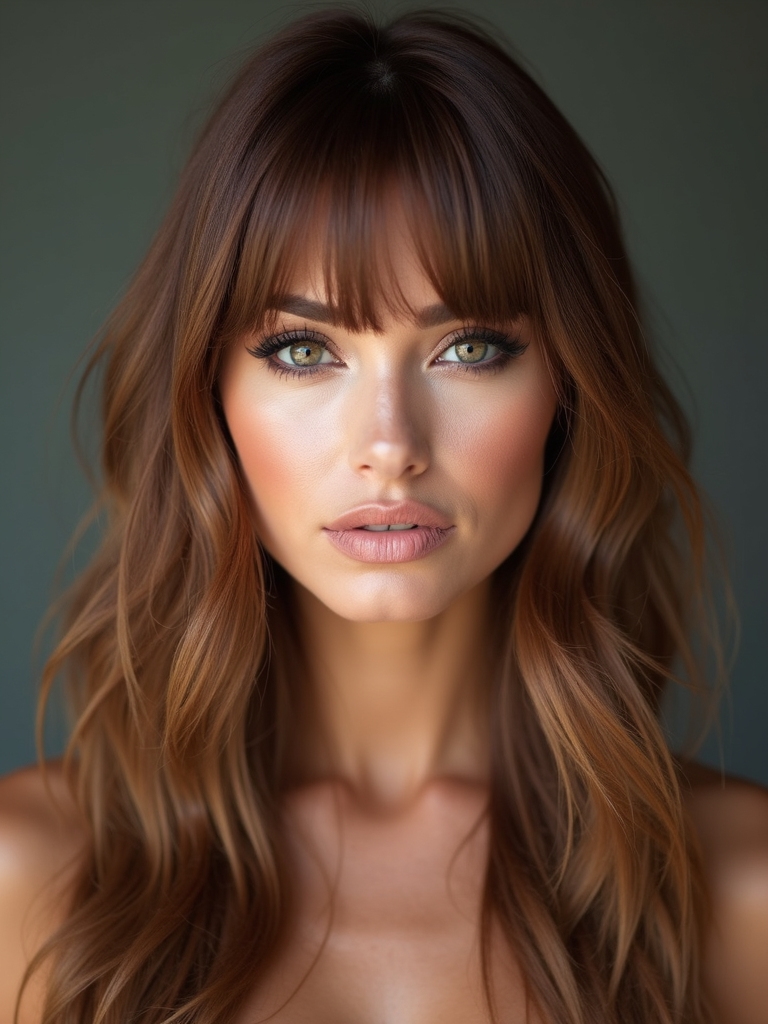
When I cut long curtain bangs, I match the layering to your hair density so the shape actually sits where it should; thin hair gets soft, feathered layers to create movement without losing weight, medium hair benefits from long, graduated layers that keep volume but avoid bulk, and thick hair needs strategic thinning and shorter internal layers to prevent a heavy curtain that overwhelms the face.
I tweak lengths, bevels, and texturing to balance lift and softness, so your bangs frame, never flatten.
Curtain Bangs for Round Faces: Tips and Examples
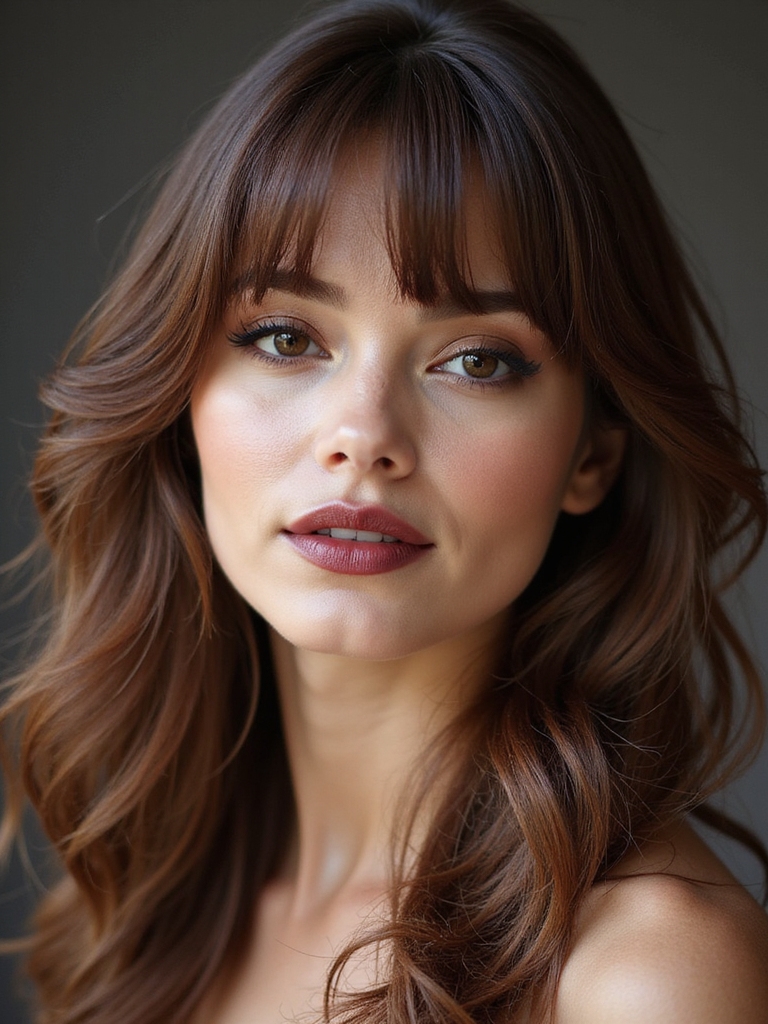
If you’ve got a round face, I’ll show you how curtain bangs can soften your shape without hiding your features.
I’ll cover ideal lengths and layering tricks that elongate the face, plus quick styling moves to add lift and volume where you need it.
Stick with me and I’ll point out easy examples you can try at home or bring to your stylist.
Soften the Face Shape
Thinking about curtain bangs for a round face, I always picture how a soft middle part and gently tapered fringe can add length and balance to your features; they’re basically a face-slimming trick that looks effortless.
I love suggesting subtle angles that frame cheekbones, a bit of wispy texture to avoid heaviness, and styling that flips outward for a light, elongating silhouette.
Length and Layering Tips
Because your goal is to add a bit of verticality, I recommend keeping curtain bangs longer — think chin-grazing to collarbone — with soft layers that taper toward the face.
I like subtle, face-framing slices around the cheekbones to slim the silhouette.
Ask your stylist for graduated ends and light internal thinning so the hair moves, never overwhelms, your lovely round shape.
Styling for Volume
Boost your roots and play with texture — that’s my go-to when I want curtain bangs to add lift, not width, to a round face.
I tease lightly at the crown, blow-dry with a round brush sweeping away from the face, and spritz a texturizing mist.
Soft layers and subtle side parts create vertical motion, keeping the look airy and flattering.
Curtain Bangs for Oval Faces: What to Ask Your Stylist
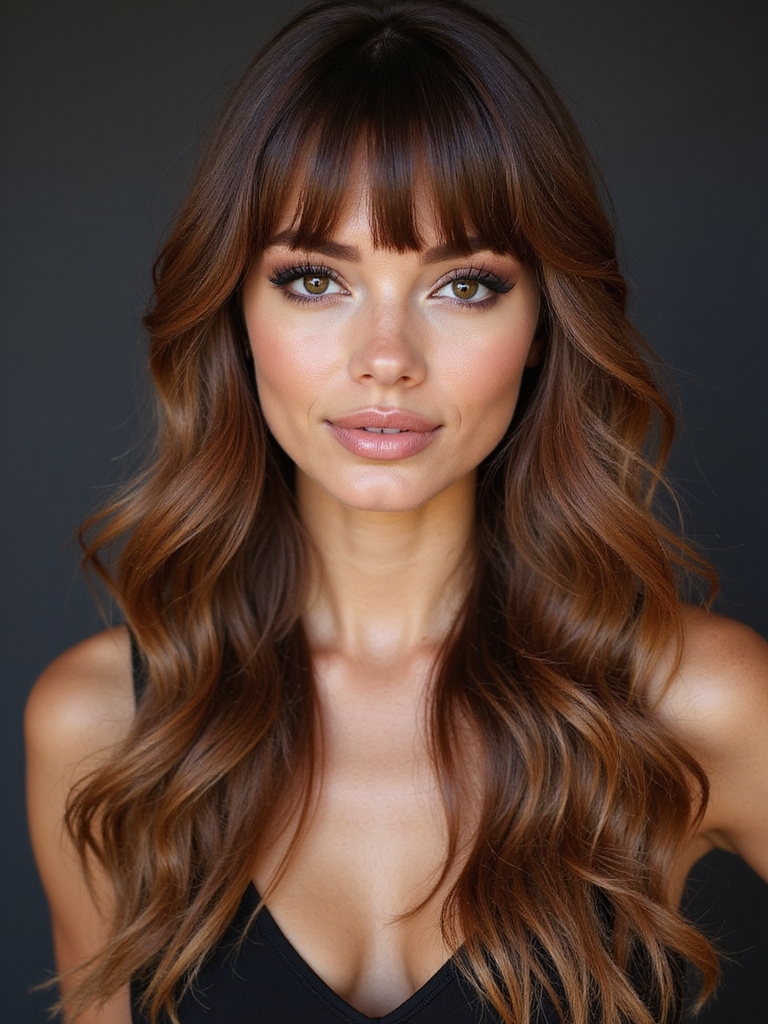
If you’ve got an oval face like mine, you’ve probably heard curtain bangs are practically made for you—so when I sit in the stylist’s chair I come armed with a few specific questions.
I ask about ideal length for my forehead, how much layering to soften my cheekbones, face-framing angle, and maintenance—daily styling time and trimming frequency—so we get flattering, low-fuss bangs.
Curtain Bangs for Square and Strong Jawlines
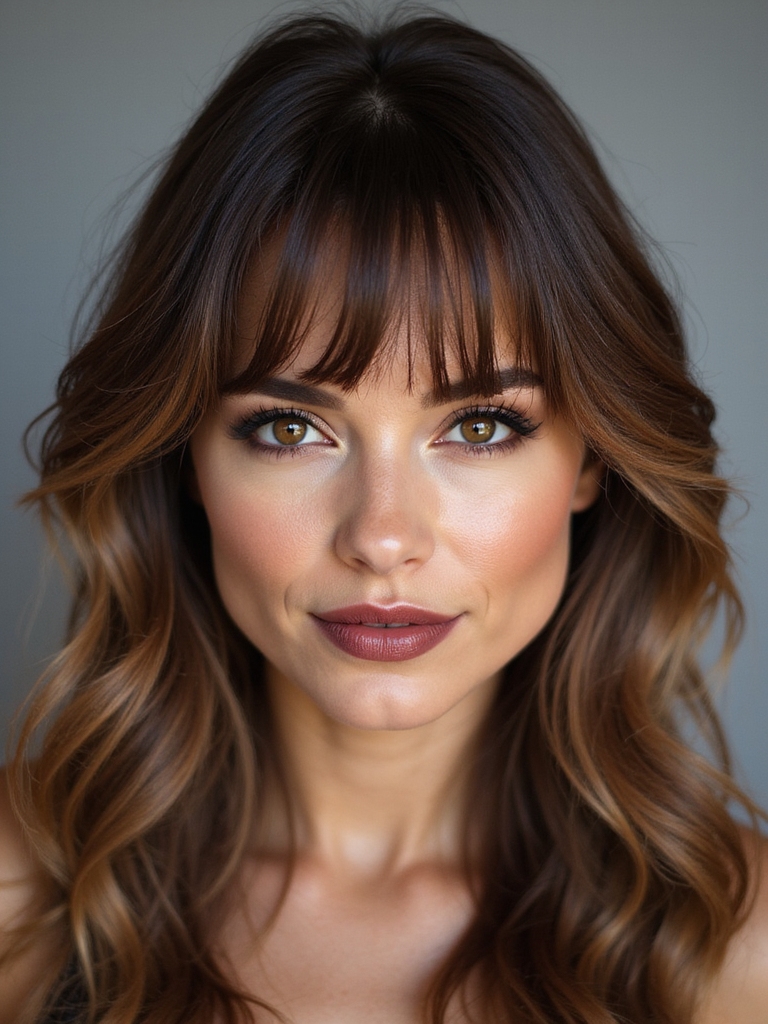
If you’ve got a square or strong jawline, I love how curtain bangs can soften those angles without hiding your features.
I’ll explain how strategic layering around the cheekbones and longer face-framing pieces blur hard lines, and I’ll share simple side-part tips to keep balance and movement. Stick with me and we’ll find a look that flatters your bone structure while feeling effortlessly chic.
Soften Angular Jawline
When I style curtain bangs for someone with a square or strong jawline, I aim to soften angles without hiding the face’s structure; the long, face-framing layers sweep inward to add vertical lines and gentle movement that distract from a boxy chin.
I’ll taper the ends, keep weight light near the jaw, and encourage a slight, effortless part so the look reads softer and modern.
Layering Around Cheekbones
Because cheekbones are the natural pivot for curtain bangs, I concentrate the layering there to lift and refine a square or strong jawline without masking facial bone structure.
I chat with you during the cut, tweaking weight and angle so the face softens but stays defined.
- Short, feathered layers to soften.
- Long face-framing pieces for balance.
- Textured ends to avoid heaviness.
Side-Part Balance Tips
I’ll start the side part a little off-center to nudge the eye away from a strong jawline and keep the curtain bangs flattering; since we already set the weight around the cheekbones, the part becomes our tool to steer volume and shadow where we want it.
I’ll sweep more hair to the softer side, creating asymmetry that softens angles and adds effortless, face-framing movement.
Curtain Bangs for Heart and Pear Face Shapes
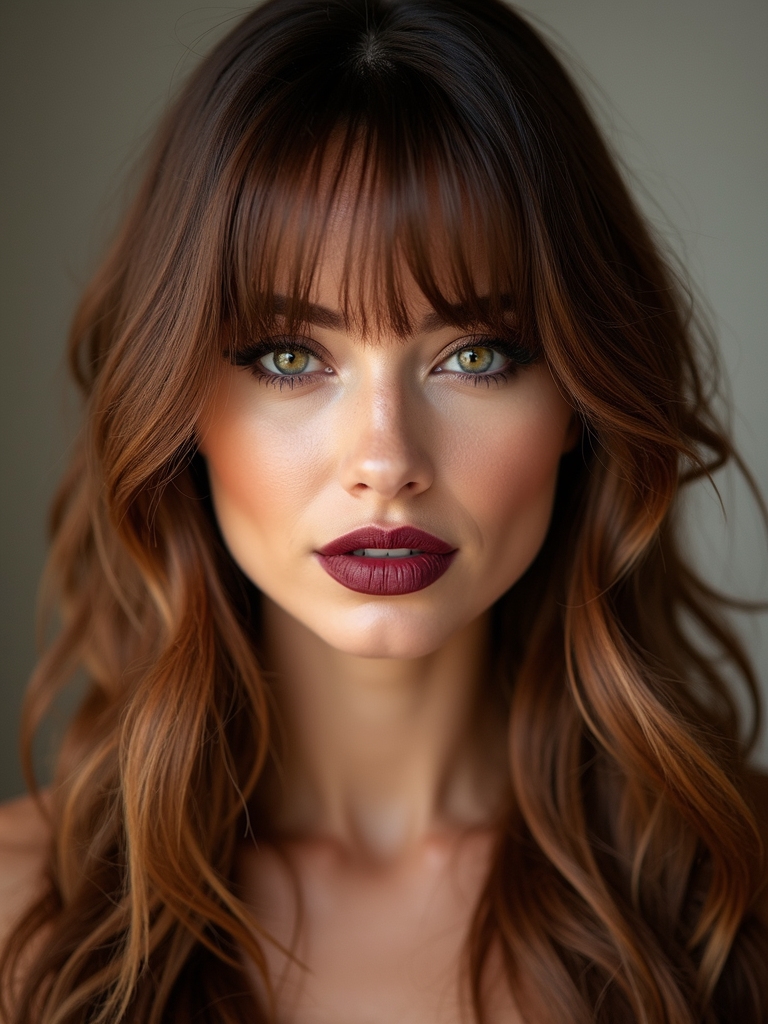
Although heart and pear faces have different focal points, I love how curtain bangs flatter both by softening the forehead and balancing the jawline.
I recommend:
- Longer, face-framing layers for pear shapes to add width at the forehead.
- Side-swept curtain pieces for heart shapes to reduce forehead emphasis.
- Soft, wispy ends to keep everything light and flattering — effortless charm.
Styling Tools and Products to Keep Them Sleek
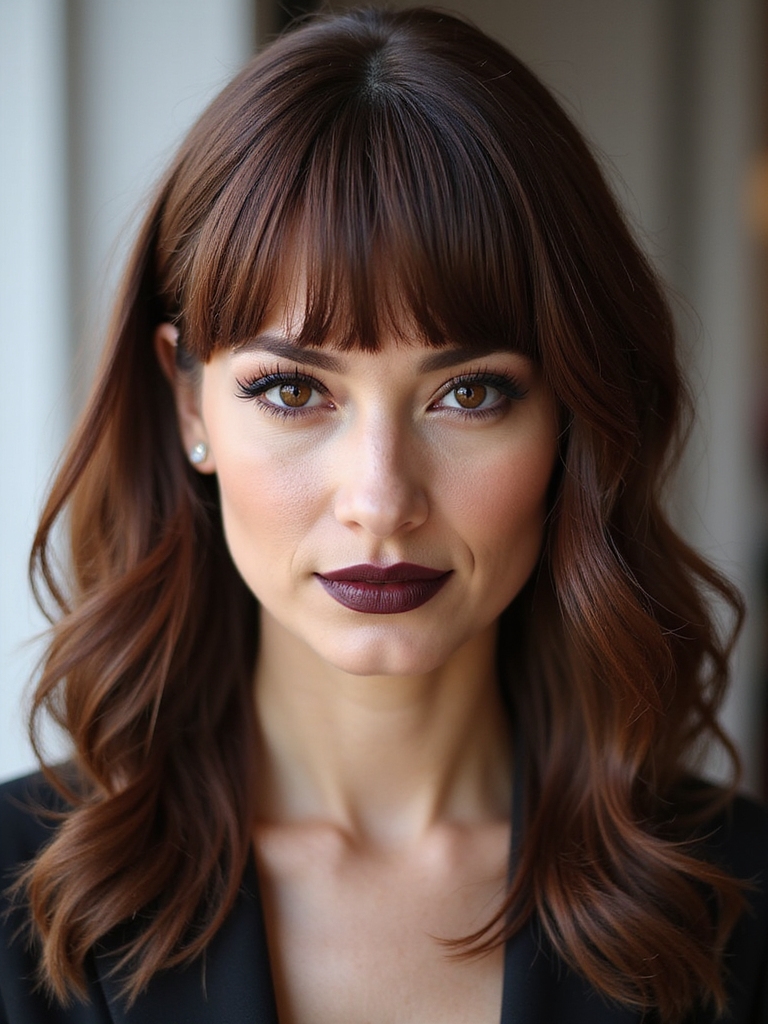
Okay, let’s talk tools: I always start with a spritz of heat protectant spray before touching my curtain bangs with any hot tool.
Then I smooth on a tiny bit of lightweight smoothing serum to tame flyaways without weighing the hair down.
Together they keep my bangs sleek and touchable all day—no greasy residue, promise.
Heat Protectant Spray
Spritzing on heat protectant is my non-negotiable step before I touch a straightener or curling iron—think of it as a little shield for your long curtain bangs.
I keep it light, spray evenly, and never skip the roots.
Try these quick tips:
- Spray 6–8 inches away.
- Comb through gently.
- Let it dry briefly before styling.
Lightweight Smoothing Serum
Once the heat protectant has done its job, I reach for a lightweight smoothing serum to keep my long curtain bangs sleek without weighing them down.
I use a pea-sized amount, rub it between fingers, and glide through ends to tame flyaways and add shine.
It smooths frizz, defines shape, and survives humidity—without that greasy, flat look.
Quick, subtle, magic.
Blow-Drying and Heat Techniques for Long Curtain Bangs
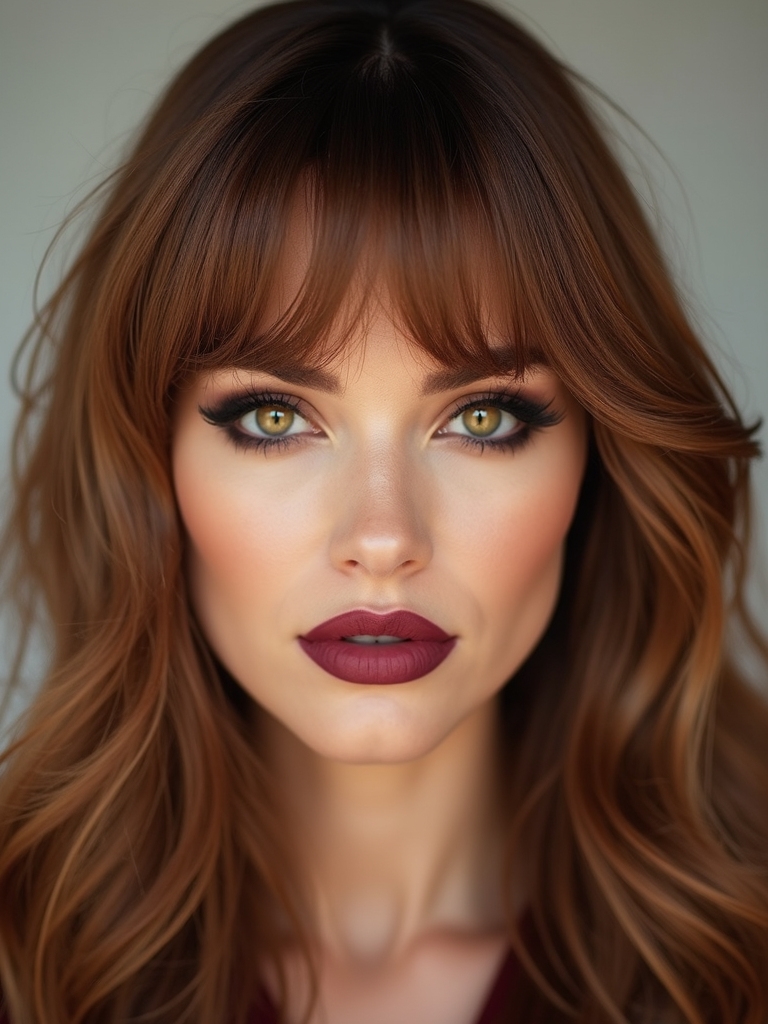
With a round brush in hand and a blow-dryer at the ready, I’ll show you how to shape long curtain bangs so they fall like they were born that way.
I walk you through heat settings, tension, and cooling for a soft bend.
- Medium heat, steady brush
- Away-from-face sweep
- Blast cool to set
You’ll love the effortless sway.
Low-Maintenance Styles and Air-Dried Options
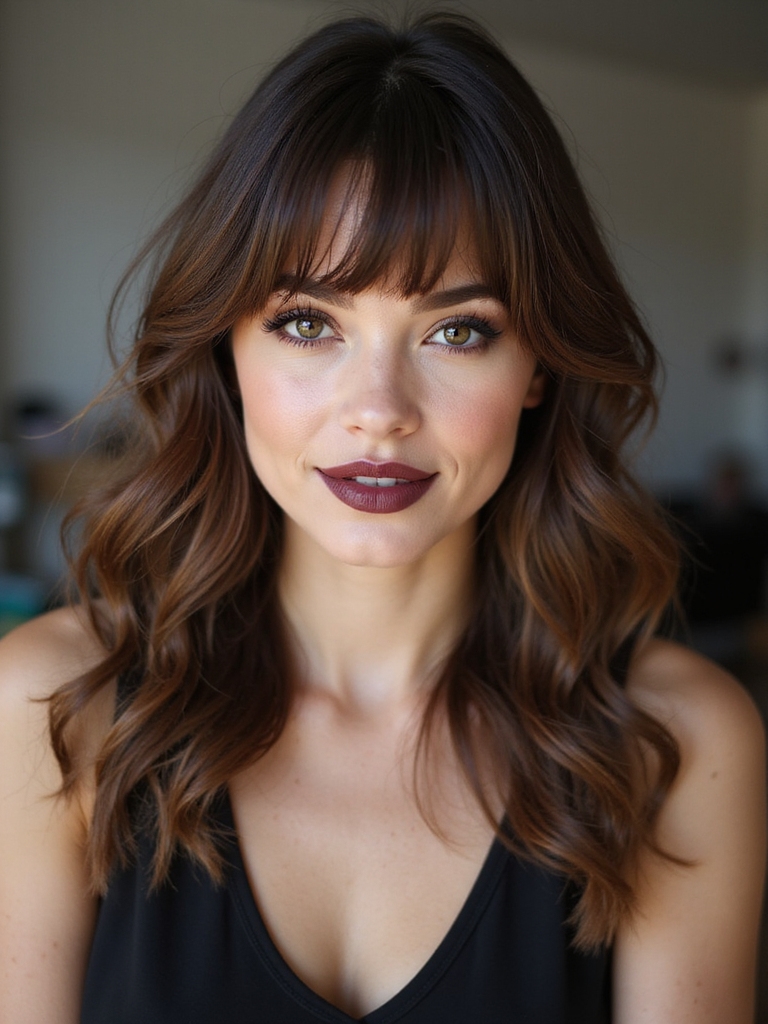
I usually keep my long curtain bangs low-maintenance by adopting air-drying tricks that give them shape without fuss — I’ll show you the quick steps I use so they still look styled on busy mornings.
I scrunch damp bangs with a lightweight cream, part and twist sections to train the swoop, then let them dry naturally. A touch of texturizer finishes the effortless look.
Growing Out Curtain Bangs Gracefully
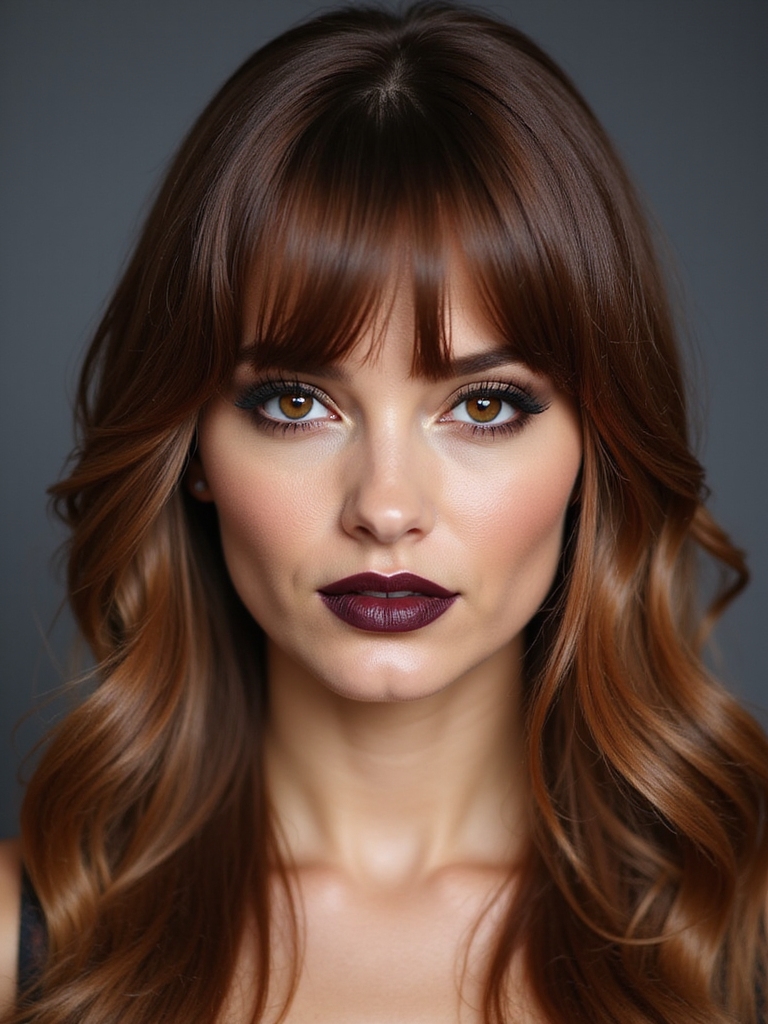
Keeping that easy air-dried routine makes the first weeks of growing out curtain bangs a lot less fussy, but you’ll want a few small tweaks so things don’t look awkward.
I swear by simple moves:
- Trim face-framing pieces monthly.
- Use clips to sweep hair back during the awkward phase.
- Adopt texture spray for playful separation and volume.
Accessorizing and Styling Variations for Different Occasions
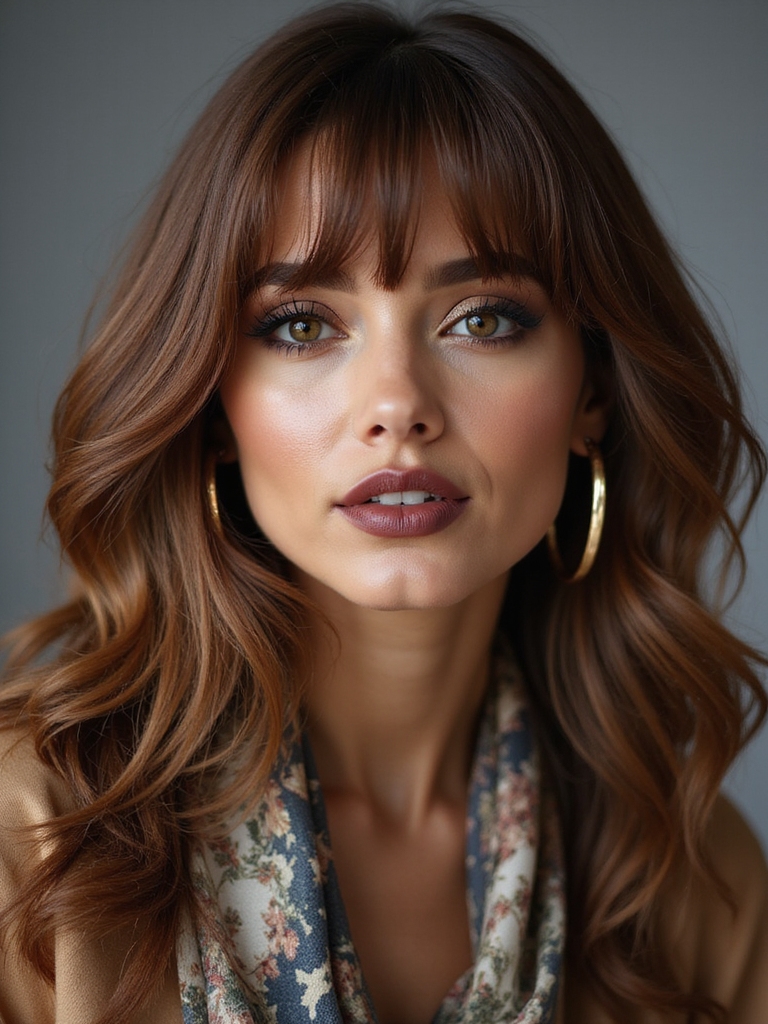
When I’m heading to a coffee date or a wedding, I treat curtain bangs like an outfit accessory — they can be dressed up or down in seconds.
I toss them behind an ear with a cute clip for casual charm, pin them sleek for formal sparkle, or braid a tiny strand for boho vibes. Quick swaps, big personality.
Color and Highlight Ideas to Enhance Shape and Texture
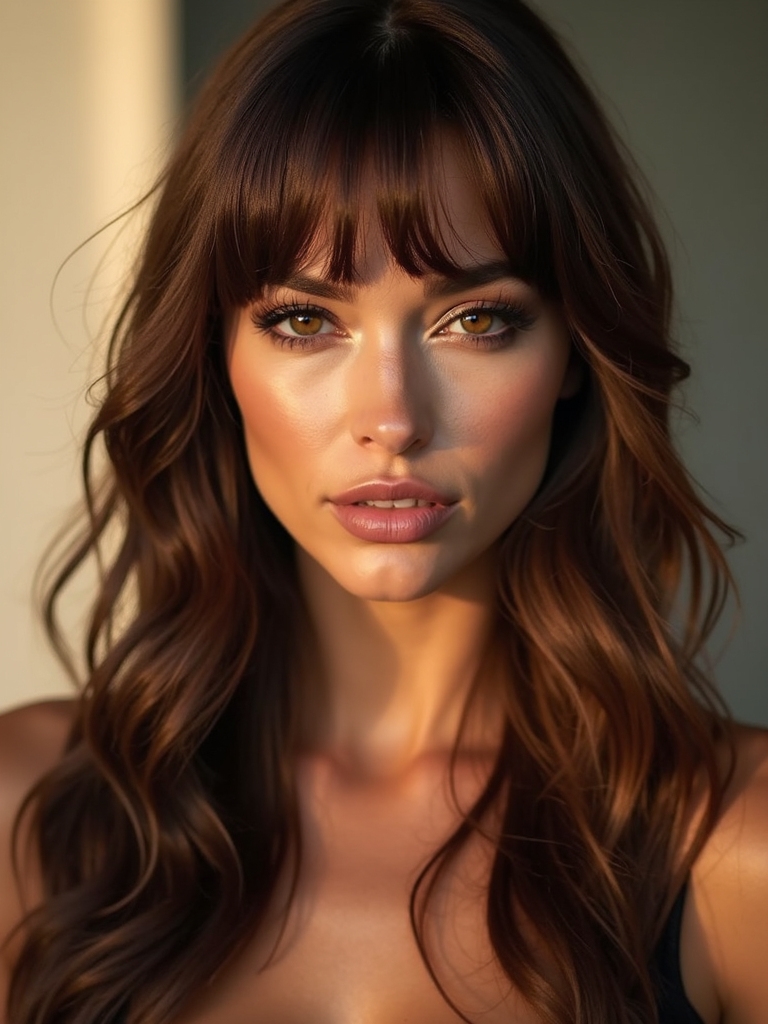
Play up your curtain bangs with color tricks that actually do something—I’m talking face-framing lowlights, sunkissed balayage, or a bold peekaboo streak to highlight the curve and movement. I love using subtle contrasts to sculpt and add texture.
Try these playful options:
- Soft balayage for airy depth.
- Lowlights to define shape.
- Peekaboo color for fun motion.
Communicating With Your Stylist: What to Bring and Say
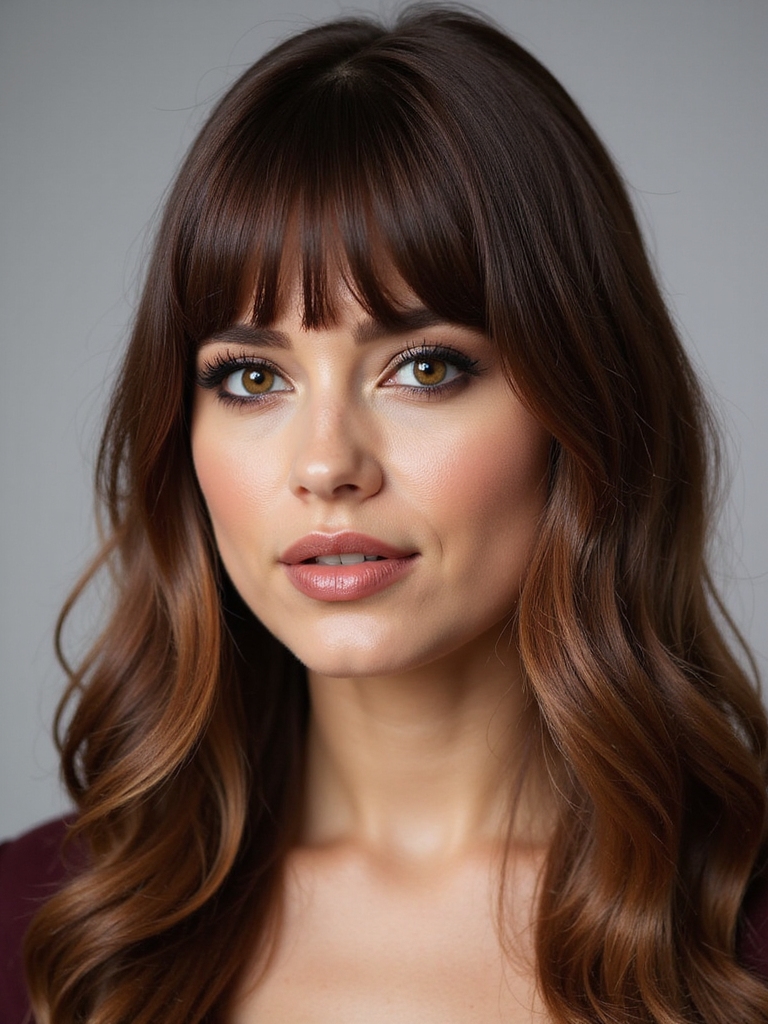
Wondering how to get exactly the curtain bangs you want? I bring clear photos from multiple angles, note my daily styling routine, and mention how much time I’ll spend on maintenance.
I tell my stylist my hair’s texture and any past chemical services, ask for a face-framing length and soft layers, and confirm styling tips so we leave on the same page.
So, there you go — long curtain bangs really are the low-effort, high-reward shortcut to framing your face and freshening your look.
Try different lengths, parts, and layers to match your hair density and vibe, and don’t be shy about asking your stylist for feathering or internal thinning. With a little trial and the right products, you’ll land a style that feels totally you — playful, polished, and just a bit undone.


