


I love how curtain bangs can frame a curly face without flattening the natural bounce, and I’ll show you how to get that soft, sweeping look while keeping volume and definition.
I’ll cover what curl types work best, how to ask your stylist, cutting techniques that honor each ringlet, easy daily styling, and quick fixes for frizz or limp bangs — plus the small habits that keep them living their best life.
Why Curtain Bangs Work So Well on Curly Hair

Loving the way curtain bangs frame a face on curly hair comes naturally to me — they soften your features, keep volume where it matters, and give your curls a built-in, flattering shape without forcing them into a rigid style.
I adore how they balance bold texture with effortless movement, framing eyes and cheekbones while reducing the need for daily styling—just refresh, scrunch, and go.
Curtain bangs also create a soft, face-framing style that complements natural curl patterns and enhances bounce and movement in the hair.
Choosing the Right Curl Pattern for Curtain Bangs
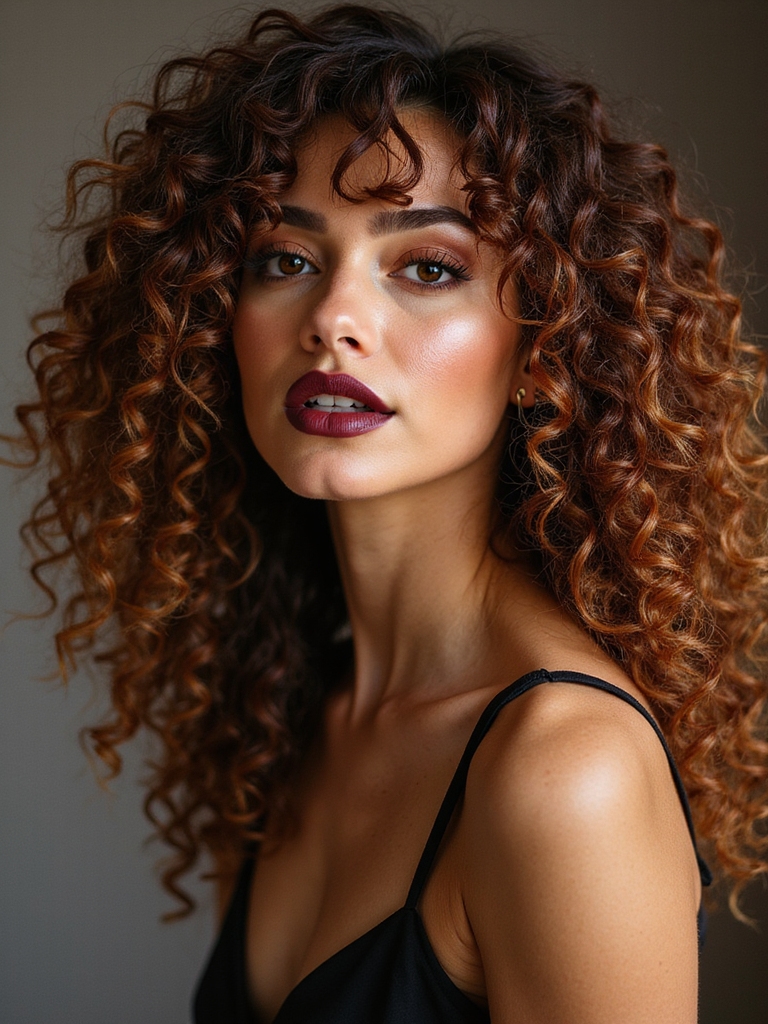
I’ll help you pick the curl pattern that flatters your face shape so those curtain bangs actually frame you the way you want.
We’ll also talk about how curl density changes the haircut’s weight and why that affects the final look.
Plus I’ll recommend the best styling products for your curl type so your bangs behave all day.
Curtain bangs on curly hair can be tailored to different curl types to enhance natural movement and avoid excess bulk, especially when considering curl density and how it distributes weight.
Match Face Shape
Because your face shape guides how curtain bangs frame your features, I always start by matching the curl pattern to what flatters you most.
For round faces I soften with looser waves that add length; for square jaws I pick airy curls to soften angles; for long faces I choose fuller, side-parted curtains for balance. We tweak texture to highlight your best bits.
I often recommend long layers to help curtain bangs blend seamlessly with the rest of the hair.
Curl Density Matters
Matching curl type to face shape is only half the job — curl density decides how those curtain bangs will actually sit and move.
I check if your curls are sparse, medium, or dense before cutting. Sparse curls need softer layering to avoid gaps; dense curls benefit from weight removal to prevent helmet bangs.
I tailor the pattern so your fringe swings, frames, and breathes.
Dense curls often require strategic thinning and shaping to maintain natural bounce without sacrificing curl definition.
Styling Product Choice
Think of products as your curtain-bangs cheat code — they decide if your fringe swings, clumps, or frizzes. I pick light gels for defined, bouncy strands, creams for soft separation, and oils sparingly to tame flyaways without weighing.
Match product weight to curl pattern: fine curls need lighter hold, thicker curls want richer creams. Test small amounts and tweak until it sings. Use a butterfly cut with curtain bangs for movement and shape butterfly haircut.
Finding the Flattering Length and Face Shape Match

I’ll help you pick the perfect curtain bang length so your curls frame your face instead of hiding it.
We’ll match lengths to face shapes—think longer, cheek-grazing pieces for round faces and shorter, jaw-skimming layers for oval or heart shapes.
Then we’ll talk about smart layering to keep bounce without bulk.
Ideal Curtain Bang Length
Curly curtain bangs can make or break your look—so how long should they be? I aim for bangs that graze cheekbones or kiss jawlines when dry, letting curls spring naturally.
Shorter pieces can feel edgy but need upkeep; longer, face-framing lengths soften features and grow out gracefully. Trust curl shrinkage, cut a tad longer, and tweak after the first wash for perfect bounce.
Matching to Face Shape
Now that we’ve settled on length and accounted for shrinkage, let’s match those bangs to your face so they actually flatter you. I’ll help you pick shapes: round faces get longer, side-swept curtains to elongate; square faces soften with wispy, curved edges; heart shapes balance a strong forehead with fuller lower bangs; oval faces? Lucky you — almost any curtain style works.
Trust your curl pattern, too.
Layering for Bounce
Let’s talk layers—the secret to giving your curls serious spring without turning your bangs into a frizz halo.
I recommend shorter layers around the crown to boost bounce and longer face-framing pieces to keep curtain bangs soft.
For round faces, elongate with long layers; for oval, play with balanced cuts; for square, soften jawlines.
I guide you to the perfect length.
How to Ask Your Stylist for Curly Curtain Bangs

Envision this: I walk into the salon with photos saved and a plan, ready to ask for curtain bangs that’ll play nicely with my natural curl pattern.
I describe curl size, show front and side pics, say I want soft parting and face-framing length, ask about styling daily, and confirm we’ll adjust slowly.
I leave open to my stylist’s expert tweaks.
Cutting Techniques That Preserve Bounce and Shape

Since you and your stylist already hashed out the look, the next step is how they actually cut those curtain bangs so your curls keep their spring and shape.
I watch and ask for dry cutting, point cutting at curl clumps, and minimal blunt snips.
We trim curl by curl, preserve natural curl formation, and test movement so the bangs bounce without getting weighed down.
Layering and Weight Distribution for Curls

I pay close attention to how layers breathe through your curls so the haircut feels light but still full where you want it. I sculpt weight to avoid pyramid shapes, encourage spring, and keep curtain bangs lively.
You’ll feel balanced, flirty, and ready to toss your hair.
- Joyful spring in each curl
- Softness around the face
- No heavy, flat ends
- Natural movement
- Effortless confidence
Best Products to Define Bangs Without Weighing Them Down

Now that the layers are doing their job — giving your curls bounce and preventing that dreaded pyramid — you’ll want products that highlight your curtain bangs without flattening them. I reach for lightweight mousse, a small dab of curl cream, and a water-based gel for hold.
Micro-amounts, scrunched in, keep definition, separation, and movement—never crunchy or weighed down.
Daily Styling Routine for Springy Curtain Bangs

I start my mornings with a quick refresh ritual—spritz, scrunch, and gently separate the curtain bangs to wake up their bounce.
I stick to feather-light products so my bangs spring back without getting flat or crunchy.
Want me to walk you through my exact steps and favorite textures?
Morning Refresh Ritual
Usually I start my morning refresh with just a few strategic spritzes and a gentle scrunch to wake up my curtain bangs without drowning them.
I coax shape, separate a stubborn curl, and air-dry a touch. It’s quick, fun, and makes me smile.
- Tiny spritz, big mood
- Playful scrunching
- Gentle separation
- Soft shake-out
- Smile-check
Lightweight Product Choices
I reach for lightweight products that won’t weigh my curtain bangs down — think feather-light leave-ins, water-based creams, and mistable gels that give hold without the crunch.
I lightly scrunch a pea-sized amount, mist when needed, and finger-shape the part.
These choices keep bounce, fight frizz, and let my bangs move naturally all day without stiffness or buildup.
Diffusing and Air-Drying Methods That Enhance Movement
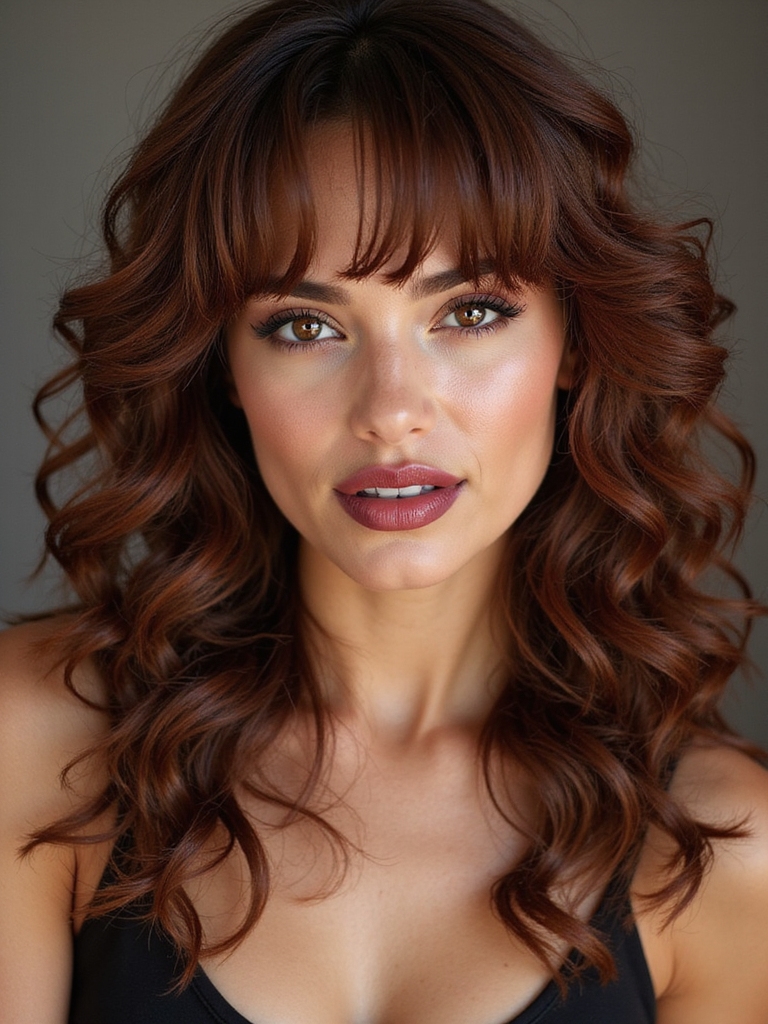
Experimenting with diffusing and air-drying has totally changed how my curtain bangs move—I’m able to get bounce without frizz or limpness. I tweak heat, angle, and timing, then let curls set naturally.
It feels fun watching movement form, and I can control shape without heavy products.
- Joyful bounce
- Easy confidence
- Soft touchability
- Playful sway
- Fresh, natural finish
Tools and Accessories to Protect and Style Your Bangs

I swear by satin scrunchies and pillowcases to keep my curtain bangs smooth overnight — no frizz party in the morning.
A good diffuser and a few sectioning clips are my go-tos for shaping and lifting those bangs while I dry. Let’s talk about which fabrics, diffuser settings, and clip placements actually work for curls.
Satin or Silk Protection
I usually reach for a silk scrunchie or satin scarf first thing after styling my curtain bangs, because they actually keep frizz, creases, and moisture loss at bay without ruining the shape.
I love how gentle protection preserves my bounce and shine — it’s a little self-care ritual that feels luxe and silly in the best way.
- Soft hug
- No dents
- Smooth mornings
- Less breakage
- Confident flip
Diffusers and Clips
After the satin scrunchie keeps my bangs cozy overnight, I reach for tools that help shape and protect them while I style—diffusers to enhance curl without frizz and clips to hold that perfect curtain sweep.
I cup curls under a low-heat diffuser, tousle gently, then pin the parting with soft clips until cool. The result: bouncy, defined bangs that behave all day.
Nighttime Care to Maintain Shape and Reduce Frizz

Usually I tuck my curtain bangs into a loose pineapple or silk scarf before bed so they wake up shaped, not flattened, and I can skip morning battles with frizz.
I also sleep on a satin pillowcase, mist with lightweight leave-in, and refresh with water in the morning. Small habits = big bounce.
- Cozy confidence
- Soft surprise
- Calm routine
- Gentle lift
- Happy curls
Transitioning From Straight or Blunt Bangs to Curly Curtains

If you’re swapping straight or blunt bangs for curly curtain bangs, expect a short learning curve and a lot of happy surprises—I went through it, so I’ll tell you what helped.
I eased adjustment by cutting softly, welcoming my curl pattern, using lightweight curl cream, and practicing gentle finger-styling.
Patience mattered—volume settled, shape emerged, and I learned to love playful, bouncy curtains.
Managing Growth and When to Trim Between Appointments

When my curtain bangs start peeking into my eyes between salon visits, I treat trims like small, confidence-boosting touch-ups rather than full hair emergencies — and you can too.
I snip damp pieces, soften edges, and keep curls balanced without stressing. Quick checks every few weeks keep shape lively and bouncy.
- Relief
- Playfulness
- Control
- Freshness
- Confidence
Styling Variations for Different Occasions

Because curtain bangs can flip your whole vibe, I love switching up styling depending on the event — from messy, lived-in waves for weekend coffee runs to polished, defined curls for date night or work calls.
For casual days I scrunch with a light cream; for formal events I set bangs with a diffuser and a little gel.
Quick half-up styles keep them chic and out of my face.
Troubleshooting Common Problems With Curly Curtain Bangs

While I love how curtain bangs frame my face, they can throw tantrums — frizz, weird parting, and limp roots are some of the usual suspects — and I’ll walk you through simple fixes so they behave.
I test products, tweak drying, and coax shape back with a few tricks that actually work.
- Smoothing serum = instant calm
- Diffuse, don’t rub
- Finger-part when damp
- Clip roots to boost lift
- Refresh with water mist
I’m so glad you’re considering curtain bangs for your curls — they really do feel like a little face‑framing hug. With the right cut, product and drying tricks, your bangs can bounce, boost your cheekbones, and still keep all that natural volume.
Be bold with curl‑by‑curl shaping, gentle with product, and consistent with trims and nightly protection. Try a few styling routines to find your fave; soon they’ll seem effortless and totally you.


