


I love how balanced long curtain bangs can quietly change your whole look without drama, and I want to walk you through why they work so well for medium hair.
They frame the face with a soft center part, skim cheekbones or jawlines, and blend into layers for movement—easy to style, even easier to wear. Stick with me and I’ll show you how to pick the right length, thickness, and tricks to keep them looking effortless.
What Are Balanced Long Curtain Bangs?
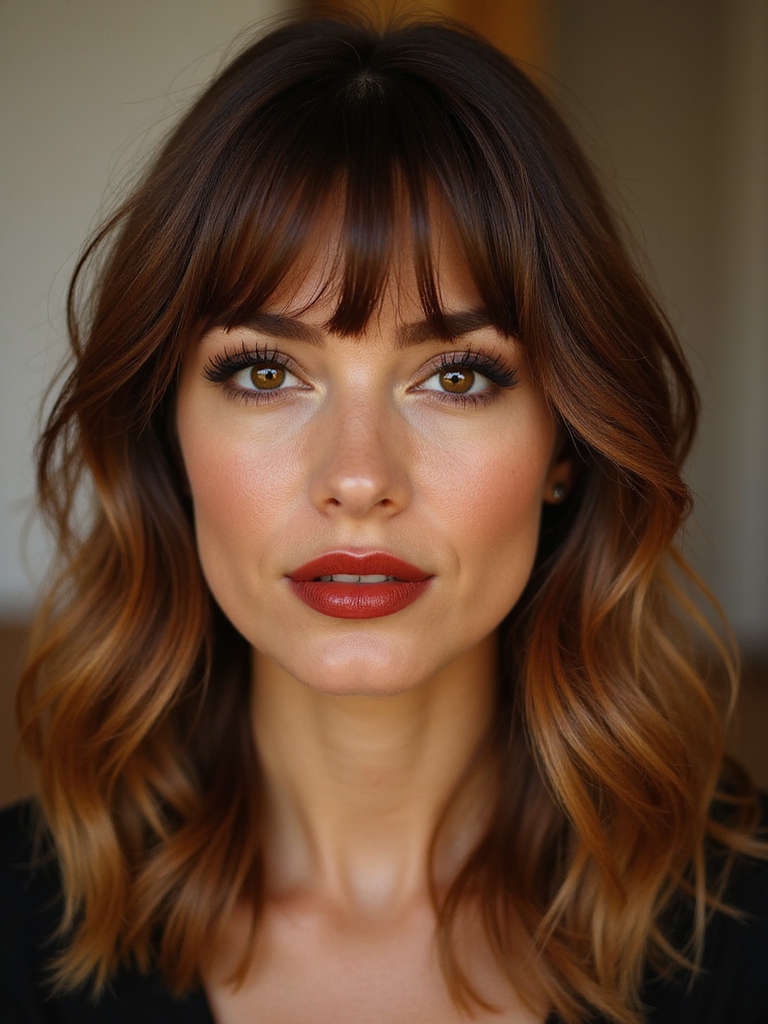
When I talk about balanced long curtain bangs, I mean bangs that frame your face evenly on both sides and blend seamlessly into the rest of your medium-length hair; they’re long enough to skim your cheekbones or collarbone and short enough to tuck behind your ears.
I love how they soften features, add movement, and require minimal fuss—perfect if you want chic, low-maintenance flair. They pair especially well with layers to enhance texture and movement.
Who Should Consider This Style?

If you’ve got medium-length hair and want a look that feels effortless but still polished, curtain bangs might be your new best friend—I’ve seen them flatter so many face shapes and hair types.
I’d suggest them if you like low-maintenance styling, want soft framing without commitment, have moderate volume, or crave a fresh update without sacrificing length.
They suit casual and polished vibes alike.
Effortless long layers can enhance curtain bangs by adding movement and reducing bulk, creating a seamless blend with the rest of your hair and making styling easier overall (see Effortless Long Layers for details).
Choosing the Right Length for Your Face Shape
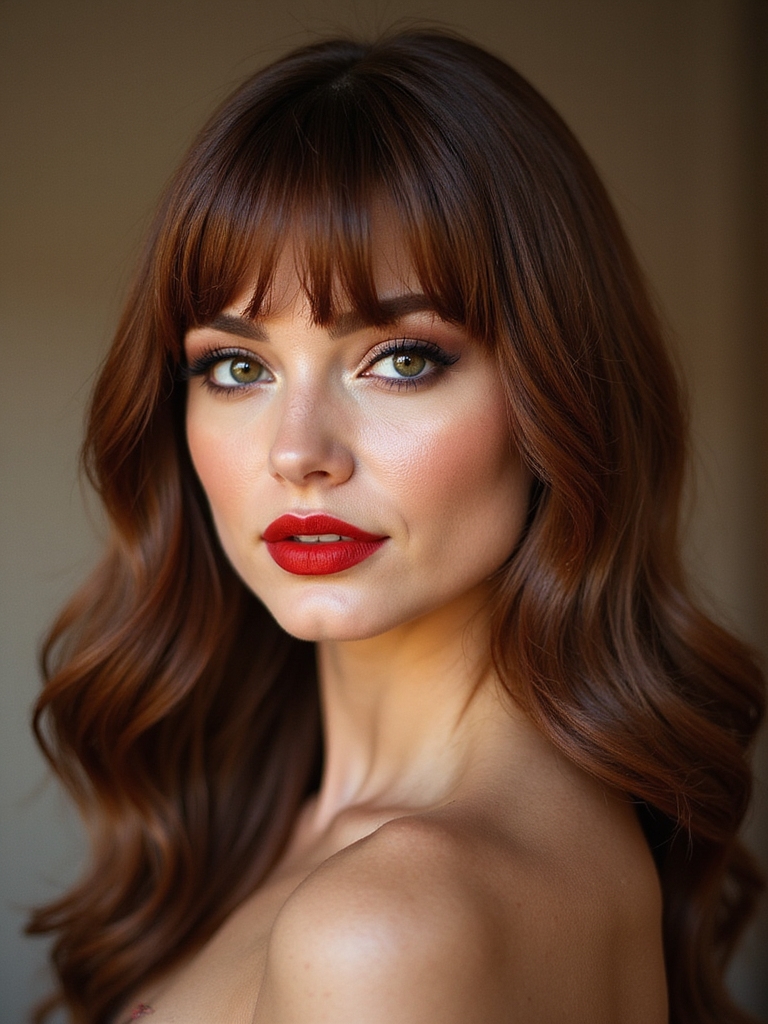
Because face shape changes how bangs frame you, I like starting with length as the first decision—too short and they can overwhelm, too long and they lose that curtain effect.
I usually suggest chin-skimming for round faces, slightly below cheekbones for square faces, and grazing the jawline for long faces.
Try a clip test at home to confirm what flatters you most.
Long curtain bangs can be particularly flattering on layered styles, especially when paired with Long Curtain Bangs for long hair to enhance movement.
Determining Ideal Thickness and Density

Start by feeling your bangs—thicker isn’t always better, and I like to think of density as the difference between soft framing and a heavy curtain that hides your features.
I test textures and face balance, then pick a comfy midpoint. Try these quick checks:
- Too thin? Add weight.
- Too heavy? Ask for lightness.
- Just right? Keep the movement.
I also evaluate how the bangs interact with overall hair shape and face-framing balance to ensure they enhance, not overwhelm, your features.
How to Blend Curtain Bangs With Medium Hair

When I’m blending curtain bangs into medium hair, I first think about your face shape so the angles flatter your features.
Then I focus on a seamless shift between the bangs and layers—soft graduation and matched texture make it look effortless.
Finally, I’ll share quick styling and upkeep tips so the look stays fresh without a fuss.
For an easy everyday finish, aim for an effortless medium cut that complements the curtain bangs and overall length.
Face-Shape Consideration
If you’ve ever wondered if curtain bangs will flatter your face, I’ll walk you through how to blend them with medium hair so they highlight, not hide, your best features. I assess bone structure, balance, and personal vibe, then tweak length and angle.
Simple tips:
- Round: longer sides to slim.
- Square: soft layers to soften jaw.
- Oval: anything goes—just play.
Seamless Layer Transition
You’ve seen how curtain bangs can flatter different faces, so now I’m going to show you how to blend them into medium-length hair so everything looks like it was born that way.
I’ll guide you through soft layering at the crown, feathered ends that melt into the lengths, and subtle graduation—so your bangs shift naturally without harsh lines, keeping movement and balance throughout.
Styling and Maintenance Tips
Usually I start by teasing the crown and blow-drying the bangs away from my face so they sit like they were meant to be there, not glued on.
I’ll share quick styling and upkeep tips that keep curtain bangs blended with medium hair and carefree.
- Use a round brush to shape.
- Trim every 6–8 weeks.
- Dry shampoo adds texture and lift.
Cutting Techniques for a Soft, Natural Part

When I cut curtain bangs for a soft, natural part, I start by letting the hair fall exactly how it will sit—no over-directing, no dramatic swoops—so I can read the growth pattern and weight.
I point-cut to soften ends, snip vertically for texture, and trim in small increments, checking the balance as I go.
I keep the center slightly longer for that effortless, face-framing swoop.
Styling Tools and Heat Techniques

I reach for my favorite round brush and a medium-barrel curling iron first, because the right tools make that soft, parted swoop actually easy to achieve.
I use heat wisely, protect with spray, and blend with gentle tension.
- Blow-dry with round brush for lift.
- Curl ends away for shape.
- Finish with light-hold spray for movement.
Daytime Looks: Casual and Textured Styles

I love how curtain bangs make an effortless tousled finish look intentional, not messy — just run a texturizing spray through the ends and fluff with your fingers.
For loose beachy waves, I’ll use a large-barrel wand or even sleep in braids to get soft, lived-in movement that frames the face.
Stick to light products so the shape stays airy and natural all day.
Effortless Tousled Finish
I often reach for a sea-salt spray and my fingers to coax curtain bangs into a relaxed, lived-in look that’s perfect for daytime—casual, textured, and a little bit tousled.
- Scrunch roots lightly for lift.
- Twist damp ends with fingers to define pieces.
- Finish with a light mist and gentle tousle for movement.
Give it a quick shake and go.
Loose Beachy Waves
After giving curtain bangs that lived-in lift, I like to pull the rest of my medium hair into loose beachy waves for a cohesive, casual vibe.
I curl mid-lengths with a large-barrel wand, alternate directions, then tousle with fingers. A salt spray adds texture and hold without crunch.
It frames my face softly, stays daytime-friendly, and feels effortlessly cool and touchable.
Polished Looks: Sleek Blowouts and Smooth Waves

Picture your curtain bangs framed by a sleek blowout or soft, smooth waves—I’m here to show you how those polished looks make any medium-length cut feel instantly chic.
I love styling them for clean lines or gentle movement.
Try these simple approaches:
- Round-brush blowout for smooth volume.
- Large-barrel wand for soft waves.
- Finger-comb finish for effortless polish.
Products to Enhance Shape and Hold
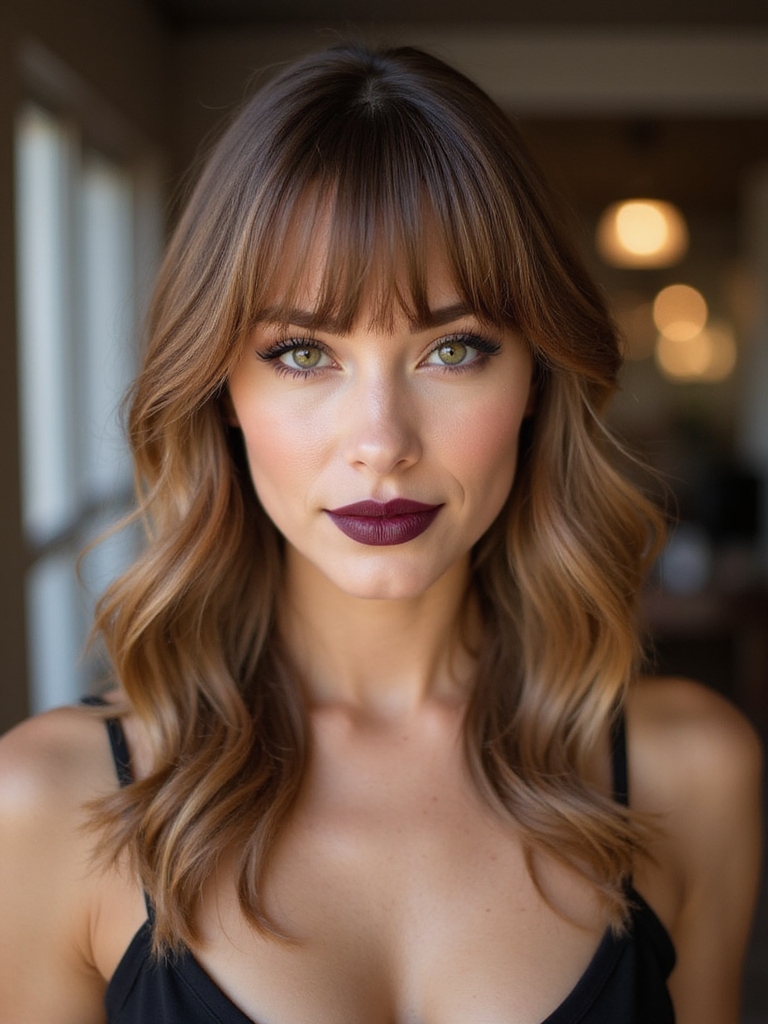
Want to keep your curtain bangs looking soft but obedient? I reach for a lightweight styling cream to shape, a flexible-hold hairspray to lock movement, and a heat-protectant serum before any blowout.
Together they give me smooth shape, natural bounce, and damage protection without stiffness.
Lightweight Styling Creams
I reach for a lightweight styling cream when I want my curtain bangs to look soft, defined, and touchable without feeling sticky or stiff.
I dab a pea-size, smooth through ends, and scrunch for movement. My go-tos:
- Smooth frizz
- Define layers
- Add subtle hold
They keep shape, breathe, and feel natural—perfect for everyday charm.
Flexible Hold Hairsprays
Usually I reach for a flexible hold hairspray when I want my curtain bangs to keep their shape but still sway with movement. I mist lightly after styling to set the part, tame flyaways, and add touchable hold without stiffness.
It refreshes shape midday, resists humidity, and lets me finger-comb for a lived-in look—perfect for carefree, balanced bangs.
Heat-Protectant Serums
Kick things off by smoothing a dab of heat-protectant serum through the bangs before you reach for the blow-dryer—I’ll swear by this step for shaping and staying power.
I use lightweight serums that tame frizz without weighing.
Try these simple picks:
- lightweight shield
- anti-frizz polish
- flexible hold finish
They boost shine, protect strands, and help your curtain bang curve perfectly.
Maintaining Shape Between Salon Visits

Often I’ll grab my round brush and a quick spritz of texturizing spray to keep curtain bangs looking intentional between salon visits.
I smooth roots with a blow-dryer, twist ends around the brush for that soft sweep, and clip bangs up while I sleep to preserve shape.
A tiny snip here and there—just dusting split ends—keeps everything tidy until my stylist works their magic.
Growing Them Out Gracefully

When I decide to grow my curtain bangs out, I treat it like a slow, fun experiment rather than a hairy crisis — I tweak the shape, play with parting, and let the length evolve into face-framing layers.
I share tiny tricks I actually use:
- Trim micro-bangs yourself.
- Clip sides for shape.
- welcome soft waves while waiting.
Adapting Curtain Bangs to Different Hair Textures

I always start by working with whatever texture you’ve got—flat, wavy, or super curly—because curtain bangs should enhance, not fight, your natural shape.
For curls I cut a bit more length and shape around the curl pattern, while sleeker hair gets softer layers and a slight taper. Then we talk products and tools—light creams or mousses for texture, heat for sleekness—so your bangs behave the way you want.
Work With Natural Texture
Working with your natural texture makes curtain bangs feel effortless instead of forced — I’ll show you how to shape them so they play nicely with whatever your hair’s doing.
I tweak length, layering, and product so your bangs behave.
Try these quick tips:
- Adopt layers to reduce bulk.
- Use lightweight cream for definition.
- Diffuse or air-dry for shape.
Cutting for Curl Pattern
Reading your curl pattern is step one — I’ll cut and shape curtain bangs to follow the way your hair naturally coils so they don’t spring up or disappear once they dry.
I assess density, shrinkage and curl size, trimming more length for tighter coils and softer layers for looser waves.
We’ll tweak angles so your bangs frame your face and bounce the way you want.
Styling Products and Tools
Once I’ve mapped your curl pattern and trimmed for shrinkage, we’ll pick the right products and tools so those curtain bangs behave from wash to second-day hair.
I tailor choices to texture, keeping your shape and bounce.
Try these staples:
- Lightweight cream or mousse for definition.
- Wide-tooth comb and diffuser for gentle shaping.
- Mini flat iron or round brush for occasional polish.
Common Mistakes to Avoid When Cutting or Styling
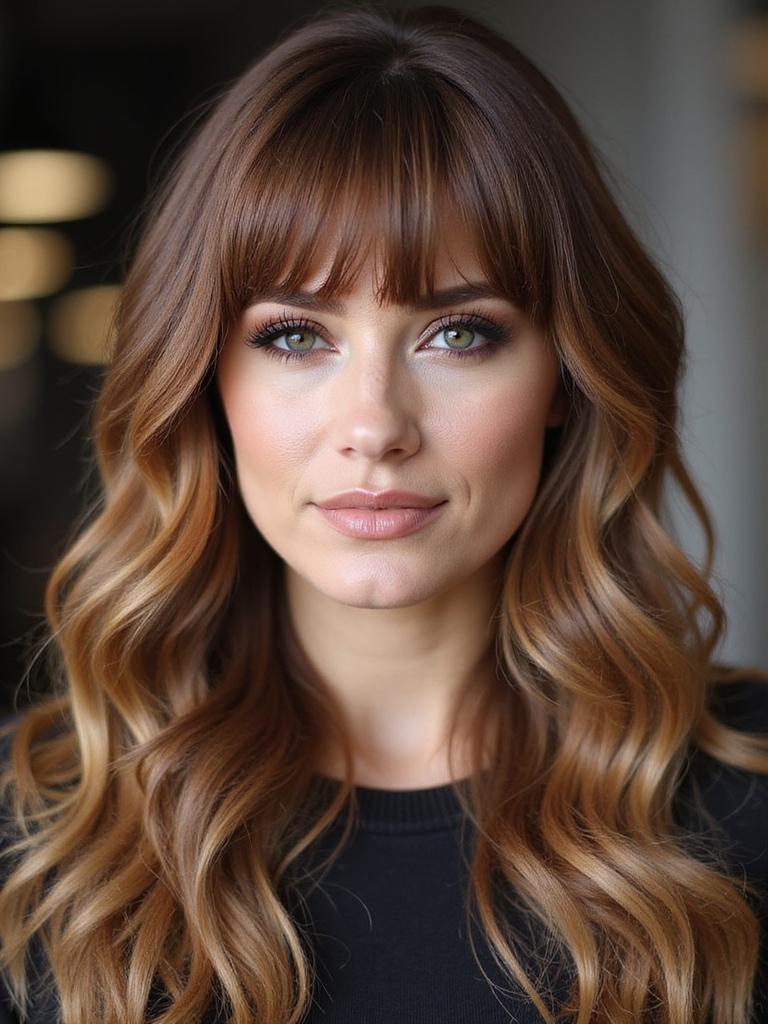
If you’re trying curtain bangs on medium hair, don’t let a few common slip-ups ruin the look—I’ve seen people over-thin, cut too short, or style with the wrong tools and watch the whole thing fall flat.
Don’t rush trims, avoid heavy layering at the roots, skip blunt chop experiments, and resist constant heat without protection. Believe me—gentle shaping and the right tools save the day.
Inspiring Celebrity and Street-Style Examples

I’ve seen how one bad trim can wreck a look, so now I love showing clients how celebs and everyday trendsetters redeem curtain bangs with smart cuts and styling—think effortless, face-framing pieces that actually move.
I point to looks I adore:
- Zendaya’s soft, lived-in swing.
- Street-style parisian rolled vibe.
- Actor off-duty, tucked behind ear cool.
So, if you’re flirting with a fresh look, balanced long curtain bangs are a cheekbone-skimming, low-fuss win—easy to style, flattering, and forgiving. I’d say try them if you want movement without commitment; just pick a length that complements your face, ask for soft density, and commit to trims every 6–8 weeks.
Play with a round brush or soft curl, keep products light, and have fun—these bangs practically wink at you every time you tuck them behind your ear.


