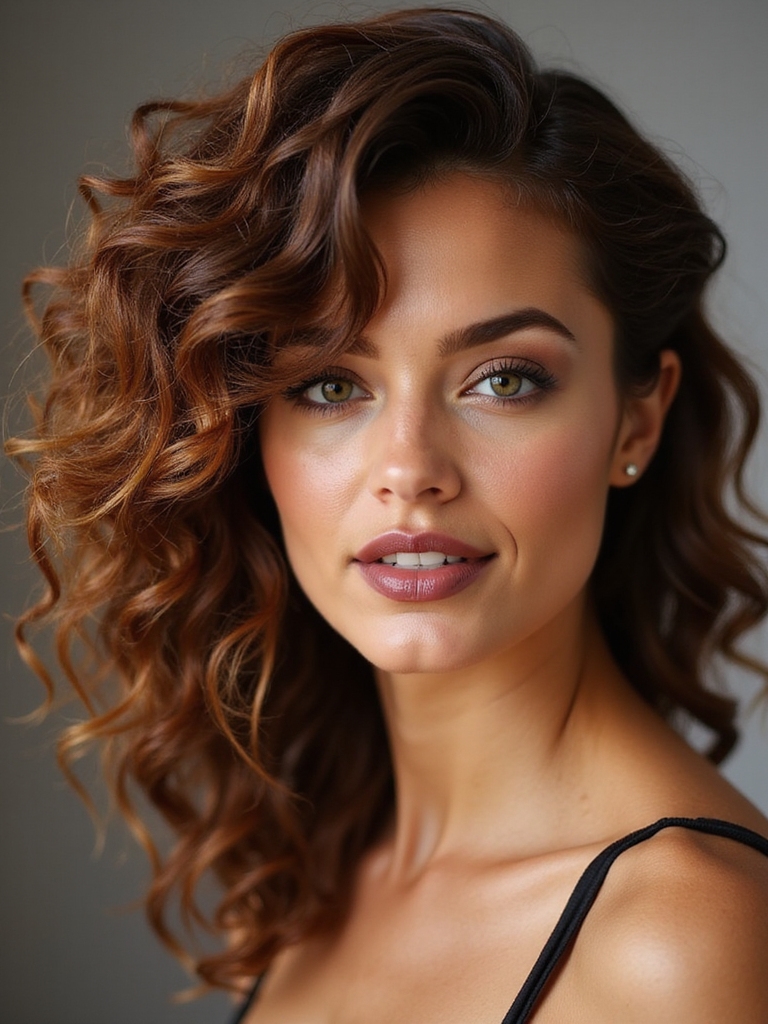


I love how a simple side part with curtain bangs can freshen your whole look without a major commitment; it softens angles, adds movement, and works with almost every hair type.
Start from your natural part, tweak the length and weight to flatter your cheekbones, and you’ve got an easy, versatile fringe that can be casual or polished. Want to know how to pick the perfect length and style for your face and texture?
Why Side Part Curtain Bangs Work for Every Hair Type

Even if you think bangs aren’t for you, I promise side part curtain bangs can work with almost any hair type — they’re forgiving, customizable, and shape-friendly.
I love how they soften strong features, add movement to fine hair, and tame thick or curly textures when layered right.
You can adapt length, weight, and parting to complement your natural growth and styling routine.
Effortless Curtain Bangs to Frame Your Face are a great option for creating soft framing around the face with minimal daily styling, especially when cut to suit your natural fall and texture, making them a low-maintenance way to refresh your look with face-framing accents.
Choosing the Right Fringe Length for Your Face Shape

I’ll help you pick a fringe length that balances your face proportions so your features look harmonious.
We’ll talk about how different lengths can frame and highlight where your cheekbones sit.
With a few simple tips, you’ll know which curtain bang length flatters your shape best.
Curtain bangs can also be styled to complement different glasses styles, ensuring both your fringe and frames work together.
Balance With Face Proportions
Face shape matters when you’re deciding how long to make those side part curtain bangs, and I’ll walk you through why a few centimeters can change the whole balance of your features.
I help you choose lengths that soften angles, add width or elongation, and harmonize forehead-to-chin proportions.
We’ll aim for bangs that feel natural with your facial geometry and flattering every day.
Curtain bangs are especially versatile for creating effortless framing around the face and can be tailored to suit every face shape.
Highlight Cheekbone Placement
Now that we’ve matched bang length to overall face proportions, let’s zero in on how those curtain bangs can draw attention to your cheekbones.
I recommend longer, soft layers grazing the top of the cheek for round faces and shorter, angled ends for longer faces to create width.
I’ll help you tweak length and part placement so your cheekbones pop without overpowering your features.
Layering also adds movement and dimension to curtain bangs, enhancing natural bone structure with layered curtain bangs and soft face-framing pieces.
Deciding on Thickness: Fuller vs. Wispy Curtain Bangs

A few simple choices will tell us if fuller or wispy curtain bangs suit you best, and I’ll walk you through the practical differences so you can pick confidently.
Fuller bangs add drama and frame the face, great with thicker hair or bold looks.
Wispy bangs feel light, low-maintenance, and soften features—ideal if you want movement without heaviness.
Consider maintenance and styling time.
Effortless straight hair pairs especially well with curtain bangs, offering a sleek backdrop that highlights the cut’s texture and clean lines.
How to Position the Side Part for Best Face Framing

I like to start by finding your natural part—it’s the easiest guide and usually the most flattering.
From there I’ll tweak the placement based on your face shape so the curtain bangs soften your features, and I’ll also account for your hair’s volume to keep everything balanced.
Small shifts can make a big difference, so we’ll experiment until it frames you perfectly.
Find Your Natural Part
When I’m figuring out where your side part should sit, I start by looking at how your hair naturally wants to fall—it’s the easiest clue to a flattering part that feels effortless.
I gently trace the natural ridge or cowlick, watch where bangs separate, and shift slightly toward the eye you want to highlight. Small moves make big, natural-looking differences—no fight with your hair required.
Consider Face Shape
Because your face shape changes how light and shadows play, I tweak the side part to highlight your best features and soften any angles.
I’ll angle the part to balance proportions, skim cheekbones, or draw attention upward. Picture these tweaks:
- Diagonal parting to soften a square jaw.
- Deep side sweep to slim a round face.
- Slight off-center for long faces.
Adjust for Hair Volume
Often I nudge the part a hair higher or lower depending on how much lift you want at the roots.
If your hair’s thick, a deeper side part softens bulk and showcases the curtain effect.
For fine hair, a slightly off-center part creates instant volume and fuller framing.
Try small adjustments until your bangs sit naturally, flattering your face and movement.
Matching Curtain Bangs to Hair Texture: Straight, Wavy, Curly

Curious which curtain bangs will flatter your natural texture? I love matching shape to hair—here’s how I see it:
- Straight: sleek, long panels that frame your face like soft ribbons.
- Wavy: textured, choppy edges for movement and effortless charm.
- Curly: shorter, layered curtains that play with bounce and avoid heaviness.
Pick the silhouette that complements your natural pattern.
Styling Tools and Products You’ll Need

Now let’s talk about the tools and products that make side part curtain bangs look effortless. I recommend a blow dryer with a nozzle, a couple sizes of round brushes, and lightweight styling products so your bangs move without weighing down.
I’ll walk you through how to use each one for your hair type.
Blow Dryer With Nozzle
A concentrator nozzle on your blow dryer is the small tool that’ll make shaping side part curtain bangs quick and precise, and I always reach for one when I want a smooth, controlled finish.
I angle airflow, tame flyaways, and define the bend. Picture:
- Glossy crescent strands
- Warm air hugging roots
- Sleek, framed face
Round Brush Variety
Reach for the right round brush and you’ll see how much easier shaping side part curtain bangs becomes — I like to keep a small selection on hand so I can match brush size to hair length and the curl or bend I’m after.
I favor a 1-inch for subtle lift, a larger barrel for soft waves, and a vented mini for precision near the roots.
Lightweight Styling Products
Keeping products light is key — I like things that give hold and movement without weighing my curtain bangs down.
I reach for airy mousses, lightweight creams, and a touch of flexible hairspray to keep shape and bounce.
Here are my go-tos for soft, touchable bangs:
- Foam mousse for lift
- Lightweight cream for smoothness
- Flexible hairspray for hold
Quick Everyday Styling Routine in Under 10 Minutes

When I’m short on time but still want my side part curtain bangs to look polished, I follow a simple, repeatable routine that takes under ten minutes.
I dampen bangs slightly, apply a pea-sized smoothing cream, and quickly blow dry with a round brush for gentle lift.
I finish with a light mist of flexible hairspray and finger-shape the fringe for natural movement.
Blowout Technique for Long-Lasting Shape

I usually start my blowout by prepping the hair so the shape holds all day.
I section the bangs, use a round brush, and aim the dryer downward for smoothness.
Quick cool shots set the curve. My steps:
- Small top section wrapped around a medium round brush.
- Root lift at the part with warm air.
- Cool blast to lock the bend.
How to Sleep on Curtain Bangs to Preserve the Style

After a long day of styling, I tuck my curtain bangs into a simple routine that keeps the shape overnight without fuss.
I lightly mist them with a flexible-hold spray, part and wrap each side around my fingers, then secure with a soft clip at the roots.
In the morning I release, shake gently, and smooth with fingers for effortless volume.
Transitioning From Full Bangs to a Side Part Curtain

If you’re thinking about softening heavy, full bangs, switching to a side part curtain is one of the easiest, most flattering moves you can make—I’ll walk you through how to get there without a dramatic chop.
I guide you to grow, trim, and style gently so bangs sweep aside naturally.
- Grow center length
- Point-cut ends
- Blow-dry with a round brush
Subtle Color and Highlight Ideas to Accentuate the Fringe

Now that your bangs are sweeping to the side nicely, let’s play with color to make that curtain really pop. I’d suggest soft face-framing highlights, subtle balayage, or a few lighter babylights near the part to catch light.
Warm caramel or cool ash tones add dimension without drama. These small touches brighten your face and make the fringe feel fresher and more intentional.
Trimming and Maintenance: When to Visit the Salon

I like to get my curtain bangs trimmed every 6–8 weeks, but I’ll go sooner if they start poking in my eyes or losing their shape.
Watch for uneven lengths, heavy weight at the ends, or your part drifting—those are clear signs it’s time for a salon refresh.
Between visits I use a lightweight oil and a quick snip with salon scissors (carefully!) to keep the fringe looking tidy.
How Often Trim
Usually I trim my side part curtain bangs every 4–6 weeks to keep the shape soft and the layers from getting heavy, but your hair growth and styling routine might push that window a little shorter or longer.
I like predictable upkeep; here’s how I think about timing:
- Light tidy every 4 weeks for crispness.
- 6-week refresh for relaxed shape.
- Quick snip between cuts when needed.
Signs to Refresh
Often you’ll notice the little signs that tell you it’s time for a refresh, and I pay attention so the curtain and side part stay flattering instead of fuzzy.
I watch for split ends, uneven lengths, loss of shape, or bangs that block my eyes.
When volume drops or the part drifts, I book a trim—usually before things feel unruly—to keep the look polished.
Home Upkeep Tips
Keeping your side part curtain bangs looking fresh doesn’t have to mean constant salon trips; with a few simple at-home checks and tiny trims, you can stretch time between appointments and still look polished.
I peek weekly, snip stray wisps, and book the salon when shape softens.
- Mirror-check fringe length
- Trim split ends lightly
- Schedule shape touch-ups every 8–12 weeks
DIY Touch-Ups and Safe At-Home Trimming Tips

Since you’ll want your side part curtain bangs to look fresh between salon visits, I’ll walk you through simple, safe touch-ups you can do at home.
I’ll show precise trimming angles, how to snip wet versus dry, and tiny point-cutting for texture.
Use sharp scissors, clip hair in sections, trim conservatively, and check symmetry.
Stop early—less is more.
Styling Variations for Special Occasions

Now that you’ve got the basics of at-home touch-ups down, let me show you how to elevate your side part curtain bangs for special occasions.
I play with texture, volume, and accessories to match mood and outfit:
- Soft waves framing my face, tucked behind one ear with pearl pins.
- Sleek, glossy sweep for a polished evening look.
- Tousled, romantic lift with a floral clip.
Common Mistakes to Avoid With Curtain Bangs

While curtain bangs can totally transform your look, I’ve learned a few pitfalls that’ll undo the effect fast if you’re not careful.
Don’t cut them too short, over-layer, or skip blending with the rest of your hair.
Avoid heavy product buildup and neglecting regular trims.
Instead, ask for soft graduation, style with light heat, and refresh every 6–8 weeks to keep them flattering.
I hope this guide has given you the confidence to try side part curtain bangs — they’re such an easy, wearable update that flatters most faces and hair types.
Start from your natural part, keep the length and weight tailored to your features, and don’t be afraid of subtle layering or soft highlights to boost movement. With simple styling and regular trims you’ll enjoy a fresh, low‑maintenance look that feels effortlessly chic and totally you.