


Ever caught your reflection after a fresh cut that lands right at the jaw and wondered why you waited so long? Chin length hair has that effect: it frames the face, sharpens your features, and looks finished with very little effort.
It is also a remarkably adaptable length — long enough to tuck, wave, or part a dozen ways, short enough to dry in minutes. Below is what I tell clients in the chair: how to cut it, style it, match it to your face and hair type, and keep it healthy.
Quick Answers Before You Book the Cut
Will it suit me? If you want a cut that frames the jaw, looks polished fast, and grows out gracefully, very likely — the right variation flatters round, long, square, and heart faces.
How much upkeep is it? A trim every six to eight weeks holds the shape; day to day it styles quickly once the cut is right for your texture.
Is it hard to grow out? Far less than a pixie. It moves through a lob into long layers without an awkward stage if you trim the ends and add face-framing pieces.
Why a Jaw-Length Cut Wins People Over

A chin-length cut hits a sweet spot most lengths miss: the ends land at the jaw, which draws the eye up toward your cheekbones and gives the face a lifted, defined look.
Part of the appeal is honesty of effort — it looks deliberate and polished without an hour of work. The trade-off is that it has to be precise, since there is little length to hide an uneven line.
How Many Ways You Can Wear One Cut

The quiet superpower of this length is how many looks live inside a single cut. With a little internal layering, the same chin-length hair reads polished for work, undone for the weekend, or swept back when you are short on time — no return trip to the salon required.
- Smooth and tucked behind the ears for a clean, pulled-together workday
- Tousled with a salt spray and finger-raked for a soft, lived-in weekend
- Pinned half-back or behind one ear on day-three hair when you want root height
💡Stylist Tip
When you book, do not just say ‘a bob.’ Tell your stylist whether you want it blunt for density or internally layered for movement, and name your hair texture out loud. Those two details decide whether the cut falls into place or fights you every morning, far more than any product will.
Matching a Chin-Length Cut to Your Face Shape

Face shape is where this cut either flatters or fights you, and small placement choices make all the difference. Here is how I steer it in the chair:
- Round face: let the ends fall just below the jaw with a side part to lengthen and slim
- Long or oblong face: keep it blunt and add soft bangs to break up the vertical and add width
- Square jaw: soften the line with waves or face-framing layers so the cut does not echo the jaw
- Heart shape: a touch of volume at the ends balances a narrower chin
Low-Maintenance Cuts Built for Busy Mornings

Low maintenance starts at the cut, not the styling. If your mornings are tight, the shape you ask for matters more than any product — a cut that falls into place as it air-dries buys back the most time.
- A blunt, one-length bob: dries close to straight and needs only a quick smooth
- A soft graduated bob: light stacking at the back holds shape as it grows
- Long-layered chin length: best for thick hair, since layers cut bulk so it dries faster
The Classic Chin-Length Bob and Its Variations

The chin-length bob is the backbone of this whole category, and it is not one haircut but a family of them. Knowing the variations lets you ask for the exact one that suits your hair instead of a vague trend name. Our bob hairstyles guide maps the wider family.
- Blunt bob: a single clean line, heavy and modern, best on straight to wavy hair
- A-line bob: a little longer at the front, shorter at the back, flattering and easy to grow out
- Graduated bob: stacked at the nape for lift, ideal for fine hair that needs body
Getting a Sleek Glassy Finish at Home

That smooth, glassy finish is mostly technique, not heat. Work in this order and you will spend far less time with the iron:
- Rough-dry to about eighty percent, then switch to a flat paddle brush, aiming the nozzle down the shaft
- Section the hair and pass a flat iron through each piece once, not three times
- Finish with a cool shot and a pea-size drop of serum on the mid-lengths only, never the roots
Two things I hear constantly about getting it sleek:
❌ Myth: You have to flat-iron it every day.
✅ Reality: A good blunt cut sits smooth with just a blow-dry and a cool shot; daily ironing mostly invites breakage.
❌ Myth: Sleek means loading on serum.
✅ Reality: One pea-size drop on the mid-lengths is plenty — any more turns fine hair greasy and flat.
Soft Waves Without Much Heat

You do not need a wand and twenty minutes for waves at this length. Because the hair is short, a few low-effort methods give soft bend with minimal heat:
- Damp-braid two loose plaits before bed and unravel them in the morning for a natural S-wave
- Use a curling wand only on the front pieces, leaving the back smooth, for a fast face-frame
- Scrunch mousse into towel-dried hair and air-dry for an undone, beachy texture
Working With Natural Curls at Chin Length

Chin length and natural curls are a genuinely good match, as long as the cut respects how curls behave. The big rule: have curls cut dry so your stylist sees where each spiral truly falls — wet-cutting hides the spring and leaves you shorter than planned.
- Factor in shrinkage: curly chin-length can bounce up an inch or two once dry
- Define with a leave-in and curl cream raked through soaking-wet hair, then scrunch
- Dry with a diffuser on low, or air-dry untouched, to keep frizz down; our haircuts for wavy hair guide helps looser textures too
A couple of curl terms worth knowing before your appointment:
📖Shrinkage
How much shorter curls look dry versus wet — chin-length curls can spring up an inch or two, so the cut has to allow for it.
📖Curl clumping
Letting curls group into defined pieces instead of separating into frizz, encouraged with a leave-in and gentle scrunching.
Picking Products That Suit the Length

Product choice changes a lot here, because there is less hair to carry weight. The mistake I see most is reaching for the heavy creams meant for long hair, which leave a chin-length cut limp and greasy by lunch.
Match the product to your goal and texture. Fine hair wants light volumizing mousses and dry texture sprays; thick or coarse hair can take a smoothing cream or a few drops of oil on the ends to calm frizz.
Whatever you use, apply less than you think and keep it off the roots. A short cut shows buildup fast, so a clarifying wash every couple of weeks keeps it moving and shiny.
Daily Habits That Save Real Time

Beyond the cut itself, a few daily habits shave real minutes off your routine. These are the ones clients tell me actually stick:
- Sleep on a silk pillowcase so you wake with less frizz and fewer kinks to fix
- Refresh day-two hair with a little dry shampoo at the roots instead of rewashing
- Keep a small claw clip in your bag — a twisted, clipped tuck reads intentional in seconds
Dressing Up the Cut With Accessories

Accessories do a lot of heavy lifting at this length, because short hair frames them so well. A clip or band reads as a styled choice rather than an afterthought.
Keep the scale in proportion — chunky pieces can swamp a small cut, while a few fine pins or a thin band sit just right.
- Slim metal clips to pin back one side for an asymmetric, polished look
- A soft headband to push a grown-out fringe off your face
- A small silk scarf knotted at the nape for a retro-leaning weekend touch
Adjusting Your Styling Through the Seasons

How you wear a chin-length cut shifts with the weather, and a few seasonal tweaks keep it working year-round. The cut stays the same; the styling and care adapt.
A quick seasonal product swap
In summer, humidity is the enemy of a smooth line, so lean into texture — salt sprays and air-dried waves look intentional when frizz is unavoidable anyway. A light anti-humidity cream holds a sleeker look if you want one.
In winter, dry heat and hat-hair take over. A leave-in conditioner fights static, and styling the front a little fuller hides the flatness a beanie leaves behind.
Building Volume When Hair Falls Flat
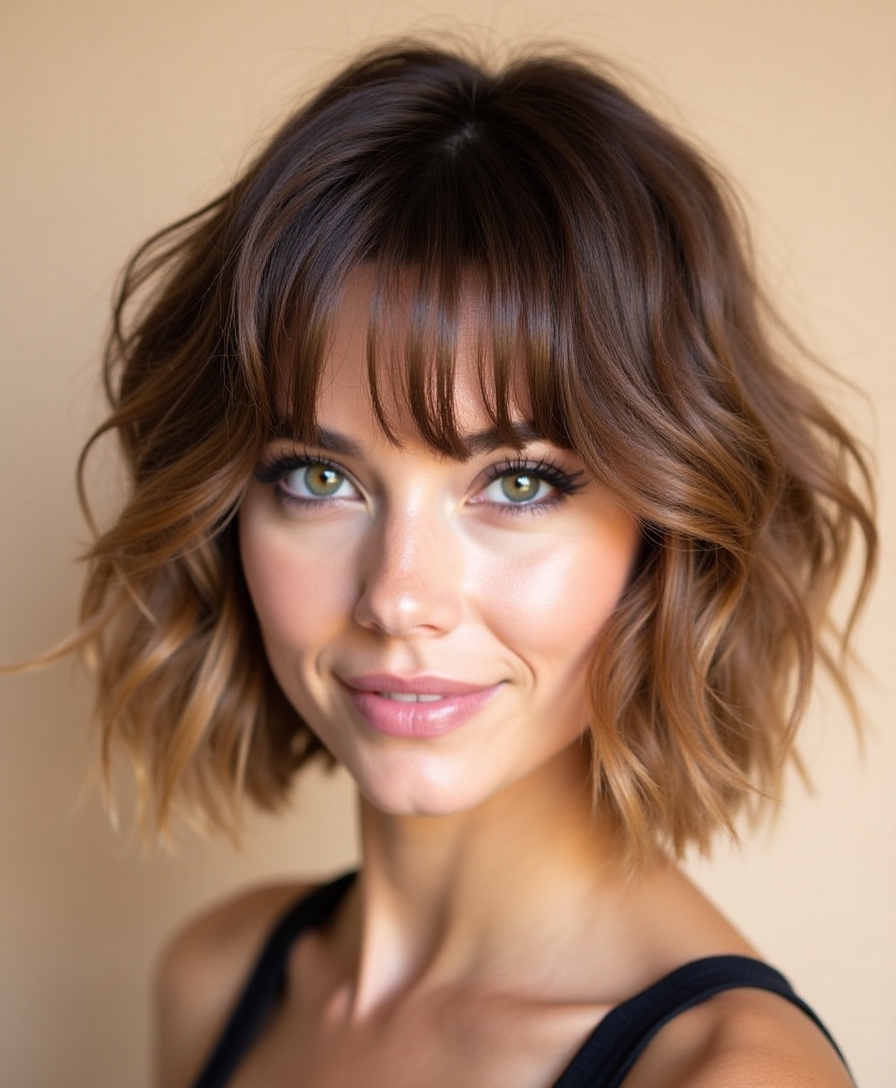
Flat roots are the most common complaint here, especially on fine hair. Volume is very achievable, though, with a few placement tricks:
- Blow-dry the roots in the opposite direction of your part, then flip it back
- Use a round brush to lift at the crown and bend the ends slightly under
- Work a mousse or root-lift spray into damp hair before drying, focused on the crown only
Adding Bangs to a Chin-Length Shape

Bangs and a chin-length cut are a classic pairing, but the type of fringe should answer to your face and your patience. Curtain bangs are the easy default — they frame the face, grow out softly, and suit nearly everyone.
If you want more drama, a blunt or micro fringe sharpens the whole look but asks for more upkeep, with trims every couple of weeks. Be honest about the time you will give it; a neglected fringe quickly works against the clean line of the cut. Our face-framing bangs guide helps you choose the shape.
What Chin-Length Looks Like on Each Hair Type

This length works across hair types, but what to ask for changes with your texture. Here is the quick map I use:
- Fine hair: blunt or graduated for the look of density; skip heavy layering
- Thick hair: ask for internal layers to remove weight so it does not pouf out
- Wavy hair: a soft, lightly layered bob lets the wave move without a triangle shape
- Coily and curly hair: dry-cut with shrinkage in mind, leaving length to spring up
Using Color to Shape the Cut

Color and a chin-length cut amplify each other, because a short, defined shape shows off dimension that gets lost in long hair. The right placement can even fake extra volume and movement.
You do not need an all-over change. Subtle, well-placed color does more here than a dramatic one. A soft brunette balayage is a low-commitment place to start.
- Face-framing money pieces brighten the front and draw the eye to your features
- Soft balayage on the ends adds depth and makes a blunt bob look less solid
- A glossing treatment alone boosts shine and makes any color read healthier
Cutting Techniques That Make the Shape Work

What separates a chin-length cut that falls into place from one that never behaves is the cutting technique, not the length itself. It is worth understanding a little so you can talk to your stylist.
Point-cut versus blunt in plain terms
Point-cutting — snipping into the ends vertically — softens a heavy line and helps the hair move, which is ideal for thick or coarse textures. A blunt, straight-across cut keeps maximum weight and gives that crisp, modern edge on straight hair.
Where the layers sit matters just as much. Internal layers remove bulk without shortening the outline; surface layers add visible movement. Ask for what your hair needs, not a trend name.
Protective Options for Textured Chin-Length Hair

For textured, coily, and Afro hair, chin length can still be low-manipulation with a little planning — there is enough length to tuck, wrap, and style without daily tension. Our protective styles for natural hair guide goes deeper; a few that work well here:
- Flat twists or mini two-strand twists that tuck the ends away while framing the face
- A satin or silk wrap at night to hold moisture in and keep friction out
- Finger coils on chin-length curls for definition without heat or daily restyling
Keeping the Length Healthy and Strong
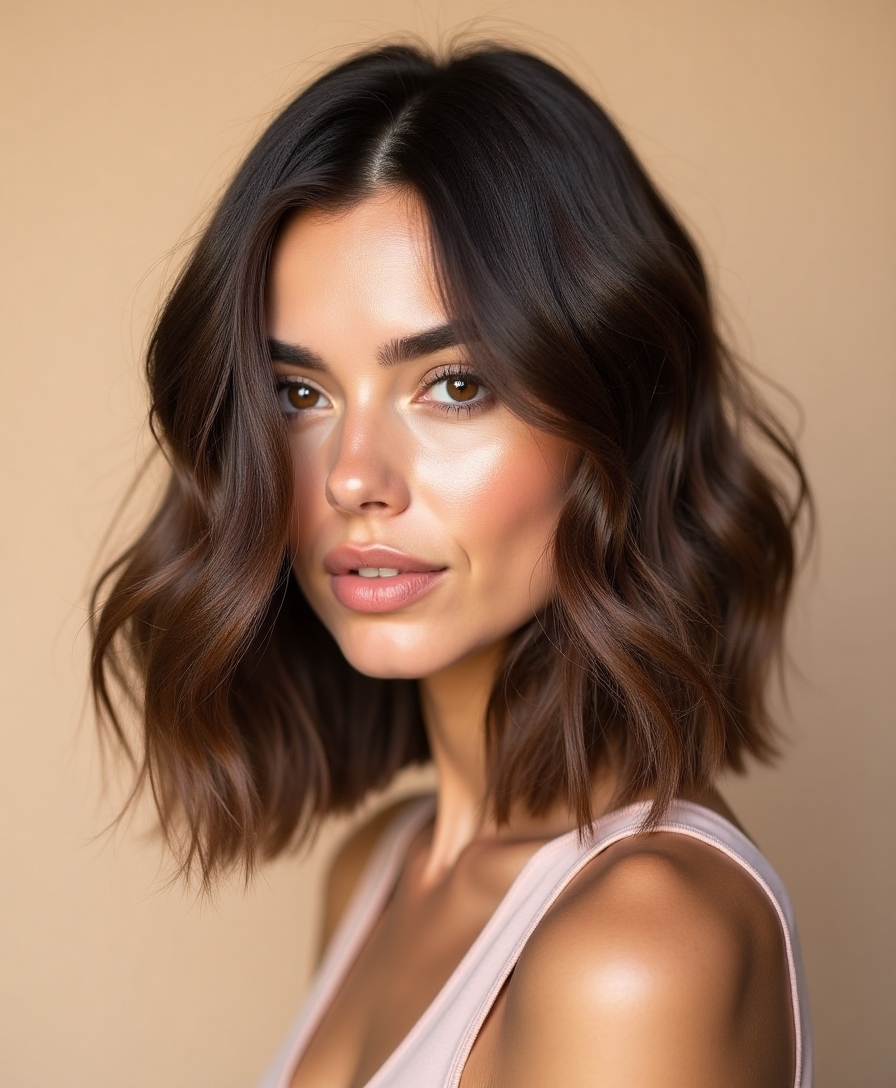
Keeping chin-length hair healthy is mostly about the ends, since they are the oldest, most exposed part and they sit right in your eyeline. Damage shows faster here than it does buried in long hair.
Regular trims are non-negotiable for the shape, but real health comes from how you treat it between cuts.
- Budget roughly fifty to ninety dollars for the cut, and a shaping trim every six to eight weeks to keep the line clean and stop splits from traveling
- Use a weekly mask or deep conditioner, focused on the mid-lengths and ends
- Turn the heat tool down — most hair styles fine well below the hottest setting
Going Shorter Without the Regret

Going from long hair to chin length is a bigger jump than most people expect, and easing in stages prevents the regret cut. There is no rule that says you must lose it all in one appointment.
Why a lob makes a good halfway step
If you are nervous, step down gradually — take it to a collarbone lob first, live with it for a few weeks, then go to the jaw once you trust the shorter shape.
When you are ready, bring a photo of the collarbone lob you are stepping through first, so your stylist can stage the change instead of guessing where to stop.
Timeless Chin-Length Looks Worth Saving

Some chin-length looks never really date, which makes them great references to save on your phone for your next appointment — no famous names needed, just shapes that keep coming back.
What these enduring styles share is a strong, clean line and a shape that flatters rather than chasing a trend.
- The sharp blunt bob: a single jaw-skimming line that reads modern in any decade
- The soft side-parted wave: glamorous, forgiving, and easy to recreate at home
- The behind-the-ear tuck: minimal and elegant, ideal for fine to medium hair
Fixing the Common Chin-Length Frustrations

Every length has its frustrations, and knowing the chin-length ones makes the cut far easier to live with. The big three are flat roots, the awkward grow-out around the ears, and ends that flip when you do not want them to.
Most are fixable with small habits: a root-lift spray for volume, a little patience plus pins through the ear-length stage, and a round brush or a touch of cream to control the flip.
Pairing the Cut With Your Wardrobe

A chin-length cut changes how outfits read, which is half the fun of it. The exposed neck and jawline make the most of statement earrings, turtlenecks, and structured collars that a curtain of long hair would hide.
Lean into it when you dress: high necklines and bold ears feel intentional, and a sleek tuck dresses up a simple outfit in seconds.
Making the Cut Truly Your Own

No two chin-length cuts should look identical, because the details are where it becomes yours. Use these levers with your stylist to personalize the shape:
- Adjust the exact length — a hair above or below the jaw changes the whole mood
- Choose your part: a middle part for symmetry, a deep side part for drama and volume
- Decide on bangs, layers, and texture based on your face and lifestyle, not a trend
Why the Chin-Length Cut Keeps Lasting

The reason this cut keeps coming back is simple: it solves real problems the rest of your routine cannot. It even leaves gracefully, growing out through a lob into long layers without a single awkward stage, which is rare for a short cut and a quiet reason people keep returning to it.
It also bridges ages and styles gracefully — polished enough for an office, soft enough for the weekend, and current without trying too hard.
- Flattering across face shapes and hair types
- Faster to style and grow out than most short cuts
- Reads classic and modern at the same time
The Cut That Earns Its Keep
If there is one thing to take from all this, it is that chin-length hair rewards a good cut more than constant styling. Get the shape right for your face and texture, and the day-to-day becomes easy.
Next time you are in the chair, bring a photo of the exact jaw point you want the ends to hit, and ask where the layers should sit for your hair type — that one conversation is what separates a cut you fight from one you love.


