
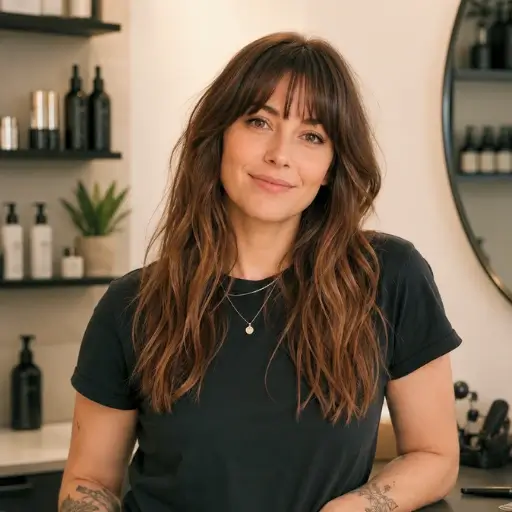

What is the one thing every 70s curly look had in common, from the disco floor to the album covers? Volume, and a lot of it. The decade treated big, bouncy, gravity-defying curls as the whole point, and that maximalist energy is exactly what is pulling these styles back into salons now.
Here are fifteen 70s curly hairstyles worth reviving, with the way I would actually build each one today: real lift, real definition, and far less damage than the backcombing-and-hairspray era relied on. Whether your texture is a loose wave or a tight coil, there is a version of the decade’s volume here for you. Our curly hairstyles guide covers the basics underneath them all.
Where 70s Volume Actually Comes From
| Volume source | Best for | Damage level |
|---|---|---|
| A layered, curl-aware cut | Every texture; the foundation of it all | None |
| Diffusing and root-clipping | Loose to medium curls that fall flat | Low |
| A pick or wide Afro pick | Coily and kinky textures | None when done gently |
| Roller sets and pin curls | Polished, defined retro shapes | Low, no heat needed |
Big Bouncy Layered Curls

The defining 70s curl was big, bouncy, and full of movement, and the secret was never teasing; it was the layered cut underneath. Layers give curls the room to lift and spring instead of sitting as one heavy mass, which is where all that volume actually lives.
Ask for long, curl-aware layers cut dry, then style with a mousse for hold and a diffuser for lift. Once it is bone dry, flip your head and shake gently at the roots; that single move is where the bounce comes from, no backcombing required.
Disco Volume With Curtain Bangs

Add a curtain fringe to all that volume and you have the full disco-floor look, with soft bangs splitting around the face while the lengths go big behind them. It is glamorous and surprisingly wearable once the bangs are cut to your curl pattern.
Curly curtain bangs have to be cut dry so they spring to the right spot, and they want a quick revive with water and cream each morning. Worn over voluminous curls, they frame the face without the maintenance of a blunt fringe. Our curtain bangs guide breaks down the cut.
The biggest myth the 70s left behind:
❌ Myth: You have to tease and backcomb to get real 70s volume.
✅ Reality: Not anymore. That volume now comes from a layered cut, root-clipping or a pick, and a diffuser. Backcombing just snaps the cuticle and leaves you with breakage, not lasting body.
Feathered, Flicked-Out Wings

The feathered, flicked-out wing was the decade’s most copied look, with face-framing pieces curling back and away like soft wings. It reads instantly retro and flatters almost everyone, because it draws volume out and around the face.
Wings Without a Daily Blow-Dry
On naturally curly hair, the feathering comes from the cut, with layers shaped to flick outward, then encouraged with a round brush only on the front pieces over low heat. The rest of your curls stay free, so the wings are an accent, not a full blow-out.
It suits loose to medium curls best, where the flick holds its shape. Tighter coils can get the same framing effect from a defined, picked-out shape rather than a brushed flick.
Crown-Height Roller Set
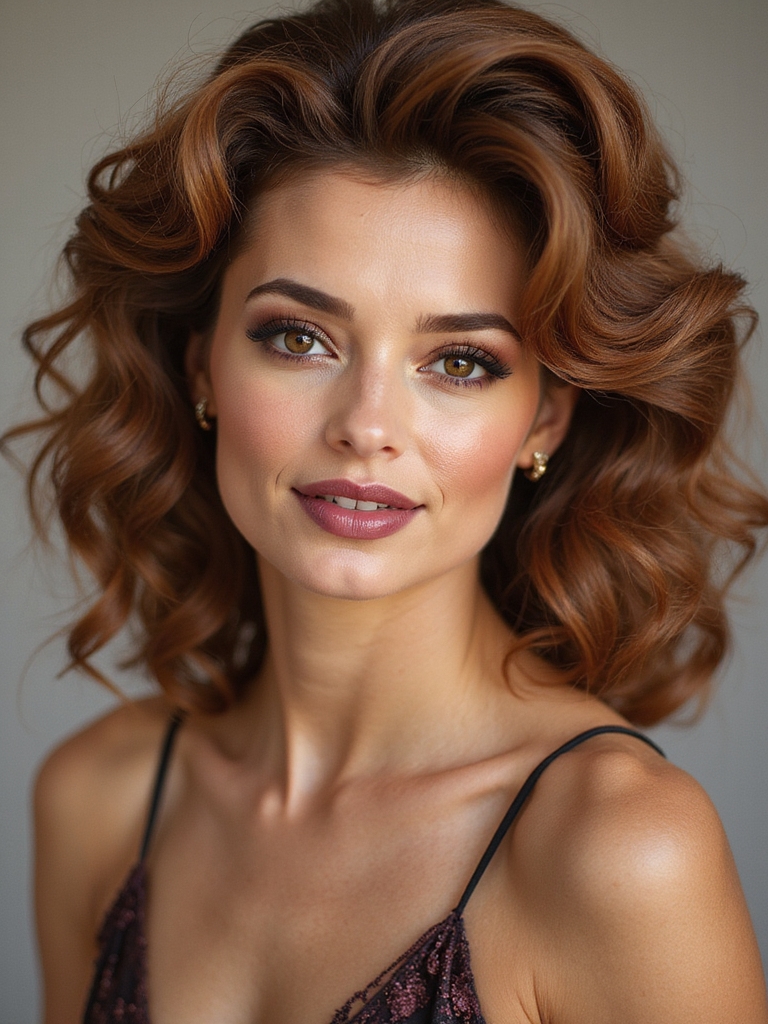
For polished, uniform volume with zero heat, nothing beats the roller set the 70s relied on, and it is having a genuine comeback among curly people who want definition without a hot tool. The rollers stretch and shape the curl while it dries, giving lift right at the crown.
A set of rollers costs about ten to fifteen dollars and the set takes twenty minutes of hands-on time plus drying, but the payoff is bouncy, long-lasting volume you simply cannot fake with your fingers.
- Pick your roller size for the finish: large for soft body, smaller for tighter, springier curl.
- Mist a flexible-hold spray before rolling so the set lasts two or three days.
- Rolling up and back stacks the height at the crown; rolling under softens it for a rounder shape.
🅰️Roller Set
Choose a roller set for polished, uniform, defined volume with zero heat. It takes time and patience but gives the most structured, long-lasting 70s shape.
🅱️Diffuser and Pick
Choose the diffuser-and-pick route for faster, more natural, lived-in volume. Less structured than rollers, but quicker and easier to work into a busy morning.
Soft Spiral Curls With Volume
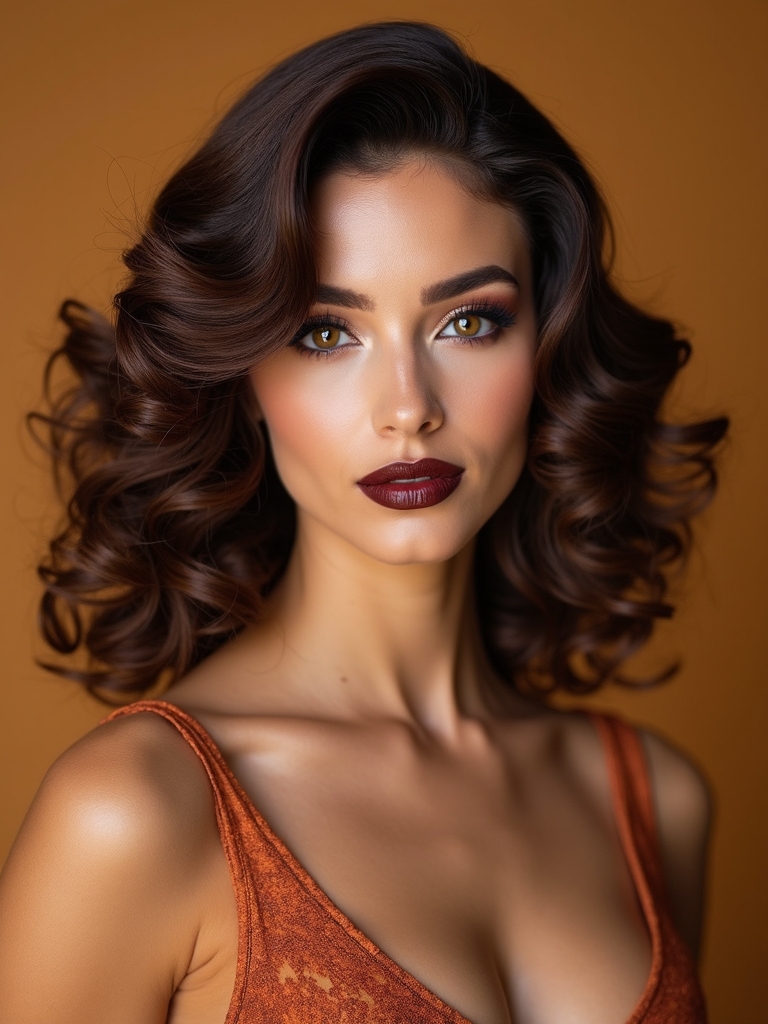
If your natural pattern is a spiral, the 70s is your decade, since soft, defined spirals with body were everywhere. The modern version keeps the definition and the volume but loses the crispy gel that the era never quite figured out.
- Rake a curl cream and a light gel through soaking-wet hair, scrunching upward.
- Diffuse on low or air-dry fully, then scrunch out any cast with a drop of oil.
- Pick out the roots once dry, working underneath, for that signature 70s height.
Lived-In Tousled Shag

The shag was born in this era and never really left, because the heavily layered, tousled cut is made for curly volume. The staggered layers pile texture on top while keeping the weight off, so curls move instead of sitting flat.
Why the Shag Stays Easy
It is also one of the easiest cuts to grow out and to live with, which makes it the easiest cut here to live with. Ask for curl-aware, point-cut layers and a few face-framing pieces.
Style it with just a leave-in and a scrunch; the cut does the work, so you spend almost no time on it. Our shag haircut guide has the full shape.
| Your texture | Best 70s look | How to lift |
|---|---|---|
| Loose waves (2a to 2c) | Feathered wings, long layered waves | Root rough-dry and a round brush on the front |
| Spirals and curls (3a to 3c) | Big bouncy layers, roller set, shag | Diffuse and lift with a pick |
| Coily and kinky (4a to 4c) | Brushed-out Afro, picked-out volume | Wide Afro pick from the roots, kept moisturized |
Springy Defined Curls With Lift

Definition and lift together are the 70s sweet spot: every curl shaped and separated, but the whole thing standing tall rather than falling flat at the roots. It is the look that photographs beautifully and the one clients ask me to recreate most.
What you’re after is volume without disturbing the curl, which is all about where you add the lift.
- Define with leave-in and gel on soaking-wet hair, then diffuse without raking through.
- Once dry, lift only at the roots with a pick or your fingertips, leaving the lengths alone.
- Root-clip while damp for even more height, or scrunch in extra mousse at the crown.
Pin-Curled Glossy Crown

For old-Hollywood-meets-70s polish, pin curls set a glossy, structured wave at the crown with no heat at all. It is the dressiest curly look here, ideal for an event when you want curls that read deliberate and shiny.
- Wind small sections into flat coils against the head and pin them while damp.
- Let them dry fully, then unpin and gently open the curls with your fingers.
- Finish with a drop of oil over the surface for that glassy, polished shine.
A no-heat roller set for 70s crown volume:
1Prep on damp hair
Start with clean, damp hair coated in a setting mousse or light gel for hold that lasts.
2Roll up and back
Wind large sections onto rollers, rolling up and back from the crown to build height where you want it.
3Dry completely
Sit under a hooded dryer or sleep on the rollers; unrolling even slightly damp kills the volume.
4Unroll and separate
Take rollers out gently, then break the curls up with a pick or your fingers, never a brush.
The Soft, Brushed-Out Afro
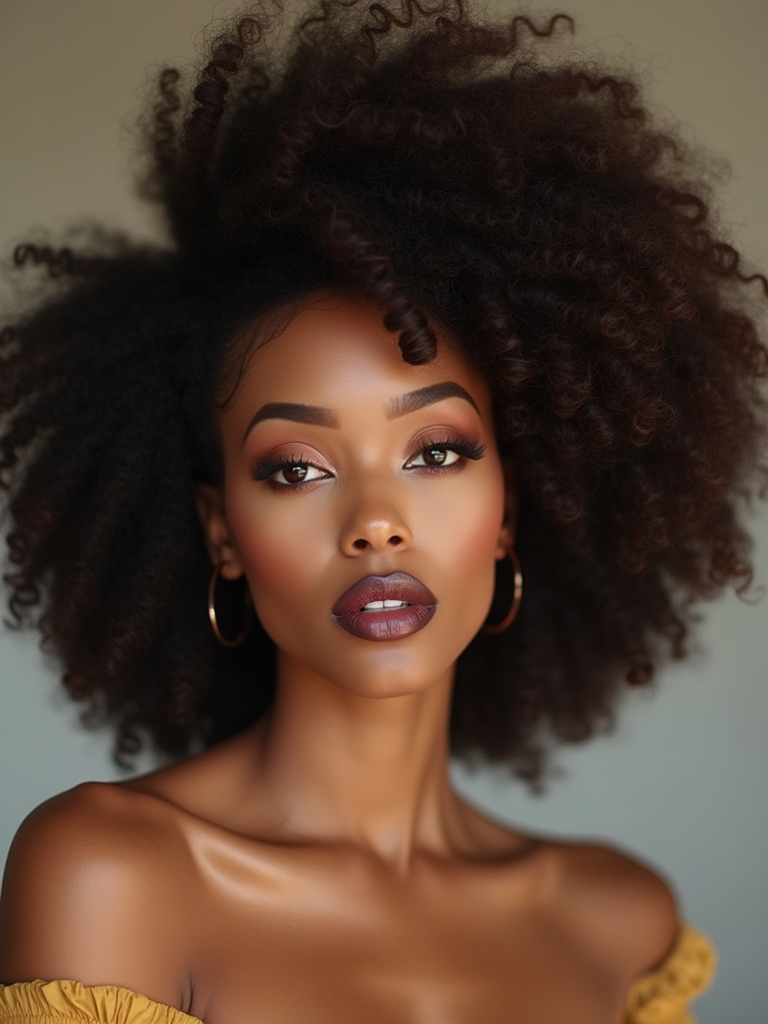
The Afro was the defining look of the decade, and it was never just a hairstyle; it was a statement of pride in natural Black hair at a moment when wearing your texture openly was radical. It remains among the most striking ways to wear coily and kinky hair, and today it is about health and shape as much as size.
Shape and Health Over Size
Modern technique is gentle and moisture-first. Keep the hair deeply conditioned so it stays soft and shapes evenly, lift from the roots with a wide Afro pick rather than a fine comb, and have the shape rounded and evened by someone who genuinely understands coily texture.
Skip the fine-tooth comb and any dry brushing, both of which snap the coil and the strand. A satin bonnet at night keeps the moisture in and the shape intact for the morning.
Slicked-Back Top, Defined Curls
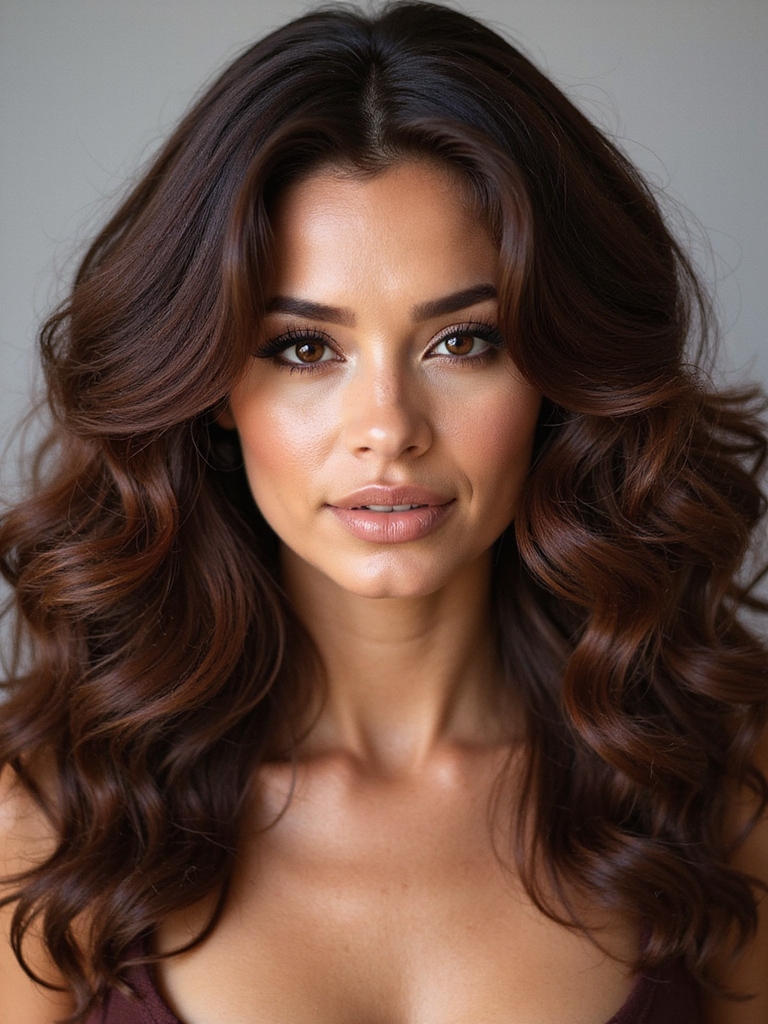
Balancing all that volume, the 70s also loved a smoothed-back top spilling into defined curls below, a polished contrast that still feels modern. It keeps the height off the crown while letting the texture do its thing through the lengths.
- Smooth just the top and front with a brush and a little gel, keeping it off the lengths.
- Let the rest of your curls fall defined and free below the slicked section.
- Very tight coils do better with a gel slick than heat at the root, to protect the texture.
Long Loose Layered Waves

For looser textures, the decade’s long, layered waves are the easiest entry point, all soft body and movement without the tight definition. It is the 70s look for 2a to 2c hair that wants volume but not ringlets.
Volume for Looser Waves
Layers are still the key, giving the waves somewhere to move, and a wide wand or an overnight braid adds bend where your natural pattern needs help. The finish stays soft and undone rather than set.
Rough-dry the roots for lift, scrunch a mousse through the lengths, and break the waves up with your fingers and a pinch of cream so they look lived-in, not done.
Teased Half-Up Playful Curls

The half-up with a lifted crown was the 70s answer to keeping hair off your face while still showing off volume. The modern, damage-free version swaps aggressive backcombing for a gentle lift and a clip.
Gather the top section, smooth the surface, and add height by lightly lifting underneath with your fingers rather than shredding the hair with a comb. Secure it loosely so it never pulls at your crown.
Leave the rest of your curls full and free below, and free a tendril or two at the front to keep it soft. It is playful, fast, and flattering on every texture.
The Curly Textured Mullet

The mullet got its rebellious start in this era, and on curly hair the shape is honestly flattering, with volume up top and through the sides and length left at the back. The curl softens the cut’s hard edges into something that just reads as cool.
It needs a stylist who cuts curly hair confidently, since the layering and the disconnection have to suit your pattern, judged dry for shrinkage. Done right, it is low-maintenance and grows out well.
Style it simply: define with a leave-in, diffuse or air-dry, and let the shape carry the attitude. It is the boldest look here and the one I recommend to clients who are bored of playing it safe.
Polished Vintage Side Part

A deep side part instantly dresses curls up and adds height where the hair changes direction, which is why the polished, vintage side-parted curl reads so grown-up. It is the easiest way to take big 70s volume somewhere formal.
Set the part on damp hair and let your curls dry that way so the lift holds at the root. The deeper the part, the more drama and the more volume you get on the fuller side.
It flatters most faces, especially rounder ones, since the diagonal adds length. A strong natural part may need a little gel or a clip to hold the deep one in place.
Chunky Glossy Bouncy Curls

To close on pure 70s drama, the chunky, glossy curl groups your texture into bigger, defined, high-shine sections that bounce with every step. It is maximal and confident, the spirit of the whole decade in one look.
- Encourage bigger curl clumps by raking gel through and twirling sections around a finger.
- Diffuse fully, then scrunch out the cast and smooth on a sheen serum for that glassy finish.
- Tease out the roots gently with your fingers, and wear it as big as you dare.
Common 70s Curl Mistakes to Avoid
The 70s got the volume right and the methods wrong, and avoiding its mistakes is what makes these looks healthy instead of damaging. Almost every problem traces back to forcing volume rather than building it into the cut and the dry.
Get the cut and the moisture right, lift gently, and the volume comes on its own. These styles are far easier on your hair than the originals ever were.
- Do not backcomb for height; lift at the roots with a pick or clips instead, which adds volume without the breakage.
- Do not brush curls dry; it shatters the pattern into frizz, so detangle wet with conditioner and a wide-tooth comb.
- Do not chase size over health; a moisturized, well-shaped curl always reads better than a bigger, drier one.
70s Curly Hair, Answered
?How do I get 70s volume without damaging my hair?
Build it into the cut and the dry rather than teasing it in. Ask for long, curl-aware layers, diffuse on low or clip your roots while drying, and lift with a pick once dry. That gives lasting volume with none of the breakage that backcombing and high heat caused in the original era.
?Do 70s curly looks work on coily and kinky hair?
Absolutely. The brushed-out Afro and picked-out volume are some of the decade’s most iconic looks and are made for coily and kinky texture. Keep the hair deeply moisturized, lift with a wide Afro pick rather than a fine comb, and have it shaped by a stylist who understands your pattern.
?What products do I need for retro curl volume?
Very little: a curl cream or mousse for hold, a light gel for definition, and a drop of oil for shine, which together run roughly twenty to forty dollars and last for months. A diffuser, a pick, and a set of rollers cover almost every look here. Most styles take ten to twenty minutes once your hair is washed.
?Can looser, wavy hair pull off the 70s look?
Yes, and it is one of the easiest entry points. Long layered waves and feathered wings suit 2a to 2c hair beautifully, getting their volume from a layered cut, a root rough-dry, and a round brush on the front pieces rather than tight curl definition.
?How often do these styles need restyling?
A diffused or picked-out look refreshes daily with a little water and leave-in, while a roller set or pin curls can last two or three days if you protect them at night on satin. The cut underneath holds its shape for six to eight weeks before a trim.
Wear the Volume, Skip the Damage
The 70s understood something we are only now relearning: curls look incredible with real volume and zero apology. The good news is that we can finally build that height the healthy way, through the cut, the diffuser, the pick, and a roller set, instead of teasing and frying our hair to get there.
So pick the look that matches your texture and your mood, lift gently, and keep your curls moisturized. Whether you go for a soft wave or a full picked-out Afro, the decade’s real lesson is that big, healthy, confident curls never actually go out of style.
Browse More Looks


